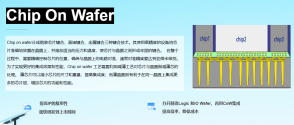
Looks like the work for vertical signal time reduction for chips have in the work for quite some time in China, this company has been working on similar concept since 2022, don't know if the company is connected to Huawei, maybe, but I don't think so, they are creating really advance packaging, bonding and 3D IC technology, looks like they started with stacked memory and they moved to logic. They already have one production line and a bigger one in construction by this year.
------
The company offers key technologies such as copper-to-copper hybrid bonding (Cu-Cu), wafer thinning, high-precision alignment, and through-silicon via (TSV) drilling. These innovations enable the effective integration of memory chips with logic chips, achieving storage-computing convergence. This significantly enhances overall chip performance, broadens functional diversity, and provides robust support and strong impetus for expanding chip applications across multiple domains.
There are two technologies for wafer-on-wafer bonding: direct bonding and hybrid bonding.
Wafer to Wafer:
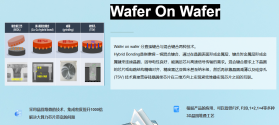
Wafer-on-wafer bonding comes in two main types: direct bonding and hybrid bonding. Hybrid bonding, such as copper-to-copper (Cu-Cu) bonding, connects wafers by forming metal layers on the wafer surface, during the bonding process, these layers create metallic bonds to join the wafers. Due to their excellent conductivity, they meet the demands for high-speed signal transmission in chips. Hybrid bonding requires precise alignment of the chips or circuit structures on the top and bottom wafers, with an accuracy reaching the sub-micron or even nanometer level. Subsequently, wafer thinning and Through-Silicon Via (TSV) techniques are used to directly penetrate through the silicon wafers, achieving tight stacking and interconnection between chips in the three-dimensional direction.
-By using wafer stacking technology, the integration density is increased by 1000 times.
-Depending on the application, we can provide various 3D wafer stacking processes such as F2F, F2B, 1+2, and 1+4.
------
The company offers key technologies such as copper-to-copper hybrid bonding (Cu-Cu), wafer thinning, high-precision alignment, and through-silicon via (TSV) drilling. These innovations enable the effective integration of memory chips with logic chips, achieving storage-computing convergence. This significantly enhances overall chip performance, broadens functional diversity, and provides robust support and strong impetus for expanding chip applications across multiple domains.
There are two technologies for wafer-on-wafer bonding: direct bonding and hybrid bonding.
Wafer to Wafer:
Wafer-on-wafer bonding comes in two main types: direct bonding and hybrid bonding. Hybrid bonding, such as copper-to-copper (Cu-Cu) bonding, connects wafers by forming metal layers on the wafer surface, during the bonding process, these layers create metallic bonds to join the wafers. Due to their excellent conductivity, they meet the demands for high-speed signal transmission in chips. Hybrid bonding requires precise alignment of the chips or circuit structures on the top and bottom wafers, with an accuracy reaching the sub-micron or even nanometer level. Subsequently, wafer thinning and Through-Silicon Via (TSV) techniques are used to directly penetrate through the silicon wafers, achieving tight stacking and interconnection between chips in the three-dimensional direction.
-By using wafer stacking technology, the integration density is increased by 1000 times.
-Depending on the application, we can provide various 3D wafer stacking processes such as F2F, F2B, 1+2, and 1+4.