Chinese semiconductor thread II

tokenanalyst

Lieutenant General
Registered Member

Impact of Low-n Absorber on SMO in High-NA EUV Lithography for Sub-3nm Nodes​

School of Microelectronics, Fudan University
National Integrated Circuit Innovation Center

Abstract:​

This study investigates how absorber materials and source-mask optimization (SMO) influence high-NA EUV lithography at sub-3 nm nodes. Through rigorous simulations comparing conventional TaBN and low-n high-k absorbers on 1D and 2D BEOL patterns, we demonstrate that low-n high-k materials under SMO deliver substantially wider exposure latitude and improved mask error factor, thereby enhancing process-window robustness for high-volume manufacturing.​

Please, Log in or Register to view URLs content!
 

tphuang

General
Staff member
Super Moderator
VIP Professional
Registered Member
Please, Log in or Register to view URLs content!

鼎龙股份(300054.SZ)公告称,公司控股子公司潜江新材料近期在KrF/ArF高端晶圆光刻胶领域取得订单突破,两家头部晶圆厂客户合计新增订单近1000加仑。截至公告日,公司已有8款高端晶圆光刻胶获多家国内主流晶圆厂批量订单,较一季度末新增5款。公司年产300吨KrF/ArF高端晶圆光刻胶产线于2026年3月投产后,已向客户交付数百加仑产品并顺利应用。ArF与KrF光刻胶是逻辑、存储芯片制造的核心刚需耗材,属于国内晶圆光刻胶市场价值量占比最高的两大品类。
good news, looks like Dinglong's Arf/KrF photoresist is seeing significant more order. Using Gemini, this is about 250 gallons per ton. so 1000 gallons is not that much. But still, as long as they can keep getting more customers & more products sold, the sales will go up
 

tokenanalyst

Lieutenant General
Registered Member

Breakthrough in AI Computing: Xi'an Institute Achieves Key Silicon Photonic Milestones​


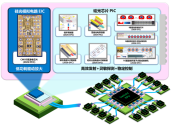
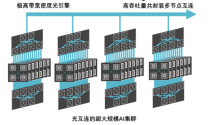
The National Key Laboratory of Ultrafast Optical Science and Technology at the Xi'an Institute of Optics and Precision Mechanics (XIOPM), Chinese Academy of Sciences, has announced a series of groundbreaking achievements in silicon photonic interconnect chips. These innovations are designed to overcome the critical "power consumption wall" and "communication wall" currently hindering the scalability of AI large models and intelligent computing centers.

The research team has developed a complete silicon photonics technology system from core devices to system integration—that directly supports Co-Packaged Optics (CPO) architecture, positioning China as a key player in post-Moore's Law computing infrastructure.

1. High-Speed Optical Receivers
  • Device: Silicon-Germanium Avalanche Photodetector (Si-Ge APD).​
  • Performance: Achieved an international-leading gain-bandwidth product of 7,564 GHz.​
  • Capability: Successfully tested for high-speed signal reception ranging from 64 Gbps to 200 Gbps, significantly boosting receiving sensitivity in optical communication systems.​
2. Advanced Optical Modulators
  • Microring Modulator: Delivered a single-channel transmission rate exceeding 400 Gbps.​
  • Mach-Zehnder Modulators (MZMs): Developed several high-bandwidth variants, including a novel serpentine structure MZM that achieves efficient electro-optical conversion within a compact area of approximately 1 mm², ideal for high-density integration.​
3. System-Level Integration & Massive Throughput
  • Multi-Channel Emission Chip: Launched a 16-channel microdisk modulator array with a large free spectral range.​
  • DWDM Capability:By integrating with quantum dot mode-locked lasers, the team realized two high-speed schemes:
    • 8-channel configuration (200 GHz spacing).​
    • 16-channel configuration (100 GHz spacing).​
  • Result: Both schemes achieved a single-fiber data throughput capability of 2 Tbps.​
4. CMOS Electrical Support Chips
  • Technology Node: Developed at the 28nm CMOS process level, specifically designed for 3D integration with silicon photonics.​
  • Bandwidth: Transmit and receive bandwidths both exceed 60 GHz.​
  • Efficiency: Supports 200 Gbps PAM4 transmission and 280 Gbps reception, achieving an excellent energy efficiency of 0.67 pJ/bit and a density of 4.9 Tbps/mm².​
These advancements mark a pivotal shift in semiconductor development trends, aligning with concepts like Huawei's "Tao (τ) Law," which emphasizes moving away from geometric miniaturization toward latency compression. The developed components are directly adaptable to CPO architecture, allowing for compact packaging and low latency. As a single-engine solution exceeds 2 Tbps throughput with low power consumption, these chips address the bottleneck of traditional electrical interconnects in next-generation AI clusters. This release underscores China's continued breakthrough capabilities in high-end silicon photonic technologies, securing its position in the foundational layer of future supercomputing and AI infrastructure.

1781212457652.png1781212478472.png

Please, Log in or Register to view URLs content!
 

tokenanalyst

Lieutenant General
Registered Member

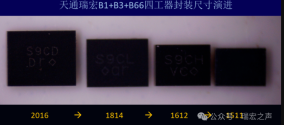
Ruihong releases the industry's smallest B1+B3+B66 quad-processor, redefining "small yet powerful" with three major breakthroughs.​


Ruihong has unveiled the industry's smallest B1+B3+B66 quad-processor, challenging the long-held dominance of international giants. This product redefines the trade-off between "small size" and "high power," offering a solution that is physically smaller than current mainstream standards while maintaining superior performance metrics.​
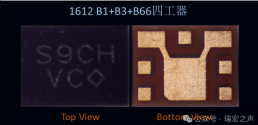
  • Chip Size: 1309 (1.3mm × 0.9mm). This is currently the smallest quad-processor chip size globally, surpassing the latest mass-production standard set by Qualcomm's RF360 (1612).
  • Package Compatibility: The chip supports both 1612 and 1511 packages, with new 1511 pins designed to be compatible with existing 1612 pads. This allows customers to flexibly choose the smallest available form factor without retooling manufacturing lines for pin layouts.​
  • Frequency Bands: Integrates Band 1 (1920–2170 MHz), Band 3 (1710–1880 MHz), and Band 66 (2110–2200 MHz RX). This configuration enables carrier aggregation for wide-area 5G coverage.​
  • Power Capability: Achieves a destructive power of 35dBm at 85°C, ensuring high reliability even under extreme heat, breaking the industry rule that smaller chips inherently have lower power tolerance.​
1781277047752.png1781277085812.png

By using specialized materials (Cu-doped Al electrodes) and advanced acoustic design, Ruihong maintained high power capacity despite the drastically reduced chip area, preventing issues like acoustic migration and thermal runaway. Despite miniaturization, the device maintains low insertion loss across all bands, ensuring signal stability and network speed comparable to larger international equivalents. The design successfully achieves inter-channel isolation greater than 55dB, a critical requirement for preventing electromagnetic interference between transmit and receive channels within such a compact space.

Testing confirms that the Ruihong chip matches or exceeds key performance indicators (KPIs) of the industry leader, Qualcomm RF360:​
  • Insertion Loss: Ranges from 1.3dB to 2.1dB across supported bands.​
  • Isolation: >55dB per port.​
  • Temperature Drift: ~-10ppm/°C (excellent stability).​
  • Out-of-band Rejection: Meets operator specifications.​
This launch marks a significant shift in the global RF filter market. For years, achieving high-power performance in sub-14mm chips was monopolized by foreign competitors due to complex acoustic and thermal engineering barriers. Ruihong's achievement not only provides domestic chip manufacturers with parity but also offers phone OEMs a solution that maximizes space savings (allowing for thinner devices) without sacrificing the robustness required for 5G networks.
Please, Log in or Register to view URLs content!
 

tokenanalyst

Lieutenant General
Registered Member

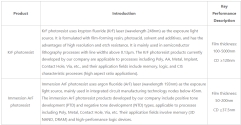
Dinglong Technology's high-end wafer photoresist has secured a major order, with a new order from a leading customer for nearly a thousand gallons.​


On June 11, Dinglong Technology issued a voluntary announcement disclosing that its holding subsidiary, Yidinglong (Qianjiang) New Materials Co., Ltd., has recently achieved continuous order breakthroughs in the field of high-end KrF/ArF wafer photoresist.

The announcement shows that since its 300-ton-per-year KrF/ArF high-end wafer photoresist production line went into operation on March 20, 2026, the company has delivered hundreds of gallons of immersion ArF and KrF photoresist to two leading wafer foundry customers, and the products have been successfully applied in their mass production lines. Due to the stable performance and good results of the company's photoresist products, the two customers have recently placed additional orders totaling nearly 1,000 gallons.

As of the date of this announcement, the company has secured bulk orders for eight high-end wafer photoresists (four ArF photoresists and four KrF photoresists) from several major domestic wafer foundries, an increase of five products compared to the end of the first quarter of this year. Furthermore, several other products are expected to convert into orders within this year. Product deliveries are projected to increase significantly in the first half of 2026, with commercialization progress accelerating considerably.

Regarding testing progress, the company has cumulatively developed over 40 high-end wafer photoresists, with nearly 30 products sent to customers for verification testing, of which over 10 have entered the gallon sample testing stage. Simultaneously, the company has also developed several supporting photolithography auxiliary materials such as BARC and SOC.

According to the announcement, the company began its foray into the high-end wafer photoresist business in May 2022. It has now achieved a complete production line for high-end wafer photoresists, encompassing product development, pilot line construction, order acquisition, and the establishment of China's first full-process production line for "organic synthesis - polymer synthesis - purification - photoresist mixing," and has achieved stable mass supply of products. The company's ArF and KrF photoresists are developed and produced using a customized R&D and production model, covering all process technology nodes in domestic wafer fabs and widely used in high-end memory (3D NAND, DRAM) and high-performance logic devices.

In terms of production capacity, the company's Phase I production line in Qianjiang, with an annual output of 30 tons of KrF/ArF high-end wafer photoresist, is operating stably and has the capacity for mass production and supply; the Phase II production line, with an annual output of 300 tons of KrF/ArF high-end wafer photoresist, was completed and put into operation at the end of the first quarter of 2026 and has entered the capacity ramp-up stage.

1781277390456.png

Please, Log in or Register to view URLs content!
 

tokenanalyst

Lieutenant General
Registered Member
Amec Cryogenic etching for 3DNAND and 3DDRAM

The Investigation of Cryogenic High-Aspect-Ratio Trench etch by Loop Function​

Advanced Micro-Fabrication Equipment Inc.​

Abstract:​

The cryogenic high-aspect-ratio (HAR) etch becomes more and more famous both in 3D-NAND and 3D-DRAM fabrication. It shows higher ER and better profile compared with the traditional strategy in room temperature. We here mainly focus on the HAR trench etch with stacked SiO2 and Si3N4 layer. The challenges include bowing, twisting and vertical profile. We explore a three-steps-loop strategy, including deposition for bowing control, flush for twisting and etch for vertical profile, to efficiently balance the trade-off effect among them. It can even work in the small-pitch trench.​

Please, Log in or Register to view URLs content!
 
Top