Countries don’t have friends only interests . This law applies to all without exceptionsThis is one week old news but I haven't seen it posted so I thought I would post it here.
I haven't heard much of it or maybe I was out of the loop. We know Japan's Rapidus wants to get the 2nm process which makes it a threat to TSMC. This is the first time a corporation has been dealt with under Taiwan's national security act. Not China but Japan. This might affect relations given how a lot of people think Japan and Taiwan are really close.

You are using an out of date browser. It may not display this or other websites correctly.
You should upgrade or use an alternative browser.
You should upgrade or use an alternative browser.
Chinese semiconductor thread II
- Thread starter vincent
- Start date
Ahahah…that’s a different matter altogether . Taiwan can’t dare do that, since overall it will jeopardize their national interests with the US as their only security guarantor. But yes they will take action against anybody else be it China, Japan, Korea or whoeverMusk is apparently poaching TSMC employees aggressively for his "Terafab" project. I wonder if Taiwan would have the courage to charge a US company
Edge AI chip startup YuangMei Semiconductor completes Pre-A round financing of over 500 million yuan
Yuanli Semiconductor announced on its official WeChat account that it had recently completed a Pre-A round of financing of over 500 million yuan.
This round of financing was led by IDG Capital, with participation from Wuyuefeng Science & Technology Innovation Fund, China Reform Fund, and other institutions. Existing and new shareholders, including Shangshi Capital, Redbird Venture Capital, Leading Investment, First Development Venture Capital, Hong Kong Kapok Fund, Innovent, CAS Star, OneDimension Venture Capital, and Tsinghua Alumni Seed Fund, continued to invest. This round of financing will primarily be used for the R&D of next-generation edge inference chips and the mass production of a series of computing power products, accelerating the commercialization of edge AI productivity chips.
The core team at YuanCe Semiconductor comes from international semiconductor companies and possesses extensive experience in developing multiple generations of AI chips and complete engineering capabilities. The company's founder and CEO, Dr. Fang Shaoxia, previously served as the chip R&D director at AMD and the AI processor R&D director at Xilinx, and has long been engaged in high-performance processor and AI chip architecture design, holding numerous related invention patents.
The company stated that it will soon launch a chip solution for edge AI inference through its self-developed architecture and interconnect innovation. This solution is based on the Chiplet modular design concept, supports flexible expansion and efficient collaboration, and can provide higher performance inference capabilities under limited power consumption, cost, and size constraints.
This round of financing was led by IDG Capital, with participation from Wuyuefeng Science & Technology Innovation Fund, China Reform Fund, and other institutions. Existing and new shareholders, including Shangshi Capital, Redbird Venture Capital, Leading Investment, First Development Venture Capital, Hong Kong Kapok Fund, Innovent, CAS Star, OneDimension Venture Capital, and Tsinghua Alumni Seed Fund, continued to invest. This round of financing will primarily be used for the R&D of next-generation edge inference chips and the mass production of a series of computing power products, accelerating the commercialization of edge AI productivity chips.
The core team at YuanCe Semiconductor comes from international semiconductor companies and possesses extensive experience in developing multiple generations of AI chips and complete engineering capabilities. The company's founder and CEO, Dr. Fang Shaoxia, previously served as the chip R&D director at AMD and the AI processor R&D director at Xilinx, and has long been engaged in high-performance processor and AI chip architecture design, holding numerous related invention patents.
The company stated that it will soon launch a chip solution for edge AI inference through its self-developed architecture and interconnect innovation. This solution is based on the Chiplet modular design concept, supports flexible expansion and efficient collaboration, and can provide higher performance inference capabilities under limited power consumption, cost, and size constraints.
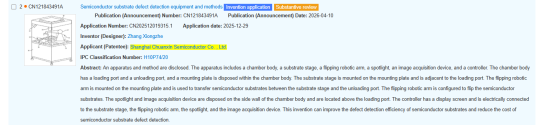
The new X-ray lithography station at Beijing synchrotron radiation facility
X-ray lithography has been widely used for decades to fabricate micro- and nanostructures, particularly those with excellent high-aspect-ratio. The X-ray lithography station at the Beijing Synchrotron Radiation Facility (BSRF) was established in the 1990s and has provided X-ray exposure services for hundreds of users during dedicated synchrotron radiation runs. However, the beam time allocated for two cycles of dedicated synchrotron radiation each year has proven insufficient, and the parasitic mode could not be employed because the X-ray lithography station is located in Hall 13 at BSRF. To mitigate this limitation, a new X-ray lithography station has been constructed in Hall 15 to accommodate beam time for both dedicated and parasitic modes.
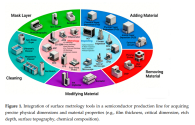
Atomic Force Microscopy (AFM)-Based Metrology for Advanced Etching in Three-Dimensional Integrated Circuits
Abstract
Fueled by the push for “More than Moore”, three-dimensional integrated circuits (3D ICs) have become a backbone of next-generation electronics. Their complex architectures place unprecedented demands on etching technologies, which must now deliver atomic precision, stringent high-aspect-ratio (HAR) control, and virtually damage-free profiles. Meeting these challenges requires metrology capable of true 3D, quantitative analysis at the nanoscale. Atomic force microscopy (AFM) has proven essential in this regard, offering non-destructive, sub-nanometer characterization that other techniques cannot provide. This review systematically examines AFM’s pivotal role in advancing key etching processes for 3D ICs, including deep reactive ion etching of through-silicon vias (TSVs), atomic layer etching (ALE), and cryogenic plasma etching. We detail AFM’s unique contributions to quantifying sidewall roughness, verifying etch-per-cycle rates, and assessing surface damage. We also discuss how recent innovations, such as tilting-AFM, HAR probes, and automated inline systems, are overcoming traditional barriers in throughput and access to sidewalls and deep trenches. Looking forward, the integration of AFM with optical metrology, machine learning, and multi-scale modeling opens a path toward truly autonomous process control and optimization. As such, AFM stands as an indispensable tool for developing and refining the etching processes that underpin next-generation 3D semiconductor manufacturing.

Equipment installation complete! Chuanghao Semiconductor completes a key step in the transition from "technology to mass production" of high-end IC substrates.
Zhejiang Chuanghao Semiconductor has completed equipment installation for its first-phase project, advancing toward mass production of high-end IC substrates a critical component for AI chips and high-performance computing. This milestone marks meaningful progress in domestic substitution efforts.
Founded in September 2022, Chuanghao specializes in advanced packaging substrates (FCCSP, WBCSP, RF, memory, and ECP embedded types). Its core team brings 20+ years of average industry experience from leading global manufacturers, enabling end-to-end capabilities in R&D, manufacturing, and quality control. The company has mastered precision processes like mSAP (15/15μm) and ETS (10/10μm), plus Coreless and ECP technologies, serving AI, RF, power, and memory applications.
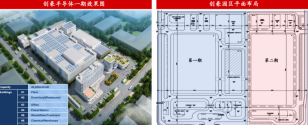
The RMB 2.2 billion, 100,000 sqm Phase 1 facility is on track to begin full-process operations by May 2026, deliver samples in Q4 2026, and start mass production in Q1 2027. At full capacity, it will produce 40,000 sqm/month of BT substrates and generate ~RMB 1.7 billion in annual output. Phase 2 plans include ECP mass production and glass-based substrate R&D.
Recognized as a 2025 National High-tech Enterprise and Zhejiang "Emerging Dragon," Chuanghao is emerging as a key player in China's push for semiconductor self-reliance amid surging AI demand and advanced packaging evolution.
Founded in September 2022, Chuanghao specializes in advanced packaging substrates (FCCSP, WBCSP, RF, memory, and ECP embedded types). Its core team brings 20+ years of average industry experience from leading global manufacturers, enabling end-to-end capabilities in R&D, manufacturing, and quality control. The company has mastered precision processes like mSAP (15/15μm) and ETS (10/10μm), plus Coreless and ECP technologies, serving AI, RF, power, and memory applications.
The RMB 2.2 billion, 100,000 sqm Phase 1 facility is on track to begin full-process operations by May 2026, deliver samples in Q4 2026, and start mass production in Q1 2027. At full capacity, it will produce 40,000 sqm/month of BT substrates and generate ~RMB 1.7 billion in annual output. Phase 2 plans include ECP mass production and glass-based substrate R&D.
Recognized as a 2025 National High-tech Enterprise and Zhejiang "Emerging Dragon," Chuanghao is emerging as a key player in China's push for semiconductor self-reliance amid surging AI demand and advanced packaging evolution.
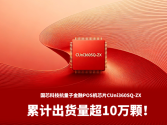
Guoxin Technology Achieves Practical Application of Quantum-Resistant Cryptographic Chip: Mass Production and Shipment of Quantum-Resistant Financial POS Machine Chip CUni360SQ-ZX
Guoxin Technology has achieved practical application of its quantum-resistant cryptographic chip, the CUni360SQ-ZX, with over 100,000 units shipped for use in financial POS machines. Developed jointly with Zhongyun Xin'an, this milestone reflects the company's deepening leadership in post-quantum cryptography (PQC) amid accelerating global urgency: with quantum computing advances threatening traditional encryption, major players like Google and the U.S. government have set 2029–2030 deadlines for PQC migration, turning quantum resilience from theoretical concern into immediate security imperative.
The CUni360SQ-ZX is a low-power chip built on a domestic 40nm process and Guoxin's proprietary CPU core. It integrates hardware engines for both quantum-resistant algorithms (NIST-standard ML-KEM and ML-DSA) and traditional cryptography (RSA, SM2, AES, SM4, SHA3, etc.), enabling seamless coexistence and agile migration. Key security features include a true random number generator, multi-layer tamper detection (voltage, temperature, light, glitch), and eight PCI-compliant anti-tamper interfaces. Its design aligns with the newly released PCI PTS 7.0 standard the first to mandate quantum-resistant algorithms for payment systems positioning financial POS terminals as an early adoption vector for PQC globally.
Beyond this flagship chip, Guoxin has built a diversified quantum-resistant portfolio: the AHC001 chip (28nm, with investee Xinda Yimi) for edge security, the CCUPHPQ01 PCIe cryptographic card supporting national and PQC algorithms, and the CCRC4XXX automotive MCU series embedding NIST-compliant PQC for connected vehicles. The company is also engaged in national R&D programs and academic collaborations focused on lattice-, hash-, and code-based PQC algorithms, while pursuing patents in hardware architecture and side-channel protection.
With a mature POS chip ecosystem over 100 million cumulative shipments across prior generations—and strategic partnerships across finance, telecom, power, and government sectors, Guoxin Technology is positioning itself at the forefront of China's quantum-safe transition. By combining autonomous algorithm IP, serialized hardware products, and real-world deployment experience, the company aims to provide the cryptographic foundation for secure digital infrastructure in the post-quantum era.