
You are using an out of date browser. It may not display this or other websites correctly.
You should upgrade or use an alternative browser.
You should upgrade or use an alternative browser.
Chinese semiconductor thread II
- Thread starter vincent
- Start date

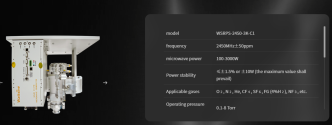
Regardless if he has an idea or not what is happening in secrecy in the ground in China, I don't think he is not going to said it in public.CEOs say stuff like this all the time. He's pretending to be confident because he wants to boost his own business.
China is very secretive about EUV, that guy has no knowledge of what's happening on the ground.
The previous CEO was more concern of the Idea of being forced out of the Chinese market. This CEO is more like trying to play sides.Interesting to see how different his position is to Jensen Huang when he talks about China.
Both big CEOs with concerns about China, but different attitudes
"Will be no competition" "Missing Opportunities and Inviting Competition",
If it will be no competition then Think Tanks stooges are correct and banning ASML from selling even their immersion and EUV scanners in China will work even if come at the cost of ASML.
But if China Immersion and EUV scanners become the defacto standard in their semiconductor facilities then they failed and ASML pay the price.
That is why I said that ASML is easy pick for moronic Think Tank Stoogery, they talk too much. US companies are Savvy about their tech.
For now Chinese made scanners, dry and immersion are more for filling the void created by export controls and so will be EUV scanners but the clock is ticking before their domestics tools become the facto standard in the biggest semiconductor market. "It’s hard for people to accept that because access to this technology is so important"

they are so arrogant regarding EUV and they should be since this is the most complex machine humans have ever build. but you have to be humble as well.Regardless if he has an idea or not what is happening in secrecy in the ground in China, I don't think he is not going to said it in public.
The previous CEO was more concern of the Idea of being forced out of the Chinese market. This CEO is more like trying to play sides.
"Will be no competition" "Missing Opportunities and Inviting Competition",
If it will be no competition then Think Tanks stooges are correct and banning ASML from selling even their immersion and EUV scanners in China will work even if come at the cost of ASML.
But if China Immersion and EUV scanners become the defacto standard in their semiconductor facilities then they failed and ASML pay the price.
That is why I said that ASML is easy pick for moronic Think Tank Stoogery, they talk too much. US companies are Savvy about their tech.
For now Chinese made scanners, dry and immersion are more for filling the void created by export controls and so will be EUV scanners but the clock is ticking before their domestics tools become the facto standard in the biggest semiconductor market. "It’s hard for people to accept that because access to this technology is so important"
another cope, we did it coz of DeCaDeS of R&D. as they are acting like China just started yesterday. CIOMP doing Lithography related research for past 3 decades.
GOWIN Semiconductor Announces New FPGA Families for 2026
GW1AN and GW3A Expand GOWIN’s Small and Medium FPGA Portfolio
GOWIN Semiconductor today announced the launch of its next-generation Arora GW1AN and GW3A FPGA families, expanding its programmable logic portfolio with compact architectures, efficient integration, and dependable performance across industrial, consumer, and embedded applications.
Designed to support the complete FPGA decision chain — including hardware architects, FPGA developers, engineering managers, and component procurement teams — the new families emphasize migration flexibility, sourcing stability, and long-term production planning across EMEA, the United States, and Japan.
Arora GW1AN: Expanded Small FPGA Integration
The Arora GW1AN family introduces an enhanced small FPGA architecture focused on system-level efficiency and integration flexibility.
Key features include:
Key features include:
- Redesigned packaging for improved board compatibility
- Hardened embedded IP subsystems to reduce development complexity
- Integrated user flash supporting background programming and multi-image reliability
- Higher-precision ADC resources for monitoring and control systems
- Pin-compatible migration paths enabling dual-source and risk mitigation strategies
The GW1AN series is positioned for industrial control, embedded processing, power management, and cost-sensitive programmable logic designs where compact footprint and long lifecycle support are essential.
GW3A: New Medium FPGA Performance Class
The GW3A family introduces a hybrid LUT4/LUT6 FPGA architecture combined with optimized hard IP blocks to deliver balanced performance and efficient silicon utilization.
With logic densities ranging from approximately 6K to 90K LUTs, GW3A supports:
With logic densities ranging from approximately 6K to 90K LUTs, GW3A supports:
- Industrial automation platforms
- Machine vision systems
- Video bridging and display connectivity
- Embedded interface and control applications
Well I never said that China is going to have the NXT:5000 HiNA EUV tomorrow, but base on the huge acceleration in R&D and patenting says that they are progressing towards production scanners, that is why the huge emphasis in mask, photoresist, EUV inspection tools.they are so arrogant regarding EUV and they should be since this is the most complex machine humans have ever build. but you have to be humble as well.
A guy with more years in the industry than many people here have being alive once told me years ago "Call me when they start to make EUV Pellicles"
Guess what?
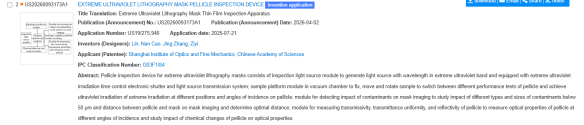
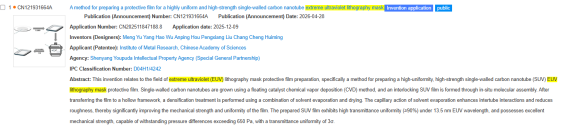

I not saying that companies in China are going to compete directly with ASML globally but it could be a cheaper domestic EUV scanner to satisfy the domestic needs of a company like Huawei for example. AND the clock will start to tick for ASML.

Hey, dare to dream. On more advanced EUV, China is the best positioned long term to capitalize on new light sources like SSMB; LPP is not really suitable for high NA, just like LDP/DPP aren't really suitable for production standard NA scanners like LPP is. Further in China's favor is that SSMB is infrastructure.Well I never said that China is going to have the NXT:5000 HiNA EUV tomorrow

Speaking of SSMB, what exactly is the progress on that supposed prototype being built in Xiong'an? It was a big deal for like 3 weeks back in 2023 and then everyone forgot about its existence and never said anything about it ever since.Hey, dare to dream. On more advanced EUV, China is the best positioned long term to capitalize on new light sources like SSMB; LPP is not really suitable for high NA, just like LDP/DPP aren't really suitable for production standard NA scanners like LPP is. Further in China's favor is that SSMB is infrastructure.
Was it just a false rumor or something else? I mean you'd think for something that is said to be as revolutionary as this would atleast have semi updated coverage.
For context, EUV pellicles are these very thin thick membranes that have very high transmissivity to EUV light while at the same time protecting the mask from contaminants. From my understanding it was the last stage in the EUV developing cycle toward high volume manufacturing because these mask are expensive and you want to pattern as many wafers with them as possible. I am looking at the broader picture and even that may be a the tip of the iceberg of what really is happening on the ground.
EUV "chemicals" are already in the supply of domestic companies.

High-End Electronic Information Materials Project (Phase I) The total investment for this project is 110 million yuan. It involves renovation and expansion of the existing infrastructure, reducing the capacity of existing production lines 1, 2, and 3 to accommodate the production of new products. The project will purchase and install production equipment and supporting facilities, without constructing any new buildings. Upon completion, the project will have an annual production capacity of 45 tons of photoresist photosensitizer, 430 tons of photoresist resin monomer, and 125 tons of photoresist additives.
Thin Film tools are heavily used in the display industry
Visionox Launches Mass Production Solution for High-Mobility ALD All-Oxide Technology
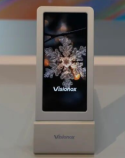
Visionox technical expert Chen Faxiang was invited to deliver a keynote report, announcing that Visionox has taken the lead in launching a mass production solution for high-mobility ALD (Atomic Layer Deposition ) all-oxide technology.
Visionox has achieved a breakthrough in single-gate mobility of 50 cm²/ V·s for all-oxide TFTs using ALD technology , and successfully lit up a 6.39-inch all-oxide panel. Verification shows that this technology has initially met performance requirements in terms of film deposition accuracy, stability, and consistency, providing a new path for OLED backplanes that balances high performance, process efficiency, and full-size expansion potential .
his achievement further demonstrates the successful illumination of a small-sized all-oxide panel. Previously, due to mobility limitations, all-oxide backplanes were primarily used in medium-sized displays. The successful illumination of this small-sized panel signifies that this technology has the capability to extend to higher-specification applications, and also marks a reopening of the application boundaries for oxide backplanes.
Verification has shown that this ALD solution has met mass production specifications in terms of key process indicators, with film thickness variation between sheets less than 2% and film thickness uniformity less than 4% . This indicates that the process has good stability and repeatability during batch production, meeting the consistency requirements of panel production. Currently, this technology has been verified on a 4.5-generation line and has the capability to be extended to higher generation lines.
Visionox has achieved a breakthrough in single-gate mobility of 50 cm²/ V·s for all-oxide TFTs using ALD technology , and successfully lit up a 6.39-inch all-oxide panel. Verification shows that this technology has initially met performance requirements in terms of film deposition accuracy, stability, and consistency, providing a new path for OLED backplanes that balances high performance, process efficiency, and full-size expansion potential .
his achievement further demonstrates the successful illumination of a small-sized all-oxide panel. Previously, due to mobility limitations, all-oxide backplanes were primarily used in medium-sized displays. The successful illumination of this small-sized panel signifies that this technology has the capability to extend to higher-specification applications, and also marks a reopening of the application boundaries for oxide backplanes.
Verification has shown that this ALD solution has met mass production specifications in terms of key process indicators, with film thickness variation between sheets less than 2% and film thickness uniformity less than 4% . This indicates that the process has good stability and repeatability during batch production, meeting the consistency requirements of panel production. Currently, this technology has been verified on a 4.5-generation line and has the capability to be extended to higher generation lines.