Chinese semiconductor thread II

tokenanalyst

Lieutenant General
Registered Member

TCL CSOT Debuts World's First Ultra-High Mobility 50 ARR Display Technology​


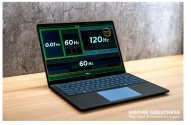
TCL CSOT has unveiled the world’s first ultra-high mobility (50 cm²/V·s) oxide display technology, integrated with Adaptive Partition Refresh Rate (ARR) capabilities, marking a major advancement in LCD performance and energy efficiency. Designed to overcome the inherent limitations of traditional backplane technologies like amorphous silicon, LTPS, and conventional oxide TFTs, this innovation delivers exceptional electron mobility while maintaining mass-production-grade stability and voltage resilience. By enabling a dynamic refresh rate range from 0.01Hz to 120Hz, the technology reduces display power consumption by up to 50%, positioning it as a foundational solution for next-generation AI PCs, laptops, and high-performance monitors.
1778176855702.png
The breakthrough is built upon three core engineering advancements. TCL CSOT reengineered its manufacturing process using linked rotating target sputtering and composite repair techniques to achieve highly uniform, defect-suppressed oxide semiconductor films. To tackle the environmental sensitivity of ultra-high mobility devices, the company developed a precise hydrogen-oxygen balance control system for insulating layers, significantly improving leakage current suppression and long-term reliability. Additionally, end-to-end circuit and device optimizations, including a novel GOA architecture and enhanced thermal management, resolve threshold voltage drift and self-heating challenges, fully unlocking the material’s performance potential while paving the way for 2026 mass production.

The ARR technology leverages this oxide platform to deliver intelligent, content-adaptive display performance. Through horizontal and vertical dual-dimensional matrix partitioning, the screen can independently adjust refresh rates across different zones, matching dynamic content to up to 120Hz while dropping static areas to as low as 0.01Hz. This hardware-software synergy is powered by AI scene recognition and AI picture quality compensation algorithms, which intelligently map screen content, allocate refresh rates accordingly, and dynamically optimize brightness, color gamut, and contrast across zones. The result is a flicker-free, visually seamless experience that dramatically cuts power usage without compromising image quality.
1778176900352.png
This launch represents the latest milestone in TCL CSOT’s strategic oxide technology roadmap, following commercial deployments of conventional oxide in 2024 and high-mobility 30 oxide in 2025. Premiering at SID with a 14-inch laptop panel, the technology solidifies TCL CSOT’s leadership in semiconductor display innovation. Guided by the company’s “APEX” technology philosophy, the ultra-high mobility 50 oxide and ARR platform directly addresses industry demands for high-resolution, low-power, and AI-ready displays. As the technology scales, it is expected to redefine performance benchmarks across consumer and professional markets, driving the broader display industry into a new era of intelligent, energy-efficient visual experiences.​

Please, Log in or Register to view URLs content!
 

tokenanalyst

Lieutenant General
Registered Member

Aoxin Semiconductor Achieves Technological Breakthrough in Glass Substrate Manufacturing Process.​

Aoxin Semiconductor assembled technical backbones from multiple departments, including R&D, process, quality, and equipment, to focus on tackling two core areas: glass substrate manufacturing processes and mass production processes.

The team focuses on technological innovation and process optimization, continuously carrying out technical research, process improvement and multiple rounds of data verification. After repeated debugging and actual testing, they have successfully achieved breakthroughs in key technologies for glass substrate manufacturing, achieving industry-leading yield levels and stable and efficient delivery results.

The successful completion of this technological breakthrough once again demonstrates Aoxin Semiconductor's core manufacturing strength: the company not only possesses a mature and complete mass production system and large-scale production capabilities in the field of organic ABF substrates, but also has strong technological iteration and implementation capabilities in the research and development and mass production of new materials and new processes.

1778177278085.png

During the project's progress, the company simultaneously completed 25 patent applications, successfully mass-produced and delivered glass substrate products of various specifications, and achieved new heights in process precision. The thinnest substrate was only 0.23 millimeters thick, demonstrating the company's innovative strength through its exceptional process capabilities.

Please, Log in or Register to view URLs content!
 

tokenanalyst

Lieutenant General
Registered Member

Huahai Qingke delivers ion implanters to leading domestic advanced storage companies​


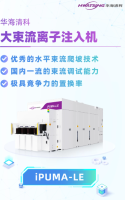
Huahai Qingke, through its subsidiary Xinyu Semiconductor, has successfully delivered its iPUMA-LE 12-inch high-current ion implanter to a leading domestic advanced memory manufacturer. This delivery builds on the company’s prior successful deployments to major integrated circuit producers and marks a significant step in expanding its market presence. The adoption by a top-tier memory chip maker validates the equipment’s stability, process compatibility, and mass-production reliability, reflecting growing customer trust and strengthening Huahai Qingke’s position in the domestic semiconductor equipment market.
1778177743166.png


Historically monopolized by international giants due to stringent technical requirements, ion implanters are critical to front-end chip fabrication. The iPUMA-LE breaks through these barriers by meeting internationally advanced performance standards, delivering exceptional beam transmission efficiency, precise implantation uniformity, and accurate angle control. These capabilities enable the system to satisfy the rigorous demands of advanced memory processes and cutting-edge semiconductor nodes, demonstrating Huahai Qingke’s ability to produce high-reliability, domestically engineered front-end manufacturing tools.

Leveraging this breakthrough, the company is rapidly broadening its ion implantation portfolio. It has achieved full model coverage for its high-current series, made phased progress on medium-current systems, and is actively developing high-energy platforms. This expanding lineup is designed to serve diverse semiconductor applications, including logic, memory, power devices, and image sensors across multiple process nodes. Aligned with the accelerating push for domestic equipment substitution and expanding domestic wafer capacity, Huahai Qingke is reinforcing its “equipment + service” platform strategy, integrating ion implantation with its broader capabilities in CMP, thinning, polishing, scribing, and wafer regeneration.

Looking forward, Huahai Qingke remains focused on customer-driven innovation, quality excellence, and ecosystem collaboration. By continuously expanding its product portfolio and process integration solutions, the company aims to deepen its role in China’s semiconductor supply chain and support the industry’s push for technological self-reliance. This strategic advancement not only elevates the competitiveness of domestic front-end manufacturing equipment but also contributes to the sustainable, high-quality development of the nation’s integrated circuit sector.

Please, Log in or Register to view URLs content!
 

tokenanalyst

Lieutenant General
Registered Member
Ok whats going on here @tokenanalyst ? I lost count into how many Deposition companies popping up in CHina in last 4-5 years. Do you have a track? It feels like the EV industry, hundreds of players concurrently...
Also these tools are not like consumer goods that you go to a dealership and get it. you have to place orders to the tool manufacturers and wait in a backlog and these tools makers also have to place orders to part manufacturers and so on. Is not exactly like EVs.
 

tokenanalyst

Lieutenant General
Registered Member

EUV mask modeling based on a wide-angle full-vector beam propagation method​

Abstract​

Extreme ultraviolet (EUV) lithography imaging models have garnered widespread attention as digital twin simulation engines for the EUV lithography process. However, as the core of EUV lithography imaging simulation, the EUV mask model still faces challenges in balancing computational accuracy, efficiency, memory usage, and simulation area. To address this, we propose an EUV mask model based on the wide-angle full-vector beam propagation method (WA-FVBPM), integrated with the transfer matrix method and plane-wave expansion. By employing an optimized Padé approximation and an acceleration strategy using alternating direction implicit differentiation, this model achieves both acceptable computational accuracy and exceptional efficiency while minimizing memory consumption for near-field calculations of EUV masks with diverse patterns. Embedding the WA-FVBPM-based mask model within the Abbe imaging framework enables accurate calculation of EUV lithography aerial images, yielding a critical dimension (CD) relative error of less than 0.8% for a standard contact array pattern with a CD of 24.4 nm. Actually, the absolute CD error for all the patterns is less than half a discrete grid, with potential for further reduction through fine sampling. Compared to the finite-difference time-domain method, WA-FVBPM improves computational efficiency by approximately 200 times and reduces memory usage by 100 times while maintaining negligible accuracy loss. This facilitates large-scale simulation of EUV masks with complex patterns. The demonstrated advantages underscore the method’s significant potential for full-chip EUV lithography simulations.

1778178944663.png

Please, Log in or Register to view URLs content!
 

tokenanalyst

Lieutenant General
Registered Member

̀Nanoscale Additive Manufacturing of Sub-24 nm Pitch Silicon Nanowire Arrays and High-Performance GAA FET Based on SiO2/SiNx Stacked Multilayers​

Abstract​

Deploying gate-all-around (GAA) field effect transistors (FETs) in the back-end-of-line (BEOL) represents a promising pathway to extend Moore’s law. Although the in-plane solid–liquid–solid (IPSLS) approach can produce planar silicon nanowires (SiNWs) with precise positions and alignment at low temperatures, the SiNW density should be further enhanced for higher integration density. Here, we employed SiO2/SiNx stacked multilayers to fabricate ultranarrow guiding steps with controllable widths of 30–75 nm via conventional lithography, followed by producing dense ordered SiNWs with diameters of 25.9 ± 2.0 nm, horizontal pitches of 21.3 ± 2.3 nm, and vertical spacing of <22 nm. Facilitated by the alumina sacrificial layer for SiNW suspension, high-performance GAA-FETs were successfully fabricated, demonstrating an Ion/Ioff > 107 and a steep subthreshold swing of ∼63.3 mV/dec. These results underscore the potential of IPSLS growth as a wafer-free additive manufacturing route in BEOL for monolithic 3D integration.​

Abstract Image


Please, Log in or Register to view URLs content!
 

tokenanalyst

Lieutenant General
Registered Member

MOCVD+RTP ETA-Semitech Dual-Engine Drive​


ETA-Semitech has successfully developed a MOCVD epitaxial growth system and annealing systems (RTP and laser annealing) through forward engineering, and has applied for and implemented several innovative technology solutions. These include its independently developed SiC/GaN epitaxial growth technology, rapid thermal annealing/thermal oxidation/thermal nitriding (RTA/RTO/RTN) technology, and system solutions for power chip back-side laser annealing and metal alloys. Currently, the company has obtained multiple invention patents, and its equipment performance is at an advanced level in the industry. ETA-semitech consistently adheres to full-process forward engineering, continuously pursues innovation, and is committed to helping its partners achieve their vision.

1778182030506.png

Please, Log in or Register to view URLs content!
 

Wahid145

Junior Member
Registered Member
To start deposition is an enormous market, different techniques (Chemical based, Physically based, Oxidation, Atomic layer, Epitaxial Growth, Electro Chemical Deposition....), even these categories had sub-categories (PEALD, Thermal ALD, Flowable ALD, HDPCVD, PECVD, Atmospheric pressure CVD, PVD sputtering, PVD thermal, PVD Laser...)

A big chunk of the periodic tablet is used in many kind of processes, way many products require thin films (photovoltaics, power semiconductors, logic, memory, compound semiconductors, photonics and even coating components for other tools like the mirrors of EUV machines and so on). Is more complex and less straight forward than lithography. In a logic process you may require one tool for Hafnium deposition.

Remember that US banned the sale to china of the equipment needed for the deposition of just one compound SiGe (Silicon Germanium) that is needed to make FinFets and GAAFETs for the 5nm and below process.

There are too many? According to Abachy a directory of semiconductors companies says that there are 15 thin film equipment companies (I think probably is a bit more like 30 because the directory doesn't list all companies), in a country with almost 1/3 of the global production.
The directory list 21 in Japan and 36 in the US. You know how much are a Denmark? 22 companies, a country that don't even huge semiconductor production.
Is normal for companies to have overlapping products? Well Applied Materials and Lam compete basically in the same tools category from etching and deposition. I think at the end most of market share will consolidate in a few big companies with the rest moving to niche categories or going out bussiness.​
Ah ya I do recall seeing some more Deposition companies but had absolutely no idea Denmark has 22 companies on this field.
Most of the time when it comes to Deposition and Etching we just talk about AMAT, LAM & TEL. What I thought was these 3 companies (which already have a lot of overlapping products in both Deposition and Etching) dominate 90 to 95% of Deposition and Etching.

So I was thinking China just needs Naura and AMEC to broaden their portfolio, but I was proven wrong, so many companies at this point. I'm not really complaining as long as they are making cutting edge products.

I was researching today and saw China still accounts for around 30% of revenue for AMAT, LAM and TEL. So there's still a long way to go in term of Domestic Self sufficiency even in Deposition and Etching let alone Lithography, sometimes we need to get a reality check on the matter.

I kept thinking China will dramatically reduce tools from AMAT, LAM and TEL past 2025 but its not the case it seems just yet. Wanna see that China share of AMAT, LAM go to zero and a big slap on those sanctions
 

tokenanalyst

Lieutenant General
Registered Member
Most of the time when it comes to Deposition and Etching we just talk about AMAT, LAM & TEL. What I thought was these 3 companies (which already have a lot of overlapping products in both Deposition and Etching) dominate 90 to 95% of Deposition and Etching.
Like Naura and Amec, they are the big ones in advanced processes but not even close to be the only ones in the entire industry.
 

sunnymaxi

Colonel
Registered Member
Ah ya I do recall seeing some more Deposition companies but had absolutely no idea Denmark has 22 companies on this field.
Most of the time when it comes to Deposition and Etching we just talk about AMAT, LAM & TEL. What I thought was these 3 companies (which already have a lot of overlapping products in both Deposition and Etching) dominate 90 to 95% of Deposition and Etching.

So I was thinking China just needs Naura and AMEC to broaden their portfolio, but I was proven wrong, so many companies at this point. I'm not really complaining as long as they are making cutting edge products.

I was researching today and saw China still accounts for around 30% of revenue for AMAT, LAM and TEL. So there's still a long way to go in term of Domestic Self sufficiency even in Deposition and Etching let alone Lithography, sometimes we need to get a reality check on the matter.

I kept thinking China will dramatically reduce tools from AMAT, LAM and TEL past 2025 but its not the case it seems just yet. Wanna see that China share of AMAT, LAM go to zero and a big slap on those sanctions
China right now have at least 6-7 big companies in all critical Semi tools categories like Metrology/implanter.
----------------------------------------------------------------------------------------------------------------------------------
i can understand the sentiments regarding foreign Semi tools firms still has 30 percent market share in mainland. which should be ZERO right now but things don't work like this. 100 percent market share technically not possible considering China being the largest market in the world.

see the car example. Chinese cars swept across the globe. the quality, features and manufacturing absolute at par with German/Japanese and even surpassed them in many categories. Porsche used to be Golden boy in mainland but in Q1,2026 they reported worst sales crashed since 2009 in China. despite all these Chinese cars never crossed 70 percent market share in mainland. they still at 65 percent to 68 percent.

all this happened in last few years. from Zero to half the market share in almost every high tech category.
------------------------------------------------------------------------------------------------------------------------------------

here is one great example in semiconductor, Silicon Wafers.

we went from zero to 70 percent in this category. this sector used to be the Japanese playground. even Japanese media reported this.

Please, Log in or Register to view URLs content!
you are seeing the 30 percent revenue share of KLA/LAM/Applied Material but you don't see the remaining large revenue share which currently being held by Chinese firms. Chinese firms significantly reduce their market share but you can't reduce their share suddenly zero. this takes little more time.

Chinese SME firms have historic sales in 2025 and Q1,2026.. if you read my old massages on this thread. i always said one thing, there will be a massacre of foreign SME firms in 2027-28. all these firms will reduce to zero in mainland in coming years.

China's demand of Semi tools are so massive and domestic firms cannot fulfil right now so current problem is related with production and semi tool takes longer time to test and evaluate.

AMEC has two new production plant under construction. Shanghai and Chengdu

ACM current line is expanding in Shanghai

Piotech has two new plant under construction. Shenyang and Shanghai

NAURA aggressively expanding Beijing plant and building new one in Wuhan

Sicarrier building largest production plant in Shanghai, which will only manufacture high end tools.

there are plenty more. i can't name all of them. every single Chinese SME firm expanding production. once all these lines become operational you will see foreign firms will lose market share further.
 
Last edited:
Top