Chinese semiconductor thread II

tokenanalyst

Lieutenant General
Registered Member

Fujian Crystal Technology: Focusing on Ultrafast Lasers and 266nm Deep Ultraviolet, Aiming for High-End Manufacturing​


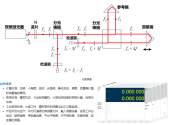
Facing intensified market competition, Fujian Crystal Technology has adopted an aggressive growth strategy for 2026, rejecting contraction in favor of integrating "crystals + optics + devices." The company aims to transition from a simple component supplier to a provider of complex optical adhesive components and system-level solutions. By stabilizing its core industrial nanosecond ultraviolet and fiber laser businesses, it is shifting focus toward high-value-added sectors that promise higher margins and technological depth in the manufacturing landscape.

The primary growth engines for this year are ultrafast lasers, including disk laser technology, and deep ultraviolet (266nm) lasers specifically designed for semiconductor manufacturing. These initiatives reflect a strategic evolution into critical high-end applications beyond traditional industrial processing. Simultaneously, the firm is expanding its footprint in the optical communication industry by developing diffraction gratings required for next-generation wavelength selective switches, which are vital components driving data center interconnection needs fueled by AI computing power.

A key driver of this transformation is Zhiqi Photonics, a subsidiary viewed as the company's vanguard in precision optics. Although specific output figures were not provided, management indicated a commitment to rapid growth aligned with order demand and development progress. This diversified approach positions Fujian Crystal Technology to build a deeper competitive moat, leveraging its expertise across multiple high-tech supply chains to secure a leading role in advanced manufacturing and communication infrastructure.

Please, Log in or Register to view URLs content!
 

tokenanalyst

Lieutenant General
Registered Member

Chongqing: By 2030, the intelligent computing power scale of the Chengdu-Chongqing computing power hub node will reach 100,000 petabytes.​


Recently, the Chongqing Municipal People's Government issued the "Action Plan for Promoting the Development Level of the Chengdu-Chongqing Twin-City Economic Circle in Chongqing (2026-2030)". The plan outlines efforts to promote the mutual empowerment of artificial intelligence and "Digital Chengdu-Chongqing", exploring the synergistic linkage of key elements such as computing power, data, application scenarios, and policy ecosystem between Sichuan and Chongqing to support the research, development, application, and industrialization of artificial intelligence technologies in the Chengdu-Chongqing region.

By 2030, the intelligent computing power of the Chengdu-Chongqing computing hub will reach 100,000 petabytes, the city will build more than 10 pilot bases for artificial intelligence industry applications, cultivate 20 large-scale vertical models and 5 major projects with national influence, and the daily meta-call volume will be among the highest in western China.
 

tokenanalyst

Lieutenant General
Registered Member

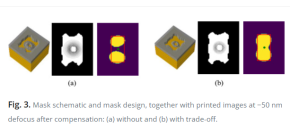
Three-dimensional absorber correction for EUV mask defect compensation​

Abstract​


Extreme ultraviolet multilayer defects induce both amplitude and phase effects, which significantly degrade defocused imaging quality. However, existing phase effects compensation approaches either require alteration of the multilayer structure, introduce additional phase-shifting materials, or impose constraints on pattern pitch. In this work, we propose a defect compensation method based on three-dimensional absorber correction that avoids all of these limitations and achieves substantially improved defocused imaging performance compared with existing techniques. Within this framework, the trade-off between three-dimensional and two-dimensional corrections is explored, while a multi-channel perception strategy is employed to enhance imaging performance. Simulation results demonstrate that the proposed method effectively compensates for defects of various types, sizes, and locations under both 0.33 NA and 0.55 NA conditions, and applies to diverse mask patterns.

1777908258433.png

Please, Log in or Register to view URLs content!
 

Randomuser

Major
Registered Member
This is one week old news but I haven't seen it posted so I thought I would post it here.

Please, Log in or Register to view URLs content!

Offenders sentenced up to 10 years for spying on TSMC​

LEAKING TRADE SECRETS: Chen Li-ming, who previously worked in a yield engineering unit at TSMC, joined Tokyo Electron Taiwan’s marketing division after leaving the chipmaker​


A former Taiwan Semiconductor Manufacturing Co (TSMC, 台積電) engineer has been sentenced to 10 years in prison for his role in leaking trade secrets involving the company’s advanced 2-nanometer process, a court ruled yesterday.

The Intellectual Property and Commercial Court found Chen Li-ming (陳力銘) guilty of contraventing the National Security Act (國家安全法), and of other offenses related to the unauthorized acquisition and the use of Taiwan’s “national core key technologies.”

The ruling can be appealed.

The case is the first involving a corporate entity under the National Security Act.

Two other TSMC engineers — Wu Ping-chun (吳秉駿) and Ko Yi-ping (戈一平) — were sentenced to three and two years in prison respectively, while another employee, Chen Wei-chieh (陳韋傑), received a six-year sentence.

A fourth defendant, Lu Yi-yin (盧怡尹), was given a 10-month suspended sentence and fined NT$1 million (US$31,779). She is an employee of Tokyo Electron Taiwan (東京威力), the company to which the TSMC trade secrets were leaked.

Tokyo Electron Taiwan, a TSMC equipment supplier, was fined NT$150 million, which could be suspended if it pays NT$100 million in compensation to TSMC and NT$50 million to the treasury, the ruling said.

Chen Li-ming, who previously worked in a yield engineering unit at TSMC’s Fab 12, joined Tokyo Electron Taiwan’s marketing division after leaving the chipmaker, prosecutors from the Intellectual Property Branch of the Taiwan High Prosecutors’ Office said.

Between the second half of 2023 and the first half of last year, Chen Li-ming repeatedly solicited confidential technical information from Wu and Ko, who were still employed at TSMC, in a bid to help Tokyo Electron secure more equipment supply positions for TSMC’s advanced process nodes.

The information, including trade secrets related to etching equipment used in 2-nanometer production, was photographed and reproduced to allow Tokyo Electron to evaluate and improve its equipment performance, prosecutors said.

TSMC reported the case to authorities on July 8 last year after detecting irregularities through an internal investigation, an earlier statement said.

Prosecutors conducted an investigation between July 25 and 28 last year, and obtained court approval to detain and hold Chen Li-ming, Wu and Ko incommunicado.

The three suspects were indicted in August last year on charges including theft of trade secrets and extraterritorial use of national core technologies. Prosecutors sought prison terms of 14 years, nine years and seven years for Chen Li-ming, Wu and Ko respectively.

Prosecutors later determined that Tokyo Electron Taiwan failed to exercise adequate supervision over Chen Li-ming and did not take sufficient measures to prevent breaches of the law, and pursued corporate criminal liability under the National Security Act, seeking a fine of NT$120 million against the company.

Investigators also found that the company’s cloud storage still contained TSMC’s trade secrets, including chip manufacturing technologies below the 14-nanometer node, and related equipment and chemical processes.

Tokyo Electron, Japan’s largest semiconductor equipment maker and TSMC’s major Japanese supplier, in a statement issued after the indictments last year said that it had found no evidence that TSMC’s 2-nanometer technology had been leaked to third parties, adding that it does not tolerate contraventions of the law or ethical standards.

TSMC has said it maintains a zero-tolerance policy toward trade secret violations and pledged to strengthen internal controls to safeguard its technological advantage.

Additional charges were filed in January against Chen Li-ming, Chen Wei-chieh, Tokyo Electron Taiwan and Lu, who was accused of destroying evidence.

I haven't heard much of it or maybe I was out of the loop. We know Japan's Rapidus wants to get the 2nm process which makes it a threat to TSMC. This is the first time a corporation has been dealt with under Taiwan's national security act. Not China but Japan. This might affect relations given how a lot of people think Japan and Taiwan are really close.
 

meedicx

Junior Member
Registered Member
This is one week old news but I haven't seen it posted so I thought I would post it here.

Please, Log in or Register to view URLs content!


I haven't heard much of it or maybe I was out of the loop. We know Japan's Rapidus wants to get the 2nm process which makes it a threat to TSMC. This is the first time a corporation has been dealt with under Taiwan's national security act. Not China but Japan. This might affect relations given how a lot of people think Japan and Taiwan are really close.

Musk is apparently poaching TSMC employees aggressively for his "Terafab" project. I wonder if Taiwan would have the courage to charge a US company
 

tokenanalyst

Lieutenant General
Registered Member

Accelerating the large-scale production of RPP chips! Core Power industrialization project lands in Hefei.​

On the 4th China (Anhui) Science and Technology Innovation Achievement Transformation Fair opened at the Hefei Binhu International Convention and Exhibition Center. At the fair, Zhuhai Core Power Technology Co., Ltd. (hereinafter referred to as "Core Power") and Anhui Artificial Intelligence Industry Investment and Development Co., Ltd., a subsidiary of Hefei Industrial Investment Holding Group, officially signed an agreement on the "Reconfigurable Parallel Processor Chip R&D and Industrialization Project" .
According to official news from ChipPower, this signed project represents eight years of technological exploration and accumulation by the ChipPower team. Facing the surging wave of the AI era, ChipPower has established a new product strategy: no longer limited to the edge, but aiming at the complete AI inference market from cloud to edge, adhering to the core proposition of "computing power equality," and committed to providing the world with high-performance, low-power AI computing power through disruptive technologies.

The decision by ChipPower to locate its industrialization project in Hefei represents a precise alignment between scientific and technological innovation and the industrial ecosystem. Through this collaboration, ChipPower will leverage Hefei's industrial capital, supply chain support, and talent advantages to accelerate the large-scale production of RPP chips . This will not only enable domestically developed computing power technology to serve the market more quickly but will also fill the gap in Hefei's edge AI general-purpose computing power sector, helping Hefei build a world-class integrated circuit industry hub.

As introduced, the industry has long been hampered by an invisible barrier: the high power consumption and cost of general-purpose GPUs, while dedicated NPUs sacrifice versatility for energy efficiency. To break through this barrier, ChipPower has spent eight years independently developing the Reconfigurable Parallel Processor Architecture (RPP) . ChipPower recognized the decisive value of reconfigurable, near-memory computing, and large-capacity SRAM technologies in AI inference and was the first to complete the entire process from R&D to commercialization. Now, as industry giants turn to HBF as their core inference technology, ChipPower has proactively secured core HBF patents, maintaining a first-mover advantage in technological iteration.

Please, Log in or Register to view URLs content!
 
Top