Chinese semiconductor thread II

tokenanalyst

Lieutenant General
Registered Member

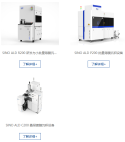
Changsha EFORS Technology Co shipped the MRF300B magnetorheological polishing machine and IFS1000-600B ion beam polishing machine for high end ultraprecise optical components manufacturing.​


The ÅFiSy MRF300B magnetorheological polishing machine developed by ÅFiSy Technology adopts a high-precision marble bed, has 6-axis 6-linkage function, and can process workpieces with a maximum size of 300mm×300mm or Φ300mm. It has the ability to process optical parts such as planes, spheres, aspherical surfaces, and cylindrical surfaces, and has the advantages of high rigidity, high precision, high dynamic characteristics, powerful functions, and convenient and intelligent operation.
1775236163976.png
ÅFiSy IFS1000-600B ion beam polishing machine from Changsha ÅFiSy Technology Co., Ltd. features 4-axis, 3-linkage operation and can process workpieces up to 1000×650mm or Φ650mm in size. It is capable of processing optical components such as planar, spherical, aspherical, off-axis, and freeform surfaces.

This ion beam polishing machine mainly consists of a vacuum system, a motion system, an ion source system, electrical control, and software. The vacuum system comprises a main vacuum chamber, a secondary vacuum chamber, a gate valve connecting the two chambers, and corresponding vacuum pump units. The motion system consists of an XYZ motion mechanism and a Z2 motion mechanism. The ion source is mounted on the XYZ motion mechanism in the main vacuum chamber, and high-precision motion control of the ion source can be achieved through a CNC system.

1775236376848.png

Please, Log in or Register to view URLs content!
 

tphuang

General
Staff member
Super Moderator
VIP Professional
Registered Member
Samsung and Hynix are giving market share to China due to production cuts

Chinese chipmaker's market share
DRAM 1% (2025) -> 11% (2026) -> 14% (2027) (YOLE Group Outlook)
NAND 4% (2025) -> 12% (2026) -> 16% (2027)
this is clearly wrong, at least the 2025 figures. YMTC was over 10% for NAND and CXMT was over 5% for DRAM.
 

tokenanalyst

Lieutenant General
Registered Member

Huachuang Hongdu, a specialized and innovative "little giant" company, has completed its Series C financing round, which will be used for the establishment of its TGV production line and factory construction.​


Anhui Huachuang Hongdu Optoelectronic Technology Co., Ltd., a national "little giant" specializing in high-reliability solid-state laser technologies, has successfully completed its Series C financing round, led by Haiwang Capital. The raised funds will be primarily allocated to establishing a new TGV production line and factory construction, aiming to expand manufacturing capacity and accelerate the industrialization of its core ultrafast laser technologies.

The company has mastered "ultra-high gain slab-type integrated amplification technology," enabling mass production of 100–300W high-power industrial-grade femtosecond and picosecond lasers. This achievement helps break overseas monopolies in critical sectors like semiconductor wafer cutting, photovoltaics, and flexible screen etching. Huachuang Hongdu provides full-chain laser solutions (from light source to application) for industries including semiconductors, consumer electronics, new energy, and precision instruments. Their modular designs offer customized high-performance solutions that fill significant gaps in China's domestic supply chain.

Having completed five rounds of financing since its 2019 founding (with Haiwang Capital investing again in this round), the company demonstrates strong market confidence in its ability to overcome technological bottlenecks and drive manufacturing upgrades. With over 80% of employees dedicated to research, the team includes more than 70% experts from top institutions such as USTC (University of Science and Technology of China), CAS, Huawei, and Han's Laser, ensuring sustained innovation capabilities.

Founded by physicist Shu Qingbang, Huachuang Hongdu is positioned as a strategic player in China's push toward intelligent, precise, and green manufacturing, targeting the replacement of imported high-power laser equipment with domestic solutions.

Please, Log in or Register to view URLs content!
 

tokenanalyst

Lieutenant General
Registered Member

With a total investment of 1 billion yuan, Zhongke Green Cloud Semiconductor's diamond MPCVD project has been signed and settled in Ordos.​


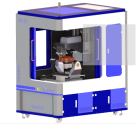
According to Zhongke Green Cloud, in 2026, Zhongke Green Cloud (Guangdong) Energy Management Co., Ltd. and the People's Government of Etuoke Banner officially signed a cooperation agreement, and a semiconductor diamond MPCVD project with a total investment of 1 billion yuan was established in the Shanghai Temple Economic Development Zone of Ordos. This signing is a milestone for both parties to deepen strategic cooperation and lay out their plans in the high-end semiconductor new materials field.

The newly launched semiconductor diamond MPCVD project focuses on ultra-wide bandgap semiconductor materials, a national strategic emerging industry. These materials are core materials used in high-end chips, new energy vehicles, aerospace, and power devices, and are hailed as the "ultimate semiconductor material."

Project core information:
Total investment: 1 billion yuan
Planned output value: 1.5 billion yuan
Land area: Approximately 80 mu
Construction period: 12 months
Technical approach: Employing advanced MPCVD (microwave plasma chemical vapor deposition) technology to produce high-purity, large-size semiconductor-grade diamond materials.

Upon completion, the project will integrate core equipment R&D, material production, terminal applications, and technical services, filling the industrial gap in the semiconductor diamond field in Etuoke Banner, creating a leading regional semiconductor new material R&D and manufacturing base, helping to break through the "bottleneck" links in high-end materials, and enhancing the independent controllability of the industrial chain.

It is reported that at the signing ceremony, relevant leaders from Etuoke Banner, heads of the Shanghai Temple Economic Development Zone Management Committee and its functional departments, Li Heng, Chairman of Zhongke Green Cloud, along with his core management team, and representatives from partner companies such as Beijing Pinzhi Youcai Technology and Inner Mongolia Yongyao Energy, attended to witness this important moment. Based on the principles of complementary advantages, resource sharing, mutual benefit, and long-term stability, both parties formally established a comprehensive strategic cooperative relationship to jointly promote the rapid implementation, construction, and production of the project.

Please, Log in or Register to view URLs content!
 

tokenanalyst

Lieutenant General
Registered Member

Nexperia China is close to achieving 100% domestic semiconductor production.​


Nexperia's Chinese subsidiary is approaching a milestone of 100% domestic semiconductor production, aiming to fully localize its chip manufacturing by the second half of 2026. This strategic shift comes as a direct response to supply chain disruptions triggered by a geopolitical standoff between Nexperia's Dutch headquarters and its China-controlled parent company. Since last October, when Chinese export controls were imposed and wafer supplies from Europe were cut off, Nexperia China has been forced to pivot entirely toward using locally produced silicon wafers to maintain operations.

To circumvent these restrictions, Nexperia China has already begun manufacturing various chips using domestically sourced 12-inch wafers in its Dongguan packaging plant and Shanghai wafer facility, a move that contrasts with the Dutch parent's reliance on less advanced German 8-inch wafers. At a recent event in Beijing, company representatives confirmed they have transitioned from global to local supply chains, assuring customers that locally made chips will meet stringent quality standards. Despite this progress, current capacity remains around 60% to 70%, with plans to restore output to 90% by the second quarter of this year through a combination of inventory management and alternative domestic suppliers.

The conflict between the two entities stems from last September when the Dutch government invoked Cold War-era laws regarding state-owned enterprises, leading to administrative overreach that disrupted Nexperia China's access to office systems and internal communications. While the Dutch headquarters has historically sought dialogue to restore normal supply flows, these attempts have reportedly failed due to a lack of constructive engagement with Chinese management. As the situation evolves, Nexperia China is solidifying its Dongguan and Shanghai factories as primary production bases, ensuring that critical automotive, industrial, and consumer electronics components remain available within China despite the ongoing international friction.

Please, Log in or Register to view URLs content!
 

tokenanalyst

Lieutenant General
Registered Member

Yiwen Technology initiates IPO preparation, increasing investment in independent equipment R&D​


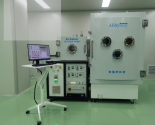
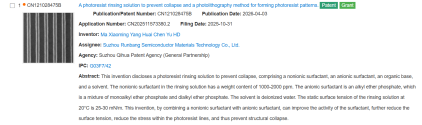
Wuxi Yiwen Microelectronics Technology Co., Ltd. has officially initiated its preparation for an IPO on China's A-share market, marking a significant milestone in its transition from equipment refurbishment to becoming an independent semiconductor manufacturer.

On April 2, 2026, the company confirmed it began listing guidance work with two joint underwriters: Ping An Securities and Guolian Minsheng Securities. Founded in 2011 by controlling shareholder Liao Haitao, Yiwen Technology has evolved from refurbishing equipment to developing proprietary semiconductor front-end process equipment. It is recognized as a "national-level specialized small giant" and was added to the Jiangsu Unicorn Enterprise List in September 2024.

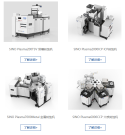
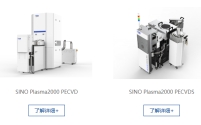
Headquartered in Wuxi, the company boasts high-standard facilities including a Class 1,000 cleanroom (3,000 sqm) and an 8,000 sqm assembly workshop. It holds full independent intellectual property rights for core technologies such as dry etching, CVD deposition, resist stripping, and ALD. Yiwen Technology supplies major domestic clients including BYD Semiconductor, Silan Microelectronics, and the Chinese Academy of Sciences. Its products are critical for compound semiconductors (SiC, GaN) and MEMS processes.
1775491721756.png1775491748073.png
1775491774791.png
In short, this news confirms that one of China's leading semiconductor equipment innovators is now moving forward with its public listing to raise capital for further growth.

Please, Log in or Register to view URLs content!
 

tokenanalyst

Lieutenant General
Registered Member

The team led by Hu Yizhe at the University of Science and Technology of China proposed a novel ADC architecture, breaking through the bottleneck of high-speed applications.​


Professor Hu Yizhe's research team at the University of Science and Technology of China (USTC) has achieved a major breakthrough in designing high-speed Analog-to-Digital Converters (ADCs), overcoming a long-standing bottleneck that limited such devices to sub-GHz speeds. By proposing a novel architecture based on a resettable ring voltage-controlled oscillator (R-RVCO), the researchers developed an ADC capable of reaching sampling rates up to 2.5 GS/s. This achievement surpasses previous limitations, effectively enabling GHz-level bandwidth signal processing which is critical for advancing AI computing, ultra-high-speed wireless communications, and wired interconnect technologies.

The core innovation lies in a newly proposed discrete-time open-loop R-RVCO structure that addresses the phase noise accumulation and quantization noise issues inherent in traditional VCO-based designs.
The team introduced differential transmission characteristics within the oscillator to suppress phase noise without needing an additional differentiator, while simultaneously avoiding quantization noise shaping within the Nyquist band to improve signal quality by approximately 3dB. Furthermore, the design eliminates the need for a digital differential module and employs adaptive reset techniques and dynamic switching buffers, resulting in a more robust system that is less susceptible to trigger metastability and requires less hardware overhead.

Implemented using a compact 22nm CMOS process with a core area of merely 0.0022 mm², this chip demonstrates exceptional performance efficiency. It supports adjustable sampling rates ranging from 500 MS/s to 2.5 GS/s; notably, at a speed of 2 GS/s, it achieves a signal-to-noise ratio (SNDR) of 39.1 dB with an impressive power efficiency index (Walden FoM) of just 31.3 fJ per conversion step. Published in the prestigious IEEE Journal of Solid-State Circuits, this work provides a promising new pathway for creating future high-speed, low-power chips essential for next-generation communication and radar detection systems.

Please, Log in or Register to view URLs content!
 
Top