After a decade of dedicated development, Zhixin has completed its Pre-A round of financing, accelerating the large-scale application of MEMS micromirror arrays in the field of optical interconnects for AI data centers.
Suzhou Zhixin Sensing Technology has successfully completed its Pre-A round of financing, attracting investors such as iFlytek Venture Capital and Suzhou Venture Capital. The capital raised will be strategically directed toward expanding production capacity for MEMS micromirror arrays, advancing next-generation research, and strengthening the company's market dominance in critical optical interconnect components for AI data centers.
Driven by surging demands from AI and cloud computing, traditional electrical switching architectures are facing significant bottlenecks regarding bandwidth, power consumption, and latency. In response, Optical Connectivity Systems (OCS) utilizing MEMS micromirror arrays have emerged as the industry-standard solution. These devices offer superior performance with millisecond response speeds, low insertion loss below 1dB, and high integration, making them ideal for building efficient, flexible optical networks in modern data centers.
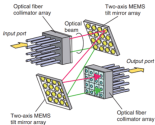

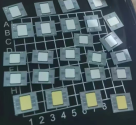
Zhixin has pioneered domestic mass production of these components, achieving a stable yield over 90% at significantly lower costs than imported alternatives due to robust supply chain control. Currently supplying leading industry customers, the company's existing 300×300 and 320×320 mirror specifications meet current medium-to-large data center needs. Looking ahead, Zhixin plans to scale up to 1024×1024 ports to handle the massive routing demands of future intelligent computing centers while maintaining an energy efficiency advantage of approximately 40% over traditional electrical solutions by enabling direct optical signal routing.
As the global OCS market is projected to exceed $10 billion by 2030, Zhixin is positioned to capitalize on a crucial development window driven by domestic infrastructure expansion and supply chain self-sufficiency initiatives. By continuing to invest heavily in R&D and deepening industry collaborations, the company aims not only to secure its role as a core component supplier but also to promote the global transition toward more efficient, green, and intelligent optical network infrastructures.