Chinese semiconductor thread II

tokenanalyst

Lieutenant General
Registered Member

The Advancement Path of ChipHuazhang's Domestic EDA Technology​

In 2026, the global semiconductor industry is undergoing an unprecedented "logic explosion," with the AI infrastructure market reaching a trillion dollars in size. Industry competition is shifting from a simple infighting over chip-level "computing power density" to a struggle for certainty in the value chain.

In the era of trillions of transistors, chip design complexity has increased exponentially, while the efficiency of traditional design verification tools has only maintained linear growth. The huge gap between the two is becoming a "black hole" swallowing up chip manufacturers' R&D costs and time to market. Against this backdrop, in the past two years, Chinese EDA company Xinhuazhang has completed its transformation from a traditional chip tool vendor to a system-level productivity engine in the AI era through technological innovation and organizational restructuring.

In response to industry pain points, Xinhuazhang proposed the "EDA 2.0" concept , which breaks away from the traditional positioning of EDA as an isolated link in the chip industry. It reconstructs the system-level design and verification process from the bottom up, promotes the industry's evolution from AI-Driven to Agentic AI , and enables tools to have the ability of intelligent agents with autonomous reasoning and automatic debugging. It realizes the collaborative verification of hardware logic and software before tape-out, which meets the demand of the trillion-dollar AI infrastructure market for the efficiency of whole system-level convergence .

In terms of core technology breakthroughs, Xinhuazhang has deeply applied large language models to the field of formal verification. The intelligent SVA generation tool, jointly developed with leading clients such as ZTE Microelectronics , can automate three layers of verification: syntax, functionality, and quality, thus reconstructing the digital verification production relationship. In an AI inference chip project for a leading internet client, this tool compressed the original three-month verification cycle to three weeks , transforming formal verification from a capability exclusive to senior experts into a standard feature of general development, thereby achieving widespread access to industrial productivity.

On the hardware side, Xinhuazhang also delivered impressive results. In 2025, its hardware emulator shipments exceeded 100 units, achieving large-scale mass production deployment. Furthermore, in the field of intelligent computing chips, it completed a large-scale cascaded deployment of over 40 hardware emulators, setting a record for the scale of domestic hardware simulation systems.
This solved the latency and synchronization problems of ultra-large-scale data interaction, verified the stability and deployment capability of domestic equipment in large-scale computing chip verification, and laid a solid verification foundation for AI infrastructure construction .
Please, Log in or Register to view URLs content!
 

tokenanalyst

Lieutenant General
Registered Member

The use of domestic chips among domestic OEMs keep increasing.​

Vivo flagship phone is using Huizhi Micro RF chips.​


The n79 band is a key band for 5G/5G-A communication. Its bandwidth is several times or even tens of times that of other commonly used bands. Especially in densely populated areas such as concerts and high-speed rail stations, the difference in experience between using and not using the n79 band is very obvious.

However, due to the additional area and cost required to integrate this frequency band, only a few flagship phones previously supported it. This time, vivo has brought the communication capabilities of its Ultra flagship series down to the X standard flagship version for the first time, demonstrating that vivo is striving to meet the highest specifications in communication details to improve the user experience.

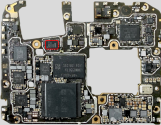
The reason vivo was able to integrate more communication bands into the X300s without sacrificing battery capacity is due to the use of a miniaturized, highly integrated RF front-end module that supports 5G/5G-A n79 bands. Developed by Huizhi Micro, a leading domestic RF front-end chip supplier, this module is 40% to 50% smaller than previous solutions. This allows the X300s to achieve flagship-level communication capabilities within a limited body space, while also leaving more room for improved battery life and performance.
1775765917123.png
It was this chip that enabled the X300s to be the first to bring Ultra-flagship-level communication capabilities to the standard version of flagship phones—and what it unlocked was far more than just an upgrade in the user experience of a single phone; it was also the beginning of breaking the long-standing "n79 deadlock" that had plagued the industry.

Please, Log in or Register to view URLs content!
 

tokenanalyst

Lieutenant General
Registered Member

RoboSense sold 330,300 LiDAR units in Q1, with 144,800 units in the ADAS (Advanced Driver Assistance Systems) sector.​

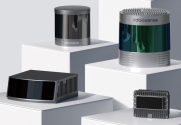
On April 8, RoboSense issued a voluntary announcement stating that in the first quarter of 2026, the Group continued to expand its business scope, with total sales of LiDAR products reaching approximately 330,300 units; of which approximately 144,800 units were LiDAR products used in ADAS applications, and approximately 185,500 units were LiDAR products used in robotics and other fields.
1775766206904.png
On the evening of February 19th this year, RoboSense released a profit forecast, expecting to achieve its first quarterly profit in the fourth quarter of 2025, with a profit of no less than RMB 60 million. This performance "significantly exceeded the management's previous break-even expectation, marking a new stage in the company's operations."

Looking at the full year, RoboSense expects its net loss attributable to shareholders for fiscal year 2025 to narrow significantly to no more than RMB 180 million from RMB 481.8 million in fiscal year 2024, a decrease of more than 60%. The company stated that the improved performance was mainly due to a significant increase in product sales and optimization of the business structure, as well as net gains from financial assets measured at fair value in profit or loss.

Please, Log in or Register to view URLs content!
 

tokenanalyst

Lieutenant General
Registered Member

Bopu Semiconductor completes hundreds of millions of yuan in Series A financing; it is a domestic silicon photonics OCS company.​


POP Semiconductor, a Shanghai-based silicon photonics firm founded in 2022, has successfully completed a Series A financing round worth hundreds of millions of RMB, led by Shanghai Guohe Investment. The capital will fuel the iterative upgrade and mass production of its silicon photonics Optical Cross-Connect (OCS) products, accelerate R&D for high-end chips, and support global market expansion. Distinguished by its full-stack capabilities spanning chip design, wafer manufacturing, advanced packaging, and system solutions, the company’s experienced team has mastered critical technologies such as CPO optoelectronic co-packaging and chiplet heterogeneous integration, achieving stable mass production and filling significant gaps in domestic independent control over computing infrastructure.

The company’s core innovation lies in its pure optical switching solution, which offers microsecond-level switching, electrical layer-free forwarding, high bandwidth, and low power consumption while remaining compatible with existing data center architectures.
With its 8×8 and 16×16 OCS products already commercially delivered and technically verified at international exhibitions, POP Semiconductor is well-positioned to enhance transmission efficiency and reduce energy consumption in AI computing networks. Looking ahead, the company plans to develop larger-scale 32×32 and 64×64 port products, further expanding its footprint in high-performance sectors such as AI computing power, supercomputing centers, and scientific research facilities.

1775766680754.png

Please, Log in or Register to view URLs content!
 

tokenanalyst

Lieutenant General
Registered Member

A project to invest 10.1 billion yuan in high-end printed circuit boards for AI chips from Hushi Electronics was signed.​

According to Suzhou Daily, on April 6th, the Hushi Electronics AI chip-supporting high-end printed circuit board (PCB) project was officially signed in Kunshan, Suzhou. The project has a total investment of 10.1 billion yuan and will be constructed in two phases. Phase one, with a total investment of approximately 3.3 billion yuan, mainly involves the construction of production plants and the purchase of equipment, focusing on the research and development and production of high-end PCBs for AI chips. Phase two, with a total investment of approximately 6.8 billion yuan, will further expand production scale and upgrade technology, aiming to build a world-leading high-end PCB production base in Kunshan. Upon reaching full production capacity, the project is expected to generate approximately 15 billion yuan more in annual output value compared to 2025, with products applied to cutting-edge applications such as high-performance computing and AI servers.
.
Please, Log in or Register to view URLs content!
 

tokenanalyst

Lieutenant General
Registered Member

Kexin Semiconductor’s Silicon Carbide Project in Sichuan Nears Completion, Set for June 2026 Delivery​

The Kexin Semiconductor Equipment Manufacturing Industrial Park, located in Liangshan High-tech Industrial Park (Sichuan), has entered its final construction phase and is expected to be delivered in June 2026.​
  • Covers 40.01 mu (~2.67 hectares) with a construction area of ~19,933 sqm.​
  • Includes the installation of 390 sets of production equipment.​
  • Annual Capacity: 500 sets of SiC semiconductor supporting equipment/devices, 50,000 SiC component products, and 50,000 SiC AR lens substrates.​
The project focus on Silicon Carbide (SiC), a core material for third-generation semiconductors used in EVs, photovoltaics, 5G, and AR/VR. Aims to fill gaps in China’s domestic SiC industry chain and enhance international competitiveness. The production of SiC AR lens substrates is highlighted as a key contribution to emerging fields like AR glasses and satellite communications.

Operated by Kexin Semiconductor Technology (Liangshan Prefecture) Co., Ltd., a subsidiary of Kexin Zhigu (Beijing) Technology Co., Ltd. Collaborates with major research institutions such as CETC’s Second Research Institute and the China Electronics Engineering Design Institute. The park will be built in two phases, ultimately creating an integrated hub for R&D, production, component processing, and sales of SiC components and equipment.

Please, Log in or Register to view URLs content!
 

tokenanalyst

Lieutenant General
Registered Member

Onray Microelectronics' 5G RF front-end has passed automotive-grade certification, providing reliable assurance for communication in intelligent connected vehicles.​

Beijing Onray Microelectronics Technology Co., Ltd. (hereinafter referred to as "Onray") announced that several of its 5G automotive-grade RF front-end modules have successfully passed the AEC-Q100 Grade 2 test, and have been certified by certification bodies such as the Fifth Research Institute of the Ministry of Industry and Information Technology. This certification signifies that the relevant products have met the requirements of automotive-grade standards and can be applied to intelligent connected vehicle communication scenarios.

The AEC-Q100 Grade 2 certification covers dozens of rigorous verifications across seven categories, including functionality, electrical performance, lifespan, application environment, and mechanical reliability. All items must be passed. Products that passed the tests include GSM PAs, MMMB PAs, Sub6G L-PAMiFs, LNA Banks, and Sub6G LFEMs. These modules cover the relevant frequency bands for automotive 5G communication modules and support a wide temperature range of -40°C to 105°C, exhibiting automotive-grade reliability.

In addition to RF front-end products, Onray Microelectronics is also continuously expanding into automotive-grade communication standards such as C-V2X and Bluetooth, as well as intelligent vehicle applications such as digital keys and tire pressure monitoring.

Please, Log in or Register to view URLs content!
 

tokenanalyst

Lieutenant General
Registered Member

JCET Group released its 2025 annual report: annual revenue hit a record high, and total profit increased year-on-year.​

JCET Group reported record-breaking financial results for 2025, with annual revenue reaching RMB 38.87 billion (an 8.1% year-on-year increase) and total profit rising 5.4% to RMB 1.74 billion. This marks the company’s third consecutive year of growth since 2023, driven by steady operations and high capacity utilization across its domestic and international factories, particularly in advanced packaging which generated a historical high of RMB 27 billion in revenue. Although forward-looking investments and raw material price fluctuations temporarily pressured costs, profitability improved quarter-by-quarter, culminating in a strong fourth quarter where net profit attributable to shareholders surged 26.6% quarter-on-quarter to RMB 610 million.

Strategically, JCET Group deepened its involvement in high-growth sectors such as high-performance computing, automotive electronics, and storage, seeing significant revenue increases of 42.6%, 31.7%, and 40.6% respectively in key application areas. The company ramped up R&D spending by 21.4% to RMB 2.09 billion, focusing on cutting-edge technologies like glass substrates and high-density heterogeneous integration, while also expanding production capabilities through new facilities in Shanghai and Jiangyin. Looking ahead to 2026, CEO Zheng Li emphasized the company’s commitment to seizing opportunities in embodied intelligence and high-performance computing, aiming to accelerate the translation of technological breakthroughs into mass production to solidify long-term competitiveness.​

Please, Log in or Register to view URLs content!
 

tokenanalyst

Lieutenant General
Registered Member

Huatai Gas's revenue reached 1.419 billion yuan in 2025, with the number of import substitution products increasing to 57.​


Huatai Gas reported a total operating revenue of RMB 1.419 billion for 2025, representing a 1.7% year-on-year increase, despite facing industry-wide challenges such as declining prices and increased production capacity. While net profit attributable to shareholders decreased by 26.75% to approximately RMB 135 million due to pressure from traditional fluorocarbon price drops, temporary hydride demand fluctuations, and convertible bond interest accruals, the company successfully optimized its profit structure. Notably, the gross profit margin in the semiconductor application sector rose by about 1.04%, driven by the commercialization of high-margin new products and stable supply capabilities. To reward investors, the company announced a cash dividend of RMB 5.0 per 10 shares.

As a leader in China’s electronic specialty gases sector, Huatai Gas significantly advanced its import substitution efforts, increasing its portfolio of substitute products from 22 at launch to 57 in 2025. More than 20 of these products are now used in 14nm and 7nm advanced process lines, with some reaching 5nm cutting-edge processes, covering over 90% of domestic 8-inch and 12-inch integrated circuit manufacturers. The company capitalized on the structural recovery in the semiconductor industry, particularly the demand surge from AI and data centers, while strengthening its R&D capabilities through the acquisition of Hebi Derui Technology. This move enhanced its integrated production of high-end fluorinated gases, resulting in 270 authorized patents and successful sales orders for new materials like silane and hydrogen bromide.

Strategically, Huatai Gas is pursuing a globalization strategy that combines deep domestic cultivation with overseas expansion, steadily growing its international customer base, including five semiconductor clients in Singapore. To support this growth and ensure supply chain security, the company has optimized its production layout with projects in Jiangxi and Jiangsu, including a 1,764-ton-per-year semiconductor materials project, and improved logistics to achieve one-day delivery within a 200-kilometer radius. Looking forward, Huatai Gas remains committed to the localization of core semiconductor materials, aiming to enhance self-reliance in the industry chain through continued R&D investment and market expansion.​

Please, Log in or Register to view URLs content!
 

tokenanalyst

Lieutenant General
Registered Member

Study on debris contamination characteristics and control methods of DPP-type EUV light source.​

Abstract​

As a key technology for advanced semiconductor manufacturing, extreme ultraviolet lithography (EUVL) requires high exposure power to achieve high productivity and low cost. Nevertheless, debris-induced contamination and degradation of EUV optics remain a major limitation for lithography efficiency and system stability, especially in discharge-produced plasma (DPP) EUV sources. In this work, we realized the effectiveness of in-situ monitoring and control of debris contamination associated with DPP sources. First, we analyze the material characteristics and deposition behavior of debris through in-situ collection and characterization experiments. By varying exposure conditions, we identify key parameters that influence debris deposition. Furthermore, we evaluate the effectiveness and limitations of cleaning debris with operando-compatible argon (Ar) plasma. Finally, we design a debris mitigation (DM) unit that integrates vacuum differential and debris inhibition functions for the DPP system. This work offers practical strategies to mitigate debris in DPP EUV sources, which is crucial for enhancing their power scalability and operational stability in advanced lithography systems.​

Please, Log in or Register to view URLs content!
 
Top