Chinese semiconductor thread II

tokenanalyst

Lieutenant General
Registered Member

Inverse Lithography Technology (ILT) Under Chip Manufacture Context​

AMEDAC.
CAS.

Abstract​

As semiconductor process nodes shrink to 3 nm and beyond, traditional optical proximity correction (OPC) and resolution enhancement technologies (RETs) can no longer meet the high patterning precision needs of advanced chip manufacturing due to the sub-wavelength lithography limits. Inverse lithography technology (ILT), a key part of computational lithography, has become a critical solution for these issues. From an EDA industry perspective, this review provides an original and systematic summary of ILT’s development and applications, which helps integrate the scattered research into a clear framework for both academic and industrial use. Compared with traditional OPC, the latest ILT has three main advantages: (1) better patterning accuracy, as a result of the precise optical models that fix complex optical issues (like diffraction and interference) in advanced lithography systems; (2) a wider process window, as it optimizes mask designs by working backwards from the target wafer patterns, making lithography more stable against process changes; and (3) stronger adaptability to new lithography scenarios, such as High-NA EUV and extended DUV nodes. This review first explains ILT’s working principles (the basic concepts, mathematical formulae, and main methods like level-set and pixelated approaches) and its development history, highlighting key events that boosted its progress. It then analyzes ILT’s current application status in the industry (such as hotspot fixing, full-chip trials, and EUV-era use) and its main bottlenecks: a high computational complexity leading to long runtime, difficulties in mask manufacturing, challenges in model calibration, and a conservative market that slows large-scale adoption. Finally, it discusses promising future directions, including hybrid ILT-OPC-SMO strategies, improving model accuracy, AI/ML-driven design, GPU acceleration, multi-beam mask writer improvements, and open-source data to solve data shortage problems. By combining the latest research and industry practices, this review fills the gap of comprehensive ILT summaries that cover the principles, progress, applications, and prospects. It helps readers fully understand ILT’s technical landscape and offers practical insights for solving the key challenges, thus promoting ILT’s industrial use in advanced chip manufacturing.​

Please, Log in or Register to view URLs content!
 

tokenanalyst

Lieutenant General
Registered Member

A 3D NAND-based in-memory computing architecture and its system technology co-optimization simulation​

Abstract​

The rapid advancement of large language models (LLM) such as ChatGPT has imposed unprecedented demands on hardware in terms of computational power, memory capacity, and energy efficiency. Compute-in-memory (CIM) technology, which integrates computing directly into memory arrays, has become a promising solution that can overcome the data movement bottlenecks of traditional von Neumann architectures, significantly reduce power consumption and achieve large-scale parallel processing. Among various non-volatile memory candidates, 3D NAND flash stands out due to its mature manufacturing process, ultrahigh density, and cost-effectiveness, making it a strong contender for commercial CIM deployment and local inference of large models.
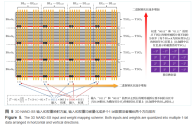
Despite these advantages, most of existing researches on 3D NAND-based CIM remain at an academic level, focusing on theoretical designs or small-scale prototypes, with little attention paid to system-level architecture design and functional validation using product-grade 3D NAND chips for LLM applications. To address this gap, we propose a novel CIM architecture based on 3D NAND flash, which utilizes a source line (SL) slicing technique to partition the array and perform parallel computation at minimal manufacturing cost. This architecture is complemented by an efficient mapping algorithm and pipelined dataflow, enabling system-level simulation and rapid industrial iteration.
We develop a PyTorch-based behavioral simulator for LLM inference on the proposed hardware, evaluating the influences of current distribution and quantization on system performance. Our design supports INT4/INT8 quantization and employs dynamic weight storage logic to minimize voltage switching overhead, and is further optimized through hierarchical pipelining to maximize throughput under hardware constraints.
Simulation results show that our simulation-grade 3D NAND compute-in-memory chip reaches generation speeds of 20 tokens/s with an energy efficiency of 5.93 TOPS/W on GPT-2-124M and 8.5 tokens/s with 7.17 TOPS/W on GPT-2-355M, respectively, while maintaining system-level reliability for open-state current distributions with σ < 2.5 nA; in INT8 mode, quantization error is the dominant accuracy bottleneck.
Compared with previous CIM solutions, our architecture supports larger model loads, higher computational precision, and significantly reduced power consumption, as evidenced by comprehensive benchmarking. The SL slicing technique keeps array wastage below 3%, while hybrid wafer-bonding integrates high-density ADC/TIA circuits to improve hardware resource utilization.
This work represents the first system-level simulation of LLM inference on product-grade 3D NAND CIM hardware, providing a standardized and scalable reference for future commercialization. The complete simulation framework is released on GitHub to facilitate further research and development. Future work will focus on device-level optimization of 3D NAND and iterative improvements of the simulator algorithm.​

1768591675344.png

Please, Log in or Register to view URLs content!
 

tokenanalyst

Lieutenant General
Registered Member

A domestic manufacturer of memory chip testing equipment has completed a nearly 100 million yuan Series B financing round!​


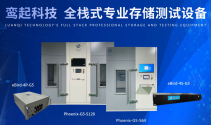
Luanqi Technology (Suzhou) Co., Ltd., a domestic manufacturer of memory chip testing equipment, has successfully completed a Series B financing round of nearly RMB 100 million, led by CAS Star, with follow-on investments from Hetang Capital and Yixin Capital. The funds will be used to expand production, boost R&D, and develop new product lines.

Founded in 2022, Luanqi Technology boasts a core team with over 10 years of experience at global semiconductor leaders such as AMD, Samsung, Huawei, and ZTE. The company specializes in NAND Flash-based storage testing technology, addressing the critical shortage of high-end domestic storage chip testing equipment.
1768599598413.png

It offers end-to-end testing solutions for SSDs, UFS, and NAND chips across R&D, production, and product introduction stages making it the only domestic provider covering all stages of semiconductor storage testing. Its products are already adopted by leading domestic and international players in storage, server, data center, and new energy vehicle sectors.

Please, Log in or Register to view URLs content!
 

tokenanalyst

Lieutenant General
Registered Member

Shanghai Science and Technology Innovation Board invests 692 million yuan in GELUN Electronics, marking a key leap forward for the domestic EDA ecosystem.​


Shanghai Science and Technology Innovation Group (SSEITC), a state-owned investment arm of Shanghai SDIC, has invested 692 million yuan in GELUN Electronics, acquiring a 5% stake at 31.80 yuan per share. This strategic move marks a significant boost for China’s domestic EDA ecosystem and signals strong institutional confidence in the company's long-term potential.

The investment deepens an existing strategic partnership established in July 2025 between GELUN Electronics and Shanghai SDIC, aimed at integrating resources to build a self-reliant semiconductor design platform. SSEITC’s participation through its extensive experience in tech innovation and industrial synergy provides both financial support and credibility, enhancing governance and stability as GELUN prepares for major restructuring.

GELUN has demonstrated strong financial performance and sustained R&D investment: operating revenue reached 315 million yuan in the first three quarters of 2025 (up 12.7% year-on-year), with net profit surging by over 170%. With more than 840 million yuan in cumulative R&D spending consistently accounting for over 60% of revenue it has established a solid technological foundation based on DTCO methodology, positioning it as a leader in high-end EDA tools.

As part of an upcoming 2.174 billion yuan asset restructuring, GELUN plans to acquire Ruicheng Microelectronics and Nanotech, transforming from a pure EDA tool provider into a “one-stop EDA+IP” chip design platform. This evolution could make it the first listed Chinese company to fully integrate EDA and semiconductor IP services, driving ecosystem development and strengthening China’s domestic semiconductor supply chain resilience.

Please, Log in or Register to view URLs content!
 
Top