Chinese semiconductor thread II

tokenanalyst

Lieutenant General
Registered Member

Ruilian New Materials: Several photoresist monomer materials have entered mass production.​


February 5 that Ruilian New Materials stated in response to investor inquiries on an interactive platform that the company currently has a variety of semiconductor photoresist monomer materials in reserve, several of which are already in mass production, some are in the customer verification stage, and some have entered the downstream verification stage.

Ruilian New Materials accumulated experience in synthesis and purification, capabilities in metal ion analysis, detection, and removal, advantages in pilot-scale production, and a strong reputation in the Japanese market, the company began developing photoresist materials, including semiconductor photoresist monomers and film material intermediates, in 2015. Focusing on high-end photoresist materials, its main products currently include semiconductor photoresist monomers, TFT planarization layer photoresists, film material intermediates, and polyimide monomers. The film material intermediates primarily serve as optical film materials for display panels, while the photoresist materials include display photoresists and semiconductor photoresist monomers. Semiconductor photoresist monomers mainly consist of ArF, KrF, and EUV photoresist monomers; display photoresists primarily serve as TFT planarization layer photoresists. The photoresist market has high barriers to entry and long customer validation cycles. The company has already developed multiple photoresist materials, experiencing rapid business growth, and its products are exported to well-known companies in countries such as South Korea and Japan.

Xi'an Ruilian New Materials Co., Ltd., established in 1999, is jointly owned by investment institutions such as Zhuoshi Partnership and Guofu Investment, as well as the company's senior and middle-level management. The company is a high-tech enterprise specializing in the research, development, production, and sales of specialized organic new materials. Its main products include monomeric liquid crystals, OLED materials, and innovative drug intermediates, used in the production of OLED terminal materials, mixed liquid crystals, and active pharmaceutical ingredients. The end-use applications of its products include OLED displays, TFT-LCD displays, and pharmaceutical preparations.
Please, Log in or Register to view URLs content!
 

tokenanalyst

Lieutenant General
Registered Member

Jiuri New Materials: new photoinitiator projects put into production, solidifying its industry position.​

Newly added photoinitiator projects are gradually entering the trial production stage, solidifying the company's leading position in the industry. On January 13, 2026, the company's subsidiary, Hongyuan Tiancheng, announced that its "350-ton/year hydroxy ketone series photoinitiator project" had entered the trial production stage. On January 24, 2026, the company announced that its subsidiary, Hongrun Chemical, announced that its "8,000-ton/year photoinitiator H4 ketone project" had entered the trial production stage. Also on January 24, 2026, the company announced that its subsidiary, Shandong Jiuri Chemical, announced that its "18,340-ton/year photocurable materials and photoresist intermediates project" had entered the trial production stage for its 784 photoinitiator. The trial production of these projects will further improve the company's product portfolio and enhance its self-sufficiency in upstream intermediates for major photoinitiators such as 184, further solidifying the company's leading position in the photoinitiator industry.​


Please, Log in or Register to view URLs content!
 

tokenanalyst

Lieutenant General
Registered Member

Study on debris contamination characteristics and control methods of DPP-type EUV light source​

As a key technology for advanced semiconductor manufacturing, extreme ultraviolet lithography (EUVL) requires high exposure power to achieve high productivity and low cost. Nevertheless, debris-induced contamination and degradation of EUV optics remain a major limitation for lithography efficiency and system stability, especially in discharge-produced plasma (DPP) EUV sources. In this work, we realized the effectiveness of in-situ monitoring and control of debris contamination associated with DPP sources. First, we analyze the material characteristics and deposition behavior of debris through in-situ collection and characterization experiments. By varying exposure conditions, we identify key parameters that influence debris deposition. Furthermore, we evaluate the effectiveness and limitations of cleaning debris with operando-compatible argon (Ar) plasma. Finally, we design a debris mitigation (DM) unit that integrates vacuum differential and debris inhibition functions for the DPP system. This work offers practical strategies to mitigate debris in DPP EUV sources, which is crucial for enhancing their power scalability and operational stability in advanced lithography systems.​

Please, Log in or Register to view URLs content!
 

tokenanalyst

Lieutenant General
Registered Member

Controlled Cross-Linking for Water Developable Hf-Based Dry Resist Prepared via Molecular Layer Deposition​

Abstract

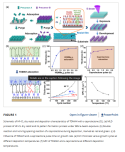
Metal-containing hybrid resists have attracted considerable attention for advanced lithography owing to their superior performance in resolution, sensitivity, and etch resistance.Beyond these benefits, vapor-deposited dry hybrid resists offer distinct advantages in film-component uniformity and process compatibility.However, such vapor-deposited dry resists typically form highly cross-linked covalent networks, which require aggressive development conditions for patterning and may not effectively establish a significant solubility switch upon exposure.This paper describes the design and fabrication of a molecular layer deposition (MLD)-based dry resist featuring a restricted covalent network, enabled by the unique reactivity of ε-caprolactone (CL). During deposition, nonring-opening reactions and double reaction pathways of some ε-caprolactone precursors systematically disrupt the long-range network integrity, thereby significantly enhancing the solubility of the film in deionized water. E-beam exposure tests confirmed that this resist is developable in deionized water, exhibiting a critical exposure dose of approximately 200 μC·cm−2, which is lower than many other MLD resists. Infrared spectroscopy (IR) and X-ray photoelectron spectroscopy (XPS) analyses reveal that the exposure mechanism primarily involves the cleavage of CO, HfO, and HfN bonds, inducing the detachment of main chain ε-caprolactone molecules from the film matrix.

1770486686241.png

Please, Log in or Register to view URLs content!
 
Top