Chinese semiconductor thread II

tokenanalyst

Lieutenant General
Registered Member

The Institute of Microelectronics has made significant progress in 4H/3C-SiC single-crystal composite substrates and devices.​


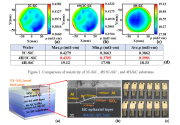
In a groundbreaking advancement in power electronics, researchers from the Institute of Microelectronics, Chinese Academy of Sciences, led by Dr. Liu Xinyu, in collaboration with institutions including the University of Hong Kong, Qinghe Epistar, Wuhan University, and the Institute of Physics, CAS, have successfully developed a large-size 4H/3C-SiC single-crystal composite substrate — a novel engineered platform that overcomes longstanding limitations of silicon carbide (SiC) in low-voltage (<600V) applications.
  • Problem Addressed: Traditional 4H-SiC substrates have high resistivity (15–20 mΩ·cm), causing excessive substrate resistance that limits device efficiency and current capability in low-voltage power devices. Substrate thinning, a current workaround, increases cost and brittleness.​
  • Innovative Solution: The team pioneered a heterogeneous integration of a high-quality 4H-SiC epilayer (for high breakdown field and crystallinity) bonded to a low-resistivity 3C-SiC substrate (resistivity <0.5 mΩ·cm, doping up to 10²⁰ cm⁻³).​
  • Record-Low Resistivity: The composite substrate achieved a record-low resistivity of 0.39 mΩ·cm45× lower than conventional 4H-SiC.​
  • Advanced Bonding Technology: Using hydrogen ion implantation, ion beam surface activation, and precise thermal processing, the team achieved:
    • 87% bonding yield
    • World’s lowest thermal boundary resistance (1±0.7/-0.6 m²·K/GW)​
    • Ultra-low interface potential barrier (<30.4 mV), enabling efficient electron tunneling​
  • High-Quality Surface: Post-bonding processes (annealing, CMP, atomic etching) produced a surface suitable for epitaxial growth.​

1768827251396.png

Performance:​

  • A 200V Schottky barrier diodefabricated on the composite substrate achieved:
    • Specific on-resistance of 0.50 mΩ·cm²47% lower than standard 4H-SiC devices​
    • Surge current capability of 312A, demonstrating superior electrothermal robustness​
  • Within the 100–600V range, the engineered substrate reduces on-resistance by 3–6× compared to conventional 4H-SiC, surpassing the theoretical performance limits of pure 4H-SiC devices.​
This innovation breaks the “dilemma” that has hindered SiC adoption in low-voltage markets (e.g., EV auxiliaries, consumer electronics, data centers), where silicon still dominates due to cost and efficiency. The 4H/3C-SiC composite enables high-performance, high-efficiency, and cost-effective SiC devices for the next generation of power electronics.
Please, Log in or Register to view URLs content!
 

tokenanalyst

Lieutenant General
Registered Member

High-performance droplet-triggered laser shooting accuracy evaluation system for LPP-EUV light sources​

Abstract​

Extreme ultraviolet (EUV) light sources with a central wavelength of 13.5 nm have become a foundational technology for advanced semiconductor manufacturing. In laser-produced plasma EUV (LPP-EUV) light sources, achieving the precise spatial-temporal synchronization between tin droplets and laser pulses is of paramount importance. To address this need, we have developed a droplet-triggered laser shooting accuracy evaluation (DLSAE) system specifically designed for LPP-EUV applications. The DLSAE system generates synchronized, tunable delay trigger signals with sub-nanosecond precision for the narrow-pulse laser and the droplet imaging camera based on real-time droplet detection. By analyzing the positional fluctuations of droplets captured via high-speed imaging, the DLSAE system quantitatively assesses shooting accuracy of the droplet-triggered laser shooting system. Under experimental conditions involving droplets with a diameter of approximately 75 μm, a velocity of ~15 m/s, and a repetition rate of 25 kHz, through the DLSAE system, the shooting error of a droplet-triggered laser shooting control system is evaluated about 3.325 μm (3σ) in the target space, compared to 60.002 μm (3σ) in the non-target space—corresponding to an 18.05× improvement.​

Please, Log in or Register to view URLs content!
 

tokenanalyst

Lieutenant General
Registered Member

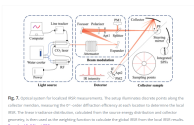
Multiscale measurement for infrared suppression ratio of SPFs-integrated EUV collectors by a weighted harmonic mean integral​

Abstract​

Infrared (IR) suppression is essential for extreme ultraviolet (EUV) lithography systems. This study establishes a method for predicting the global infrared suppression ratio (IRSR) of EUV collectors from local IRSR values, based on a weighted harmonic mean integral framework. To enable reliable local IRSR measurement, the challenge of spectral leakage inherent in finite-spot illumination on large-period gratings is analyzed and overcome by identifying optimal illumination conditions that balance spatial resolution and signal integrity. A dedicated optical system is implemented to execute this localized measurement strategy. The proposed method enables detailed assessment of IRSR performance and uniformity across the collector surface, offering practical insights for manufacturing tolerance specification and optimization of the collector-SPFs collaborative design.

1768827628841.png

Please, Log in or Register to view URLs content!
 

tokenanalyst

Lieutenant General
Registered Member

Semiconductor equipment manufacturer ASM reported better-than-expected order volumes in Q4 2025 due to a rebound in the Chinese market.​


Chip equipment manufacturer ASM International said its preliminary order volume for the fourth quarter of 2025 exceeded market expectations, driven by a rebound in orders from China.

The Dutch company said in a provisional statement that its quarterly order volume grew to approximately €800 million ($930 million), exceeding the €669 million forecast by analysts in a Visible Alpha survey.

ASM stated, "The strong order volume was primarily driven by a rebound in orders from China at the end of the quarter, as well as robust growth in the advanced logic/foundry business."

ASM's preliminary revenue was €698 million, higher than the €656 million forecast by the London Stock Exchange Group (LSEG).
In October 2025, ASM's third-quarter results were impacted by higher-than-expected order volumes from China (the world's largest buyer of chip manufacturing equipment)​
 

LanceD23

Junior Member
Registered Member

Innosilicon launches LPDDR6 IP and achieves commercial shipment.​


Chinese semiconductor company Innosilicon has become the first in China to commercially ship LPDDR6 interface IP, just months after the JEDEC standard was finalized. This breakthrough addresses growing demand for higher memory bandwidth in AI smartphones and PCs, where current LPDDR5X faces bottlenecks with large AI models.

The new IP boosts single-channel speeds to 14.4Gbps (50% faster than LPDDR5X) and widens data pathways from 16 to 24 bits, significantly improving bandwidth for AI tasks. Developed in collaboration with TSMC and Samsung for advanced 5nm/3nm processes, it overcomes challenges like signal crosstalk and thermal issues.

Innosilicon also offers a combined LPDDR5X/LPDDR6 solution, reducing chip development time by 30% and lowering transition risks. Its IP has already enabled mass production of over 10 billion chips, positioning China as a competitive player in global memory IP supply.

Please, Log in or Register to view URLs content!
just a controller , not the memory itself. Bummer.
 

tokenanalyst

Lieutenant General
Registered Member

Dinglong Technology's semiconductor materials business breaks through with strong growth​


Dinglong Technology has delivered outstanding financial results for 2025, with net profit attributable to shareholders projected at 700–730 million yuan a year-on-year increase of 34.44% to 40.20%. This robust performance is primarily driven by strong growth in its semiconductor and display materials segments, alongside effective cost control and operational efficiencies. The company’s semiconductor business, which now accounts for 57% of total revenue (up from 46% in 2024), has become the dominant growth engine, with key products like CMP polishing pads, slurries, and cleaning solutions posting year-on-year sales increases of over 45%. Meanwhile, its traditional printing consumables business has declined by 13%, underscoring a strategic pivot toward high-value electronic materials.

The company’s success is underpinned by significant R&D investment, which reached 389 million yuan in the first three quarters of 2025 14.41% of total revenue and among the highest in China’s electronic chemicals sector. This commitment has enabled rapid product innovation, including the development of advanced packaging materials and high-end KrF/ArF wafer photoresists, both of which are undergoing customer verification and are poised for commercialization. Dinglong has also expanded production capacity, particularly in CMP pads, aiming to reach 600,000 wafers per year by early 2026. Its vertically integrated supply chain, including self-produced abrasive particles, further strengthens cost control and product differentiation, solidifying its leadership in domestic semiconductor material supply.

Recognizing the momentum in China’s semiconductor material substitution and the favorable conditions of Hong Kong’s IPO market, Dinglong Technology is actively pursuing an “A+H” dual-listing strategy. The proposed H-share listing on the Hong Kong Stock Exchange aims to enhance global brand recognition, broaden access to international capital, and accelerate overseas market expansion. With a strong operating cash flow of 770 million yuan in the first nine months of 2025 (up 26.55% YoY), the company is well-positioned to fund this initiative and support future investments in global R&D, production, and customer acquisition. The move reflects its ambition to transition from a domestic leader to a globally competitive innovator in high-tech materials.

Looking ahead, Dinglong’s growth trajectory remains robust across multiple fronts. Its CMP pads, slurries, and display materials (including YPI and PSPI for OLEDs) are gaining traction with both domestic and international customers, while new products like PFAS-free PSPI and advanced packaging adhesives are nearing commercialization. Analysts project continued revenue and profit expansion through 2027, with net profit expected to reach 1.287 billion yuan by then. Although challenges such as industry cyclicality and technology adoption risks persist, Dinglong’s strategic focus on innovation, capacity scaling, and global expansion positions it as a pivotal player in China’s quest for semiconductor self-sufficiency and a rising force in the global electronic materials landscape.

Please, Log in or Register to view URLs content!
 

tokenanalyst

Lieutenant General
Registered Member

With a total investment of 2 billion yuan, the Zhunxin Semiconductor 6-inch power chip project is accelerating its progress.​


According to the official WeChat account of "Zhungeer Banner Release", the Zhunxin Semiconductor Advanced 6-inch Silicon-based Power Chip Project has been under construction for more than a year. The core cleanroom and professional electromechanical installation project is more than halfway complete, key production equipment is being delivered at an accelerated pace, and commissioning and production preparation work are proceeding in parallel, laying a solid foundation for early completion and production.

The project covers an area of approximately 150 acres, with a planned total investment of 2 billion yuan, including 1.7 billion yuan in fixed assets. The project focuses on the wafer chip manufacturing field, building an intelligent production line and supporting facilities with an annual output of 1 million 6-inch silicon-based chips, constructing a complete production system from core manufacturing to supporting infrastructure. The products can be widely used in industrial control, computing servers, wind, solar, and energy storage, new energy vehicles, inverters, and other fields. After full production, the project is expected to generate an annual output value exceeding 2.5 billion yuan.

Notably, this project has established a complete industrial chain, covering key aspects such as new energy power electronic chip manufacturing, device packaging, and supporting industry chains, forming an integrated development loop from wafer R&D and chip packaging to end-user applications. Once completed and put into operation, the project will not only successfully fill the gap in Inner Mongolia's power electronic semiconductor chip industry but will also help the Zhungeer Economic Development Zone build the autonomous region's first strategic emerging industry park for electronic semiconductors.

Please, Log in or Register to view URLs content!
 

tokenanalyst

Lieutenant General
Registered Member

This high-precision testing equipment in the semiconductor field solves a critical technological bottleneck!​


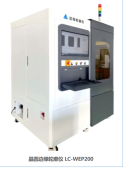
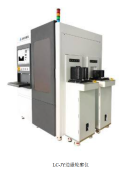
Lanchen Optoelectronics, a Ningbo-based semiconductor inspection equipment provider founded in 2016 by Zhejiang University optics experts, has developed the LC-JY Edge Profilometer China’s first domestically designed high-precision wafer edge profiler, achieving international advanced standards.

Wafer edge quality is critical: raw wafers have fragile edges and surface imperfections from cutting; precise polishing and measurement prevent breakage, boost yield, and ensure chip performance. Wafers require exact geometry control including diameter, thickness, edge profile, notches, and flatness to meet semiconductor manufacturing standards (SEMI).
1768916708122.png1768916908538.png

The LC-JY Edge Profilometer matches or exceeds Japanese competitors like Kobelco’s LEP-2200, offering:​
  • Sub-1μm measurement accuracy​
  • Automatic centering, mapping, and SECS/GEM compatibility​
  • Support for 6” and 12” wafers with one-click switching​
  • Configurable testing parameters for custom needs​
  • Versions for automated, AGV-integrated, and unmanned workshops​
Key advantages include high stability, cost-effectiveness, responsive service, and full customization—enabling import substitution in a previously foreign-dominated market. The device detects edge profiles, notches, diameter, and thickness, and is designed for integration into smart factories.

Lanchen’s innovation is part of Ningbo’s “Science and Technology Innovation Yongjiang 2035” program and supported by university-industry partnerships with Zhejiang and Ningbo Universities. The company has established a strong reputation in semiconductors, 3C, and electroacoustics, with multiple patented laser and vision inspection systems.

Looking ahead, Lanchen aims to integrate AI-driven defect detection and further enhance automation, positioning the LC-JY as a next-generation, intelligent, high-precision solution for global semiconductor manufacturing.
Please, Log in or Register to view URLs content!
 

tokenanalyst

Lieutenant General
Registered Member

Tongcheng New Materials Advances to H-Share Listing Following CMP Polishing Pad Commercialization


On January 14, 2026, Tongcheng New Materials Group Co., Ltd. approved the appointment of Ernst & Young as its audit firm for a planned H-share listing on the Hong Kong Stock Exchange, marking a major strategic step following the successful commercialization of its semiconductor CMP (Chemical Mechanical Planarization) polishing pads.

The company, a leading global provider of new materials with core businesses in rubber chemicals, electronic chemicals, and biodegradable materials, reported strong financial performance in H1 2025:​
  • Revenue: RMB 1.655 billion (+4.97% YoY)​
  • Electronic chemicals revenue: RMB 441.7 million (+29.31% YoY), now accounting for 26.7% of total revenue​
  • Net profit: RMB 350.9 million (+12.07% YoY); adjusted net profit (ex-non-recurring items): RMB 325.8 million (+43.07% YoY)​
A key driver of growth is its CMP polishing pad business, developed through wholly-owned subsidiary Tongcheng Electronics. In May 2024, Tongcheng signed a major agreement to build a semiconductor polishing pad production base in Jintan, Jiangsu, with an annual capacity of 250,000 pads.

By mid-2025, the project had completed production line setup and product validation, securing commercial orders from major domestic 8-inch and 12-inch chip manufacturers. In December 2025, the company announced the first formal shipment of commercial CMP pads, confirming entry into the market.

With its core electronic chemicals segment growing rapidly and its CMP pad business now in full commercial operation, Tongcheng New Materials is positioning itself for global expansionand the H-share listing aims to raise capital to accelerate scaling, R&D, and international market penetration.

Please, Log in or Register to view URLs content!
 

tokenanalyst

Lieutenant General
Registered Member

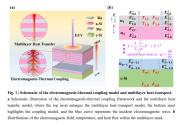
Interference-governed electromagnetic-thermal coupling and heat transport in pulse EUV-irradiated multilayer nanofilms​

Mo-Si multilayer mirrors are central to extreme ultraviolet lithography, where nanoscale optical interference and heat accumulation together constrain reflectivity and operational stability. Here we develop an analytical electromagnetic-thermal coupling model that directly links transfer-matrix-based interference-controlled energy deposition with transient heat conduction in EUV-irradiated multilayers. The model reveals a fundamental trade-off whereby increasing the multilayer period number enhances reflectivity but simultaneously elevates temperature by impeding heat dissipation. Interference-driven volumetric absorption further gives rise to pronounced axial temperature gradients and a post-pulse downward migration of the heat-flux maximum, a delayed-heating effect inaccessible to conventional surface-flux-based models. Systematic analysis establishes scaling laws connecting interfacial thermal resistance, beam size, and incident energy density to thermal confinement and temperature rise. By incorporating interfacial compaction kinetics, the model enables a quantitative assessment of mirror lifetime. This work offers a theoretical tool for thermal-optical co-design of multilayer nanostructures including EUV mirrors under pulsed irradiation across a wide spectral range.​
1768917496439.png
Please, Log in or Register to view URLs content!
 
Top