Well you have to remember a lot of de facto Chinese supply won't show up in this kind of official data because they're being smuggled into China (so they'll show up as Hong Kong or Singapore or Malaysia or whatever) or they're being put into data centers in Malaysia where they are being used by Chinese companies. Fact remains that Chinese total domestic chip capacity is probably insufficient for Chinese total domestic demand and buildout takes time, plus it's still not really clear how far along EUV actually is so this state of affairs will probably last for at least another year or two.I’m actually surprised Nvidia still holds such a large market share. Thought that they will barely have any market share left in China after US government banned their advanced chips from being sold to China . Guess it’s more of lower value far less advanced chips that are still allowed, so might explain why .

You are using an out of date browser. It may not display this or other websites correctly.
You should upgrade or use an alternative browser.
You should upgrade or use an alternative browser.
Chinese semiconductor thread II
- Thread starter vincent
- Start date
Huzhou Prim Semiconductor Technology Innovation Breakthroughs
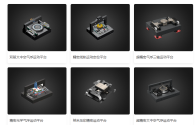
Huzhou Prim's nanometer-level ultra-high precision motion platform, equipped with independently developed air-bearing hydrostatic technology and a nano-interference feedback compensation system, achieves a positioning accuracy of 50 nanometers and a repeatability of 35 nanometers. The new generation of products further improves the positioning accuracy to within 30 nanometers, reaching international advanced levels. In the microscopic world of semiconductor manufacturing, nanometer-level precision control is the core lifeline determining chip performance and yield. Since its establishment in 2023, Huzhou Prim Semiconductor Co., Ltd. has focused on this core need, concentrating on nanometer-level ultra-precision motion control technology. Using core equipment such as wafer transfer systems, wafer handling robots, precision motion stages, and air-bearing rotary axes as its core tools, the company has built a precision solution covering the entire wafer processing workflow, injecting strong momentum into the rise of domestic semiconductor equipment.
From Lab to Mass Production Line: Technological Breakthroughs in Core Products Wafer transfer system: Unlocking the "nerve network" of wafer manufacturing Wafer transfer systems are critical hubs in the semiconductor manufacturing process, responsible for the precise transfer of wafers between different process equipment and memory cells. Their performance directly impacts production efficiency and product yield. Huzhou Prim's EFEM wafer transfer system integrates a self-developed control system and peripheral intelligent accessories. It can be flexibly configured with functions such as wafer ID reading, wafer boat RFID sensing, and wafer edge detection correction according to customer needs, achieving customized and efficient wafer handling. This system achieves a dual breakthrough in cleanliness control and vibration-proof design: it not only operates stably in Class 1-100 cleanroom environments, effectively avoiding particulate contamination, but also controls micro-vibrations during transport at the nanometer level through optimized mechanical structure and motion algorithms, ensuring zero offset of wafer patterns during transfer. Simultaneously, the system supports integration with the SECS/GEM protocol and MES system, enabling intelligent scheduling of the production process and significantly improving the automation level of semiconductor manufacturing.
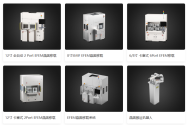
Wafer handling robots: the "art of fingertips" of precision control As the core execution unit of the wafer transfer system, Huzhou Prim's wafer handling robot is specially designed for the harsh environment of semiconductor manufacturing. The robot adopts a multi-axis structure, and the end effector uses alumina or silicon carbide ceramic materials. These materials have the characteristics of high temperature resistance, corrosion resistance, and high hardness, and can maintain high-precision operation under extreme conditions such as vacuum and high temperature. To meet the handling requirements of ultra-thin, large-size wafers, the robotic arm integrates vision sensors and AI algorithms, enabling contactless pick-and-place operations with micron-level precision. Addressing the potential damage to fragile wafers caused by traditional vacuum adsorption methods, the company has also introduced Bernoulli technology. This technology uses high-speed airflow to create a pressure difference on the wafer surface, achieving levitation support for handling. This effectively avoids the risks of mechanical stress and surface contamination, making it particularly suitable for handling special materials such as silicon wafers with a thickness of less than 100µm and flexible OLED films.
Precision motion stage and air-bearing rotary shaft: the "core support" for nanometer precision. If wafer transfer systems are the "nerves" of semiconductor manufacturing, then precision motion stages and air-bearing rotary axes are the "skeleton and joints" for achieving nanometer-level precision. Huzhou Prim's nanometer-level ultra-high precision motion platform, equipped with independently developed air-bearing hydrostatic technology and a nano-interference feedback compensation system, achieves a positioning accuracy of 50 nanometers and a repeatability of 35 nanometers. The new generation of products further improves the positioning accuracy to within 30 nanometers, reaching international advanced levels. The air-bearing rotary shaft employs hydrodynamic air bearing technology, abandoning the traditional solid-contact sliding friction mode. Using air as the working medium, and through ingenious structural design, it automatically forms an extremely thin air film during high-speed rotation, achieving non-contact support for moving parts. This technology not only completely eliminates the precision loss caused by friction and wear but also significantly improves the service life and stability of the equipment, providing reliable precision assurance for core processes such as semiconductor lithography and etching.
From Lab to Mass Production Line: Technological Breakthroughs in Core Products Wafer transfer system: Unlocking the "nerve network" of wafer manufacturing Wafer transfer systems are critical hubs in the semiconductor manufacturing process, responsible for the precise transfer of wafers between different process equipment and memory cells. Their performance directly impacts production efficiency and product yield. Huzhou Prim's EFEM wafer transfer system integrates a self-developed control system and peripheral intelligent accessories. It can be flexibly configured with functions such as wafer ID reading, wafer boat RFID sensing, and wafer edge detection correction according to customer needs, achieving customized and efficient wafer handling. This system achieves a dual breakthrough in cleanliness control and vibration-proof design: it not only operates stably in Class 1-100 cleanroom environments, effectively avoiding particulate contamination, but also controls micro-vibrations during transport at the nanometer level through optimized mechanical structure and motion algorithms, ensuring zero offset of wafer patterns during transfer. Simultaneously, the system supports integration with the SECS/GEM protocol and MES system, enabling intelligent scheduling of the production process and significantly improving the automation level of semiconductor manufacturing.
Wafer handling robots: the "art of fingertips" of precision control As the core execution unit of the wafer transfer system, Huzhou Prim's wafer handling robot is specially designed for the harsh environment of semiconductor manufacturing. The robot adopts a multi-axis structure, and the end effector uses alumina or silicon carbide ceramic materials. These materials have the characteristics of high temperature resistance, corrosion resistance, and high hardness, and can maintain high-precision operation under extreme conditions such as vacuum and high temperature. To meet the handling requirements of ultra-thin, large-size wafers, the robotic arm integrates vision sensors and AI algorithms, enabling contactless pick-and-place operations with micron-level precision. Addressing the potential damage to fragile wafers caused by traditional vacuum adsorption methods, the company has also introduced Bernoulli technology. This technology uses high-speed airflow to create a pressure difference on the wafer surface, achieving levitation support for handling. This effectively avoids the risks of mechanical stress and surface contamination, making it particularly suitable for handling special materials such as silicon wafers with a thickness of less than 100µm and flexible OLED films.
Precision motion stage and air-bearing rotary shaft: the "core support" for nanometer precision. If wafer transfer systems are the "nerves" of semiconductor manufacturing, then precision motion stages and air-bearing rotary axes are the "skeleton and joints" for achieving nanometer-level precision. Huzhou Prim's nanometer-level ultra-high precision motion platform, equipped with independently developed air-bearing hydrostatic technology and a nano-interference feedback compensation system, achieves a positioning accuracy of 50 nanometers and a repeatability of 35 nanometers. The new generation of products further improves the positioning accuracy to within 30 nanometers, reaching international advanced levels. The air-bearing rotary shaft employs hydrodynamic air bearing technology, abandoning the traditional solid-contact sliding friction mode. Using air as the working medium, and through ingenious structural design, it automatically forms an extremely thin air film during high-speed rotation, achieving non-contact support for moving parts. This technology not only completely eliminates the precision loss caused by friction and wear but also significantly improves the service life and stability of the equipment, providing reliable precision assurance for core processes such as semiconductor lithography and etching.
China's leading NAND flash manufacturer Yangtze Memory (YMTC) has stabilized two existing production lines and is expected to start high-stacked NAND shipments from Wuhan Line 3, a state-of-the-art plant, from the second half of this year. Analysts say that the company is also in the process of securing large overseas clients, which had been in difficulties. YMTC's NAND production within this year is expected to surpass SK Hynix and Micron, which are competing for third and fourth place.
According to the industry on the 2nd, YMTC is planning to mass-produce state-of-the-art NAND products at Wuhan Line 3 in Hubei Province, China, which will be in full operation from the second half of this year. An official familiar with China's local situation explained, "It is known that Wuhan Line 1 and Line 2 are already close to their maximum production capacity, and Line 3, the latest plant, is also in the final stage of setting up core equipment for full-scale mass production."
YMTC has grown its presence in the global NAND market at an alarming rate over the past two years. Wuhan Line 2, which began operation in 2024, is known to have reached its maximum production capacity in just two years. The line is currently producing an average of 60,000 sheets per month based on wafer input, and Line 1, the largest plant, is producing 100,000 sheets. The annual production volume also increased from 1.29 million units in 2024 to 1.77 million units last year, and is expected to reach nearly 2 million units this year.
When its third plant in Wuhan begins operation in earnest, YMTC will rank third in the global NAND market, surpassing SK Hynix and Micron in terms of shipment volumes. YMTC is emerging as the largest producer of NAND after Japan's Kioxia (4.82 million units) and Samsung Electronics (4.68 million units). In particular, YMTC is continuously increasing the proportion of 200 layers, which are high-level products as well as legacy NAND, in server and mobile industries, and will reportedly stabilize the yield of 300 layers this year.
YMTC's domestic-oriented sales portfolio, which has been one of the biggest factors that has been undervalued, is also likely to change from this year. According to Reuters and others, Apple is reportedly considering the possibility of using YMTC products due to NAND supply and demand. Apple is concerned about the decrease in profit margins of major products such as iPhone due to rising DRAM and NAND prices, and has begun to consider YMTC as an alternative.
Although it is unclear whether it will sign a supply contract with Apple yet, the prevailing observation is that YMTC's "block blood" will be breached if the contract is signed. This is because Apple is not just a single source of sales, but a customer with great symbolism that it has passed quality, reliability, and supply stability. If Apple's supply is confirmed, other big tech companies suffering from NAND shortage can also consider YMTC as an alternative.
"If YMTC supplies NAND to Apple, it has a symbolic meaning of re-entering the supply chain of global top tier set companies, away from its customer base in China," a semiconductor industry official said. "Considering that Apple has procured NAND from Samsung Electronics, SK Hynix, and Kioxia, YMTC's market position will be significantly different."
According to the industry on the 2nd, YMTC is planning to mass-produce state-of-the-art NAND products at Wuhan Line 3 in Hubei Province, China, which will be in full operation from the second half of this year. An official familiar with China's local situation explained, "It is known that Wuhan Line 1 and Line 2 are already close to their maximum production capacity, and Line 3, the latest plant, is also in the final stage of setting up core equipment for full-scale mass production."
YMTC has grown its presence in the global NAND market at an alarming rate over the past two years. Wuhan Line 2, which began operation in 2024, is known to have reached its maximum production capacity in just two years. The line is currently producing an average of 60,000 sheets per month based on wafer input, and Line 1, the largest plant, is producing 100,000 sheets. The annual production volume also increased from 1.29 million units in 2024 to 1.77 million units last year, and is expected to reach nearly 2 million units this year.
When its third plant in Wuhan begins operation in earnest, YMTC will rank third in the global NAND market, surpassing SK Hynix and Micron in terms of shipment volumes. YMTC is emerging as the largest producer of NAND after Japan's Kioxia (4.82 million units) and Samsung Electronics (4.68 million units). In particular, YMTC is continuously increasing the proportion of 200 layers, which are high-level products as well as legacy NAND, in server and mobile industries, and will reportedly stabilize the yield of 300 layers this year.
YMTC's domestic-oriented sales portfolio, which has been one of the biggest factors that has been undervalued, is also likely to change from this year. According to Reuters and others, Apple is reportedly considering the possibility of using YMTC products due to NAND supply and demand. Apple is concerned about the decrease in profit margins of major products such as iPhone due to rising DRAM and NAND prices, and has begun to consider YMTC as an alternative.
Although it is unclear whether it will sign a supply contract with Apple yet, the prevailing observation is that YMTC's "block blood" will be breached if the contract is signed. This is because Apple is not just a single source of sales, but a customer with great symbolism that it has passed quality, reliability, and supply stability. If Apple's supply is confirmed, other big tech companies suffering from NAND shortage can also consider YMTC as an alternative.
"If YMTC supplies NAND to Apple, it has a symbolic meaning of re-entering the supply chain of global top tier set companies, away from its customer base in China," a semiconductor industry official said. "Considering that Apple has procured NAND from Samsung Electronics, SK Hynix, and Kioxia, YMTC's market position will be significantly different."

this one is very interesting. SMIC Guangdong gets huge capital injection and planning for FinFet process. this is first time SMIC going to enter in advance nodes outside Shanghai plant.
SMIC establishes a new semiconductor company with a registered capital of nearly 3 billion yuan.According to business registration information, Shanghai Xinsanwei Semiconductor Co., Ltd.'s business scope covers integrated circuit manufacturing and sales, integrated circuit chip and product manufacturing and sales, as well as import and export of goods and technology, and related technical services and promotion.
The establishment of this new company may be one of the core moves by SMIC to continuously increase its investment in the field of advanced manufacturing and packaging of integrated circuits.
At the end of December 2025, SMIC acquired a 49% stake in SMIC North for RMB 40.6 billion, achieving 100% control of this 12-inch wafer manufacturing base. On the same day, it was disclosed that SMIC South received a capital injection of US$7.778 billion from institutions such as the third phase of the National Integrated Circuit Industry Investment Fund, focusing on the research and development of advanced processes of 14 nanometers and below, further strengthening the company's core manufacturing capabilities and advanced process layout.
On January 29th of this year, SMIC unveiled its Advanced Packaging Research Institute, with Chairman Liu Xunfeng personally in attendance. In his speech, Liu Xunfeng stated that the institute will focus on cutting-edge advanced packaging technologies and common industry challenges, building an integrated "government-industry-academia-research-application" innovation platform to address the core shortcomings of my country's advanced packaging industry.
Based on this, and considering the name and business scope of the newly established company "Xin3D" and its previous strategic layout, this new company may become the core carrier for SMIC to implement advanced packaging and 3D integration technologies, thereby strengthening the company's core competitiveness in the global integrated circuit manufacturing field.
this one is very interesting. SMIC Guangdong gets huge capital injection and planning for FinFet process. this is first time SMIC going to enter in advance nodes outside Shanghai plant.
Semiconductor Manufacturing South China Corporation (SMSC/SMIC South) is located in Shanghai.

there is basically nothing in there that says this is FinFet process. It says this is for advanced packaging, which makes sense since this sounds like TSMC CoWoS.this one is very interesting. SMIC Guangdong gets huge capital injection and planning for FinFet process. this is first time SMIC going to enter in advance nodes outside Shanghai plant.
China's leading NAND flash manufacturer Yangtze Memory (YMTC) has stabilized two existing production lines and is expected to start high-stacked NAND shipments from Wuhan Line 3, a state-of-the-art plant, from the second half of this year. Analysts say that the company is also in the process of securing large overseas clients, which had been in difficulties. YMTC's NAND production within this year is expected to surpass SK Hynix and Micron, which are competing for third and fourth place.
According to the industry on the 2nd, YMTC is planning to mass-produce state-of-the-art NAND products at Wuhan Line 3 in Hubei Province, China, which will be in full operation from the second half of this year. An official familiar with China's local situation explained, "It is known that Wuhan Line 1 and Line 2 are already close to their maximum production capacity, and Line 3, the latest plant, is also in the final stage of setting up core equipment for full-scale mass production."
YMTC has grown its presence in the global NAND market at an alarming rate over the past two years. Wuhan Line 2, which began operation in 2024, is known to have reached its maximum production capacity in just two years. The line is currently producing an average of 60,000 sheets per month based on wafer input, and Line 1, the largest plant, is producing 100,000 sheets. The annual production volume also increased from 1.29 million units in 2024 to 1.77 million units last year, and is expected to reach nearly 2 million units this year.
When its third plant in Wuhan begins operation in earnest, YMTC will rank third in the global NAND market, surpassing SK Hynix and Micron in terms of shipment volumes. YMTC is emerging as the largest producer of NAND after Japan's Kioxia (4.82 million units) and Samsung Electronics (4.68 million units). In particular, YMTC is continuously increasing the proportion of 200 layers, which are high-level products as well as legacy NAND, in server and mobile industries, and will reportedly stabilize the yield of 300 layers this year.
YMTC's domestic-oriented sales portfolio, which has been one of the biggest factors that has been undervalued, is also likely to change from this year. According to Reuters and others, Apple is reportedly considering the possibility of using YMTC products due to NAND supply and demand. Apple is concerned about the decrease in profit margins of major products such as iPhone due to rising DRAM and NAND prices, and has begun to consider YMTC as an alternative.
Although it is unclear whether it will sign a supply contract with Apple yet, the prevailing observation is that YMTC's "block blood" will be breached if the contract is signed. This is because Apple is not just a single source of sales, but a customer with great symbolism that it has passed quality, reliability, and supply stability. If Apple's supply is confirmed, other big tech companies suffering from NAND shortage can also consider YMTC as an alternative.
"If YMTC supplies NAND to Apple, it has a symbolic meaning of re-entering the supply chain of global top tier set companies, away from its customer base in China," a semiconductor industry official said. "Considering that Apple has procured NAND from Samsung Electronics, SK Hynix, and Kioxia, YMTC's market position will be significantly different."
This is another story from Koreans on the YMTC growth. The big deal here is actually the full domestic production line which is coming online as fab 2 gets fully ramped.
They are talking about 2025. In the first half of 2025 Nvidia was able to export plenty of H20s to China.I’m actually surprised Nvidia still holds such a large market share. Thought that they will barely have any market share left in China after US government banned their advanced chips from being sold to China . Guess it’s more of lower value far less advanced chips that are still allowed, so might explain why
Beyond the Boundless, Folding Reborn: Visionox Releases New Boundless Foldable Screen
At the International Display Technology Conference (ICDT 2026), Visionox unveiled its next-generation "seamless" foldable screen, marking a major milestone as these devices move from niche to mainstream. The new module is designed to be "thinner, flatter, and more durable."
- Ultra-Thin Design (≤0.4mm): The module is 20% thinner than conventional models. This reduction minimizes internal stress during folding, reduces device weight, and prevents deformation over time.
- "Three-in-One" Flatness Solution:To eliminate visible creases, Visionox optimized materials, adhesives, and structure:
- Materials: Replaced traditional PET film with a high-rigidity, non-plastic material to prevent irreversible bending.
- Adhesive: Utilized a fast-recovery OCA layer that increases recovery rate by 1.6x after every fold/unfold cycle.
- Structure: Implemented a multi-layer composite cover (glass + nano-reinforcement) with stiffness-gradient support for even stress distribution.
- Superior Performance Metrics:
- Visual creases are nearly invisible in strong light.
- Tactile difference between folded and unfolded areas is controlled within 30μm.
- After 200,000 cycles, crease depth changes less than 20μm.
- Enhanced Durability:Contrary to the idea that thinness equals fragility, Visionox's proprietary flexible AMOLED solution offers:
- 1.3x higher impact resistance on the front (resisting styluses/objects).
- 1.25x higher pressure resistance on the back (resisting compression from bags or fingers).
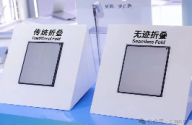
Visionox, which has researched flexible OLEDs since 2001, aims to transform foldable screens into a "mature experience." The goal is to allow users to enjoy immersive large-screen content while forgetting the physical presence and limitations of folding.
The Xilide Semiconductor Equipment Manufacturing Project has been signed and settled in Haian Economic Development Zone, Jiangsu Province.
the Xilide Semiconductor Equipment Manufacturing Project was officially signed and settled in Haian Economic and Technological Development Zone, Jiangsu Province. The project has a total investment of 1 billion yuan and is led by the team of Dr. Chen Jianming, a Jiangsu Province innovation and entrepreneurship talent, introduced by Wenzhou Hetai Intelligent Equipment Manufacturing Co., Ltd. Focusing on the research and development and manufacturing of key semiconductor equipment, it will inject strong momentum into the Haian semiconductor industry cluster.
It is understood that the project, with a total investment of 1 billion yuan, is being constructed by Xilide (Jiangsu) Semiconductor Equipment Manufacturing Co., Ltd., and will establish a semiconductor equipment manufacturing base integrating R&D, production, and sales. The team's independently developed 8-inch and 12-inch silicon carbide crystal growth equipment using the resistance method is at the forefront of domestic technology and can meet the needs of large-scale production of third-generation semiconductor materials. The project focuses on the localization of semiconductor equipment, with a key focus on the development of wide-bandgap semiconductor material growth equipment such as silicon carbide, filling the gap in high-end semiconductor equipment manufacturing in the region.
As a key high-end equipment manufacturing project introduced by Haian Economic Development Zone, the Xilide Semiconductor Equipment Manufacturing Project aligns with the national "15th Five-Year Plan" strategic direction regarding the independent control and domestic substitution of the semiconductor industry. Upon its implementation, the project will leverage the advantages of the Haian Electronic Information Industrial Park platform, linking existing semiconductor industry chain enterprises within the region to form a collaborative development pattern of "materials-equipment-manufacturing," helping Haian to become a significant semiconductor equipment manufacturing hub in the Yangtze River Delta.
It is understood that the project, with a total investment of 1 billion yuan, is being constructed by Xilide (Jiangsu) Semiconductor Equipment Manufacturing Co., Ltd., and will establish a semiconductor equipment manufacturing base integrating R&D, production, and sales. The team's independently developed 8-inch and 12-inch silicon carbide crystal growth equipment using the resistance method is at the forefront of domestic technology and can meet the needs of large-scale production of third-generation semiconductor materials. The project focuses on the localization of semiconductor equipment, with a key focus on the development of wide-bandgap semiconductor material growth equipment such as silicon carbide, filling the gap in high-end semiconductor equipment manufacturing in the region.
As a key high-end equipment manufacturing project introduced by Haian Economic Development Zone, the Xilide Semiconductor Equipment Manufacturing Project aligns with the national "15th Five-Year Plan" strategic direction regarding the independent control and domestic substitution of the semiconductor industry. Upon its implementation, the project will leverage the advantages of the Haian Electronic Information Industrial Park platform, linking existing semiconductor industry chain enterprises within the region to form a collaborative development pattern of "materials-equipment-manufacturing," helping Haian to become a significant semiconductor equipment manufacturing hub in the Yangtze River Delta.