Chinese semiconductor thread II

tokenanalyst

Lieutenant General
Registered Member

Breaking the Moore's Law Era: Silicon Core Technology Reconstructs the 2.5D/3D ICEDA Process with STC​


On May 27th at the Shanghai Zhangjiang Science Hall, the 10th AI Chip Conference hosted a landmark session focused on breaking free from the constraints of Moore's Law through advancements in silicon core technology. The event, part of a broader effort to foster ecosystem collaboration for China's semiconductor industry, featured a keynote speech by Dr. Zhao Yi, Founder and CEO of Zhuhai Silicon Core Technology (STCO). Speaking at this "Advanced Packaging and Testing Technology Innovation Summit," Dr. Zhao outlined how the global chip development logic is fundamentally shifting from single-chip performance iteration to system-level architectural optimization driven by artificial intelligence.

Dr. Zhao argued that traditional lithography limits are reaching a physical ceiling, making further reliance on process miniaturization insufficient for meeting future demands. Instead, the industry is urgently transitioning toward 2.5D and 3D integrated circuit (IC) stacking architectures. This approach, which involves vertically stacking bare dies rather than expanding horizontally, restructures interconnect mechanisms and design boundaries to unlock significant performance gains. Citing precedents set by giants like Broadcom and AMD in their pioneering of the 3.5D concept, Dr. Zhao predicts that by mid-2026, both domestic and global markets will witness a wave of large-scale innovation based on these stacked architectures, marking a comprehensive restructuring of design methods and industry paradigms beyond mere manufacturing upgrades.

To support this shift, the industry is moving from the traditional "Devices-Technology Co-Optimization" (DTCO) model to a new paradigm called "System-Technology Co-Optimization" (STCO). In the old DTCO model, design focused on adapting a single chip's device performance to the manufacturing process. However, in heterogeneous stacking scenarios involving multiple nodes and chip types, optimal performance requires top-level system architecture that dictates the design of individual chips. Dr. Zhao emphasized that this represents a qualitative leap where packaging shifts from passively adapting to design to actively leading it, requiring early-stage modeling of I/O planning, power distribution, thermal stress, and warpage risks across diverse chip types including logic, memory, RF, and silicon photonics.

The implementation of STCO necessitates a complete overhaul of the Electronic Design Automation (EDA) toolchain, which currently serves as a critical bottleneck. Traditional single-chip EDA engines struggle with the vertical interconnects and cross-layer complexities of 3D stacking. Silicon Core Technology has responded by developing dedicated design engines capable of optimizing high-speed differential signals and heterogeneous interfaces. Furthermore, leveraging Huawei's "Tao's Law," STCO promotes simultaneous design and simulation; their tools reportedly reduce a project requiring two months of serial iteration to just ten days of collaborative convergence while prioritizing reliability through early-stage analysis of stress distribution and defect probability rather than post-production correction.

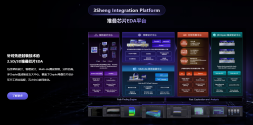
At the testing verification stage, Dr. Zhao highlighted that the high integration cost of stacked chips means any single-point failure can scrap an entire wafer, rendering traditional standards obsolete. He noted STCO's involvement in developing the IEEE 1838 standard, which addresses these challenges through on-chip redundancy and self-healing mechanisms, alongside dedicated bidirectional interconnect rule bases for accurate foundry adaptation. Addressing these needs, Silicon Core Technology has independently launched the 3Sheng Integration Platform, reportedly the first EDA platform in China to cover the entire 2.5D/3D stacked chip design process.
1779978869738.png

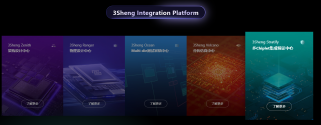
The 3Sheng Integration Platform offers a closed-loop solution spanning system architecture, physical implementation, co-simulation, fault tolerance testing, and multi-chiplet verification. It is designed to support diverse applications ranging from AI and GPU/CPU processing to silicon photonics, enabling high-performance integration for heterogeneous computing scenarios. From a macro-industry perspective, the rise of this STCO paradigm presents a strategic opportunity for domestic EDA companies to leapfrog by competing not just on single-chip specs but on holistic system collaboration capabilities. Dr. Zhao concluded by urging deep industry-wide cooperation across process, equipment, materials, and design sectors to build a robust domestic advanced packaging ecosystem capable of overcoming cost barriers and external technological blockades.
1779978943374.png

Please, Log in or Register to view URLs content!
 

tokenanalyst

Lieutenant General
Registered Member

Sixcore Optoelectronics Releases 110GHz Thin-Film Lithium Niobate (TFLN) Photonic Integrated Chip​


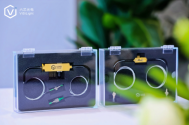
Recently, Wuhan Sixcore Optoelectronics Technology Co., Ltd. (hereinafter referred to as "Sixcore Optoelectronics") released a 110GHz thin-film lithium niobate (TFLN) photonic integrated chip. The core indicators have met the design expectations, and the first round of tape-out has been completed. The chip has an ultra-wide bandwidth of 110GHz and an extremely low drive voltage of 3V, giving it a rare process node advantage globally.

1779979132969.png

Currently, Sixcore Optoelectronics is working with several potential seed customers to advance product verification, focusing on six key application scenarios: optical interconnect, optical transmission, optical computing, microwave photonics, fiber optic sensing, and quantum information. The company expects to deliver products in the second half of this year. Leveraging the academic foundation of the Wuhan National Research Center for Optoelectronics at Huazhong University of Science and Technology, Sixcore Optoelectronics possesses full-process R&D capabilities for 8-inch TFLN photonic integrated chips, aiming to overcome computing power and transmission bottlenecks in the AI era through photonic integration technology.

Please, Log in or Register to view URLs content!
 

tokenanalyst

Lieutenant General
Registered Member

Changxin Technology's IPO on the Science and Technology Innovation Board has been successfully approved, with plans to raise 29.5 billion yuan to further invest in core DRAM technologies.​


Changxin Technology Group Co., Ltd.'s IPO application on the Shanghai Stock Exchange's Science and Technology Innovation Board has successfully passed its listing review, officially entering the registration stage. This milestone marks a significant step for the company as it prepares to list in May 2026, providing access to public capital essential for its strategic growth. As a leading domestic enterprise in the DRAM sector, this approval not only solidifies Changxin's position as a key player in China's semiconductor industry but also injects renewed momentum into the national effort for memory chip self-sufficiency, reducing reliance on imports from global giants like Samsung and SK Hynix who dominate the market with over 90% share.

Founded in 2016 and adhering to an independent innovation path, Changxin Technology has rapidly evolved through its "generation-skipping R&D" strategy, successfully mass-producing four generations of process technology platforms ranging from DDR4 to advanced LPDDR5/5X. Currently operating three 12-inch DRAM wafer fabs in Hefei and Beijing, the company ranks first domestically and fourth globally in production capacity. By offering a comprehensive portfolio of wafers, chips, and modules across servers, consumer electronics, and automotive applications, Changxin has established deep partnerships with major tech firms such as Alibaba Cloud, Tencent, and Lenovo, effectively playing a pivotal role in building a resilient domestic memory industry ecosystem.

The company's financial performance has surged dramatically following global supply constraints that tightened market dynamics and drove up product prices starting from the second half of 2025. In the first quarter alone, Changxin reported operating revenue of 50.8 billion yuan with a net profit attributable to its parent company reaching 24.762 billion yuan, representing multi-hundred percent year-on-year growth. Looking ahead, projections indicate that revenue for the first half of 2026 could soar between 110 and 120 billion yuan, while net profits are expected to exceed 50 billion yuan, validating the company's robust operational scaling and its ability to capture high-value market segments amidst rising global computing power demand.

In this upcoming IPO, Changxin Technology plans to raise 29.5 billion yuan specifically to upgrade memory wafer manufacturing lines, iterate core DRAM processes, and develop cutting-edge technologies essential for maintaining global competitiveness. Backed by a strong equity structure involving industrial capital from the Anhui Provincial Investment Group and strategic collaborations with fellow listed company GigaDevice, Changxin aims to leverage these funds to accelerate its capacity expansion and technological breakthroughs. Industry analysts anticipate that upon listing, the company will become a core stock in the A-share semiconductor sector, driving further investment enthusiasm and playing a crucial role in China's long-term goal of occupying a more significant position in global memory industry competition.

Please, Log in or Register to view URLs content!
 

tokenanalyst

Lieutenant General
Registered Member

Yanshan Technology's world's first 8-inch silicon-based gallium nitride MicroLED IDM mass production line goes into operation in Deqing.

Westlake Yanshan Technology (Hangzhou) Co., Ltd. announced that its world's first 8-inch silicon-based gallium nitride MicroLED IDM mass production line was officially put into operation at its Deqing factory in Zhejiang.

This production line operates on a full-chain IDM model, covering the entire production process from material epitaxy, chip manufacturing, and advanced packaging, achieving integrated manufacturing from silicon-based gallium nitride epitaxial growth to finished MicroLED devices. Unlike the traditional 4-inch sapphire substrate route, the production line uses 8-inch silicon-based gallium nitride technology, featuring high light extraction efficiency, excellent processing yield, and connectivity exceeding 6N.

Founded in May 2022, Yanshan Technology leverages the industry-academia-research background of Westlake University and was established by Dr. Kong Wei, a researcher at Westlake University. The core team has deep expertise in semiconductor interface processing and compound material growth. The company possesses key technologies such as MOCVD material growth, hybrid bonding, and three-color vertical stacking, and has previously completed full-process verification on an 8-inch silicon-based gallium nitride platform.

This newly launched production project is for the annual production of 3 million MicroLED new display devices, covering two major areas: micro-displays and direct-view displays. Micro-displays are used in AR glasses, micro-projectors, and automotive HUDs; direct-view displays are targeted at commercial large screens, smart wearables, transparent displays, and other scenarios.

According to reports, the project is expected to generate an annual output value of 300 million yuan after reaching full production capacity, helping MicroLED technology move from laboratory verification to large-scale mass production. Yanshan Technology has already established cooperative relationships with companies such as AVIC, BYD, Sunny Optical, BOE, and CSOT.

Please, Log in or Register to view URLs content!
 

tokenanalyst

Lieutenant General
Registered Member

Microchip Semiconductor showcases its self-developed high-end metrology equipment at the 2026 China Microelectronics Conference, demonstrating the breakthrough capabilities of domestically produced high-end metrology equipment.​


Microchip Semiconductor made a significant debut at the 10th ICMI Conference 2026 in Shanghai, showcasing its self-developed, high-end metrology equipment to break through long-standing foreign monopolies in critical semiconductor inspection technologies. Founded in 2021 by experts with deep industry expertise, the company has established itself as a domestic leader in non-contact, rapid wafer testing. Notably, Microchip became the only Chinese enterprise capable of mass-producing Second Harmonic Wave (HHW) wafer inspection equipment, a breakthrough that has already been validated and adopted by several leading wafer foundries for use across various fabrication processes.

The company displayed three core series of self-developed equipment:​
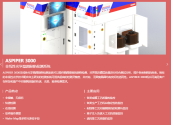
  1. ASPIRER 3000 (Second Harmonic Wafer Inspection):
    • Technology: Uses domestically pioneered second harmonic wave technology.​
    • Capabilities: Performs non-contact, online inspection for electrical properties, thin films, surface quality, and material integrity across various devices and processes.​
1779981348416.png
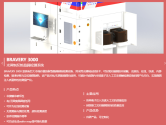
  1. BRAVERY 3000 (Thermal Wave Measurement):
    • Focus: Ion implantation processes in front-end fabrication.​
    • Capabilities: Utilizes light-emitting modulation/reflection for non-destructive testing with high spatial resolution to control wafer electrical properties and improve yield.​
1779981369417.png
  1. CLARITY 3000 (Ultrasonic Scanning Microscope):
    • Focus: Advanced packaging and post-wafer bonding inspection.​
    • Capabilities: Fully automated defect detection for voids and cracks using high-frequency ultrasound propagation in deionized water as a coupling medium.​
The exhibition highlighted Microchip's ability to provide non-contact, rapid, and accurate defect identification from R&D through mass production. This marks a significant step in China's semiconductor self-sufficiency strategy, fostering collaboration with industry partners to drive high-quality domestic equipment development.

Please, Log in or Register to view URLs content!
 
Top