Chinese semiconductor thread II

tokenanalyst

Lieutenant General
Registered Member

Domestically produced X-ray topology instrument strengthens the quality defense line for SiC wafers.​


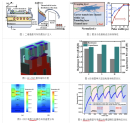
The first domestically produced X-ray morphology (XRT) instrument through a strategic collaboration between Aolong Group and Shenzhen Xinjishi. This breakthrough addresses a critical gap in the silicon carbide (SiC) semiconductor industry by providing non-destructive testing capabilities for high-end wafers. Unlike traditional methods that rely on invasive techniques, this new instrument enables precise visualization of internal crystal structures without damaging the sample, serving as an essential "invisible defense line" to bolster China's quality control standards in advanced materials manufacturing.

The development is driven by the urgent need to detect specific defects that arise during SiC single crystal growth and epitaxy processes. These imperfections include internal flaws such as dislocations and microtubes, which cause significant degradation in device performance like reduced breakdown voltage and increased leakage current. Additionally, surface-related issues like carrot defects, triangular defects, and step bundles severely impact yield rates and electrical reliability. Accurate identification of these variations is now recognized as a prerequisite for improving the efficiency and stability of SiC-based power devices.

Existing detection technologies have historically faced limitations due to their destructive nature or inability to penetrate wafer layers effectively. While methods like scanning electron microscopy (SEM) and transmission electron microscopy (TEM) offer high accuracy, they often require wet etching or electron bombardment that irreversibly damages the samples, making them unsuitable for screening large batches of wafers. Conversely, optical techniques provide speed but lack the depth to reveal internal defect distributions clearly. The XRT instrument uniquely bridges this divide by combining non-destructive characteristics with the ability to penetrate the material, offering a high-efficiency solution that preserves sample integrity while delivering detailed morphological data.

Ultimately, the introduction of this indigenous equipment marks a significant step toward enhancing yield rates and ensuring supply chain security for China's semiconductor sector. By enabling manufacturers to effectively screen, control, and reduce defects early in the production cycle, this technology supports the high-quality development of SiC devices within an era increasingly defined by deep integration with artificial intelligence. Filling the void left by foreign high-end testing gear not only strengthens domestic manufacturing.
Please, Log in or Register to view URLs content!
 

latenlazy

Brigadier

this is rather an interesting point. If we do use 171MTr/mm2 (which is not the calculation that TSMC uses) for N5, then looks like the HW's folding design needs a process that is close to N5 to achieve so much higher transistor density.
So I’m not sure if the density figures in their graph is before or after multiplying the design utilization figures, but it’s important to keep in mind that with tau scaling as the primary performance parameter what matters for Huawei isn’t the density alone but the total speed of processor operation cycles, which is why they’re also including persistent clock speed growth in their graph.
 

tokenanalyst

Lieutenant General
Registered Member

The Institute of Microelectronics has made progress in TCAD simulation of advanced electronic devices.​

Recently, the EDA Center of the Institute of Microelectronics has made a series of advances in TCAD simulation of two-dimensional memory and advanced logic devices, focusing on the needs of device-circuit co-design in the post-Moore era, and addressing issues such as interface quantum transport, logic unit interconnection and non-Fourier heat transfer modeling. The relevant results have been published in IEEE Electron Device Letters and IEEE Transactions on Electron Devices.

Two-dimensional flash memory is geared towards high-speed, low-power, non-volatile storage, but the sub-nanosecond programming mechanism remains unclear. The Institute of Microelectronics (IME) in collaboration with Fudan University has established a time-dependent quantum transport simulation framework to reproduce sub-nanosecond programming characteristics, revealing the processes of hot carrier aggregation, tunneling, and transfer, providing a basis for interface and barrier optimization. The results, titled "Ab initio Quantum Transport Simulation of High Speed 2D Flash Memory," were published in IEEE Electron Device Letters. Jia Yuntian, a doctoral student at IIE, is the first author, and Researchers Xu Qinzhi and Li Zhiqiang from IIE and Professor Lu Ye from Fudan University are the co-corresponding authors. Link:
Please, Log in or Register to view URLs content!


CFETs improve logic density through vertical stacking, but bottom device leads and signal interconnects introduce area and parasitic overhead. The Institute of Microelectronics (IME) proposes a novel hybrid channel interconnect integrated architecture and collaborative optimization process, reserving space for source-drain vias and signal interconnects, enabling direct contact between the drain terminals of the upper and lower devices, and reducing wiring and cell area. The results, titled "Simulation Design of Novel Hybrid Channel Complementary FET (HC-CFET) and Interconnect Scheme for Sub-1 nm Node," were published in IEEE Transactions on Electron Devices. Hao He, a doctoral student at IIE, is the first author, and Researcher Qinzhi Xu from IIE and Professor Zhenhua Wu from Zhejiang University are the co-corresponding authors. Link:
Please, Log in or Register to view URLs content!


Device miniaturization and three-dimensional stacking exacerbate self-heating issues, making it difficult for traditional Fourier models to describe transient heat transport at the nanoscale. The Institute of Microelectronics (IME) has developed a non-Fourier transient thermal model, revealing the limitations of the Fourier model and proposing a method to reduce hotspot temperatures by controlling the metal interconnect structure. The findings, titled "Transient Thermal Model of Advanced Nanotransistors: A Case Study of CFET," were published in IEEE Transactions on Electron Devices. An Kunlong, a doctoral student at IIE, is the first author, and Researchers Xu Qinzhi and Li Zhiqiang are the co-corresponding authors. Link:
Please, Log in or Register to view URLs content!


1779732596344.png
Please, Log in or Register to view URLs content!
 

tokenanalyst

Lieutenant General
Registered Member

The national standard "Test Methods for Intelligent Computing Memristors Part 2: Linearity", spearheaded by the Institute of Microelectronics, has been officially released.​


With the approval of the State Administration for Market Regulation and the Standardization Administration of China, the "Test Methods for Intelligent Computing Memristors Part 2: Linearity" (GB/T 46567.2-2026, hereinafter referred to as the "Standard"), which was led by the Institute of Microelectronics, was released on April 30, 2026, and will be officially implemented on November 1, 2026.

Memristors, as representative devices for realizing novel in-memory computing architectures, are considered a key technological path to overcome the bottlenecks of the "memory wall" and "power wall" in traditional computing systems. The standard system specifies the environmental conditions, test equipment, key indicators, and test methods for memristor linearity testing, providing a standardized basis for related testing work. This standard is interconnected with the standard "Test Methods for Intelligent Computing Memristors Part 1: Basic Characteristics" (GB/T 46567.1-2025), in which the Institute of Microelectronics participated, and the under-development standard "Test Methods for Intelligent Computing Memristors Part 3: Pulse-Dependent Plasticity" (Project No.: 20253308-T-469), providing complete standardized support for the systematic testing of memristors from basic characteristics to linearity and plasticity functions. This forms a standard system for memristor testing methods and is an important achievement of the Institute of Microelectronics in actively promoting standardization collaboration in the interdisciplinary field of intelligent computing and semiconductor devices.​


Please, Log in or Register to view URLs content!
 

tokenanalyst

Lieutenant General
Registered Member

Sanfu New Technology's mSAP-specific chemicals and equipment empower domestic substitution in the PCB industry chain for the era of high-density interconnects.​


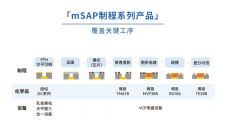
In 2026, the global computing power market is experiencing a super cycle driven by artificial intelligence, with server PCB demand projected to reach RMB 181.5 billion and AI mobile phone shipments hitting 480 million units. This surge is fueling a structural upgrade in the industry, where high-end devices like AI laptops and glasses require PCBs that are significantly more complex and valuable than standard models. The technological focus has shifted from mere capacity expansion to precision manufacturing, specifically toward the Modified Semi-Additive Process (mSAP). This advanced method enables ultra-thin copper foils and extremely fine linewidths (15μm or less) essential for high-density interconnects, CPO optoelectronic integration, and substrate-like boards used in GPU packaging.

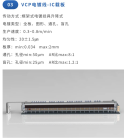
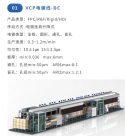
Sanfu New Technology (SFT) is integrating its own chemical expertise with complementary equipment manufacturers to build a complete mSAP solution. By partnering with Boquan Chemical for specific developing, removing, and etching solutions, and Mingyi Electronics for electroplating machinery including sheet VCP systems, SFT has created a deeply adapted production line.
This ecosystem allows them to meet the rigorous requirements of AI servers and automotive electronics, establishing a technological barrier that matches international standards while ensuring domestic controllability.

Furthermore, Sanfu New Technology's technical preparations are now complete, with DC series reliability tests successfully passed. Specific process chemicals have already moved beyond theoretical phases and are being implemented by leading PCB clients in real-world applications.

1779734090381.png
1779734136645.png1779734153996.png1779734111842.png

Please, Log in or Register to view URLs content!
 

Michael90

Senior Member
Registered Member
However, he also admitted that many domestic customers still hold the preconceived notion that "foreign equipment is better," and appealed to domestic customers to give local equipment manufacturers more opportunities for trial and verification
Yeah you can do everything and change things. But you can’t change some people lack of self confidence in themselves and their sense of inferiority complex towards others. It will take a long time for this feeling to disappear completely . Old habits die hard unfortunately .
 

tokenanalyst

Lieutenant General
Registered Member
The govt wants champions but also a healthy ecosystem. The market makes champions that like to destroy ecosystems.
To start Huawei is a private company owned by its employees but despite that it seems that Ren Zhengfei has good relations with the Central Government. especially after the Canada incident with Ren daughter.

Now, they are in survival mode, in a guerrilla war against the US and they are a pretty critical company in China. If they fall will only embolden the stooges to target more companies in China like Lenovo or Xiaomi. They are innovating their way out of a hole that would had killed any company in the world a long time ago. Is a pretty big achievement.

IMO I don't think Huawei is more aggressive than other Chinese companies like Xiaomi, in fact I think Xiaomi is more aggressive. Huawei is pretty secretive about their semiconductor manufacturing advancements, I think they are the main culprit for the lack of information of China lithography industry because a large chunk of the most advanced machines (DUVi and EUV) will go to them and SMIC.
 

latenlazy

Brigadier
To start Huawei is a private company owned by its employees but despite that it seems that Ren Zhengfei has good relations with the Central Government. especially after the Canada incident with Ren daughter.

Now, they are in survival mode, in a guerrilla war against the US and they are a pretty critical company in China. If they fall will only embolden the stooges to target more companies in China like Lenovo or Xiaomi. They are innovating their way out of a hole that would had killed any company in the world a long time ago. Is a pretty big achievement.

IMO I don't think Huawei is more aggressive than other Chinese companies like Xiaomi, in fact I think Xiaomi is more aggressive. Huawei is pretty secretive about their semiconductor manufacturing advancements, I think they are the main culprit for the lack of information of China lithography industry because a large chunk of the most advanced machines (DUVi and EUV) will go to them and SMIC.
I’m just relaying what others in the industry internally thinks about Huawei. There are also some policymakers who don’t like how aggressively Huawei pushes to try to get what it wants too. It’s not a universal sentiment but it’s also not an uncommon one. What really matters though is the central govt doesn’t want a monolith controlling too many critical industrial stacks because they’re wary of agglomerative competitive advantage making it impossible for other players to participate in the economy so eventually if Huawei continues to bulldoze this many industries and gets too many monopolies the central govt will have to step in and find some way to balance the situation in order to keep the market environment healthy.
 
Top