Chinese semiconductor thread II

sunnymaxi

Colonel
Registered Member
Huawei's HBM-like products are not called HBM, because Huawei is not a JEDEC member. Moreover, the so-called mass production of HBM3 by CXMT is based on Korean media reports. I think the Koreans have overestimated CXMT's R&D capabilities. CXMT's latest project is the Phase 2, Stage 2 wafer fab in Beijing, with a process technology of 17 to 15 nanometers, and it is just for ordinary DRAM, not HBM. Huawei has many shadow fabs; the HBM production could come from its own fab or from Fujian Jinhua (JHICC). Tongfu Microelectronics started trial production at the end of 2024 at its packaging and testing plant in Nantong, with an annual packaging capacity of 2 million HBM memory chips

Huawei is still a member of JEDEC and there are multiple players in HBM and CXMT also doing HBM memory but not yet mass production. in fact their HBM3 samples verified in late 2025.. they also massively expanding Shanghai fab with total capacity projected to reach more than 2X that of its Hefei base. this Shanghai plant basically is their HBM mass production plant if everything goes well.

@jx191
 
Last edited:
huemens

Junior Member
Registered Member

EU to propose temporary exemption on China chips from 20th sanctions package​

Please, Log in or Register to view URLs content!
The European Union will propose temporarily lifting sanctions on a Chinese semiconductor supplier ‌as early as this week, Bloomberg News reported on Thursday, citing people familiar with the matter.
Last month, the European Union formally approved ⁠some new sanctions against Russia that also included certain Chinese entities, a move which China's commerce ministry expressed firm opposition to.
Bloomberg said that the Chinese semiconductor firm was one of the entities included ‌in ⁠the list.
European automakers had lobbied the EU to delay the ban on the Chinese firm, saying that they ⁠haven't had time to diversify their supply chains and that the measures would ⁠cause stocks to be depleted in weeks, the report said.
 

jx191

Junior Member
Registered Member
Huawei is still a member of JEDEC and there are multiple players in HBM and CXMT also doing HBM memory but not yet mass production. in fact their HBM3 samples verified in late 2025.. they also massively expanding Shanghai fab with total capacity projected to reach more than 2X that of its Hefei base. this Shanghai plant basically is their HBM mass production plant if everything goes well.

@jx191
Thanks for the info.

Again, my concern was that CXMT delays in HBM3 would mean Huawei cannot mass produce Ascend 950DT and Atlas 950.

After discussion it seems Huawei should be okay as they have invested in their own packaging which alleviates some of the dependency and CXMT should still be able to play a role in supply.
 

tokenanalyst

Lieutenant General
Registered Member

TCL Zhonghuan establishes new semiconductor materials company in Shenzhen​


TCL Zhonghuan Holdings established a new semiconductor materials company in Shenzhen – Shenzhen Zhonghuan Leading Semiconductor Materials Co., Ltd., to further improve its layout in the semiconductor industry chain and strengthen its R&D and supply capabilities for key materials.

TCL Zhonghuan, a leading global photovoltaic and semiconductor silicon wafer manufacturer, has made a significant move to extend its semiconductor industry chain by establishing a semiconductor materials company in Shenzhen. Leveraging the industrial clusters and innovation resources of the Guangdong-Hong Kong-Macao Greater Bay Area, the new company will focus on the R&D, production, and sales of key semiconductor materials, helping the company enter the niche semiconductor materials market and build a business structure driven by both photovoltaics and semiconductors. The establishment of this new company will allow it to transfer its mature experience in crystal growth and precision machining to the semiconductor materials field, providing high-quality material support for the domestic semiconductor industry chain.

Please, Log in or Register to view URLs content!
 

tokenanalyst

Lieutenant General
Registered Member

The team at the Shenzhen Pinghu laboratory has overcome the challenges of developing gallium oxide photoconductive switches with "ultra-fast response, ultra-high on/off ratio, and over 10,000 volt withstand voltage".​


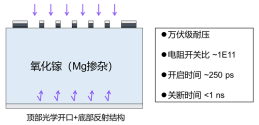
Recently, the fourth-generation semiconductor team at the Shenzhen Pinghu Laboratory has achieved another major breakthrough: following their previous successful development of a 10,000-volt vertical-structure gallium oxide photoconductive switch, the team has developed a Mg-doped gallium oxide photoconductive switch using domestically produced gallium oxide materials from Gallium Core Semiconductor. This switch boasts ultra-fast response, ultra-high on/off ratio, and over 10,000-volt withstand voltage. Thanks to the deep-level compensation effect introduced by Mg doping, the device achieves a withstand voltage exceeding 220 kV/cm, an on/off ratio as high as 1×10¹¹, and a turn-off time of less than 1 ns, setting a new record and achieving a leapfrog lead in the fourth-generation semiconductor field.
1779381766012.png
A core member of the team stated, "Doping engineering is the key to optimizing the performance of gallium oxide photoconductive switches. This breakthrough in Mg doping not only verifies the feasibility of this approach but also paves the way for the practical application of next-generation high-performance optical power devices." Equally noteworthy is that this "super switch" is a domestically produced, pure-blooded device made with domestically sourced materials, solidifying the core foundation for independent control of fourth-generation semiconductors.

This ultra-high voltage (UHV) Mg-doped gallium oxide (GaO) photoconductive switch targets major national needs, with applications covering multiple key areas such as high-voltage direct current (HVDC) transmission, pulsed power scientific devices, and advanced radar. The fourth-generation semiconductor team at the Shenzhen Pinghu Laboratory has achieved two milestone breakthroughs, ensuring China's continued leadership in the field of GaO photoconductive switches. In the future, with continued advancements in GaO material growth and doping processes, photoconductive switches based on different doping strategies will be implemented, undoubtedly shining brightly in even more critical fields and becoming a core force driving technological self-reliance.

Please, Log in or Register to view URLs content!
 

tokenanalyst

Lieutenant General
Registered Member

Xingyuan Crystal Computing joins hands with Tsinghua Tianjin Equipment to tackle atomic-level chip manufacturing challenges.​


Xingyuan Crystal Computing Technology and Tsinghua University’s Tianjin Advanced Equipment Research Institute have formally partnered to advance atomic-level manufacturing of gallium nitride (GaN) chips specifically for humanoid robot joint modules. The collaboration focuses on three key areas: evaluating the industrial application of GaN power and driver chips in robotic joints, mastering atomic-scale fabrication processes to push device performance limits, and developing optimized chip selection and heterogeneous integration strategies for high-power-density drive systems. By streamlining the entire development chain from semiconductor design to mechanical assembly, the partnership aims to overcome the thermal management and efficiency bottlenecks that traditional silicon-based components face in next-generation robotics.

This initiative responds to the growing demand for lightweight, miniaturized, and highly efficient robotic actuators, where GaN’s superior switching frequency, energy efficiency, and power density make it a leading candidate for advanced electric drive systems. Tsinghua Tianjin’s precision manufacturing experts will leverage their research in atomic-scale processing and superlubricity to enhance fabrication consistency, reliability, and system-level integration. As humanoid robots rapidly emerge alongside electric vehicles and data centers as major growth markets for wide-bandgap semiconductors, this alliance underscores a broader industry shift toward coordinated innovation across advanced materials, ultra-precision manufacturing, and intelligent robotics engineering.

Please, Log in or Register to view URLs content!
 

tokenanalyst

Lieutenant General
Registered Member

Smartsens introduces a new series of image sensors with ultra-large surface area and ultra-high resolution for industrial camera applications.​


SmartSens has officially introduced a new series of ultra high resolution image sensors designed specifically for industrial camera applications. The new lineup includes the 45 megapixel SC4880RS, the 30 megapixel SC3080RS, and the 20 megapixel SC2080RS. These sensors are engineered to meet the rigorous demands of high precision industrial defect detection across various advanced manufacturing sectors.

Built on the SmartClarity 3 technology platform, this series utilizes advanced mask stitching technology to successfully manufacture chips with ultra large target areas. The sensors are specifically optimized for inspecting products that require flawless surface analysis, including lithium battery films, OLED screens, photovoltaic wafers, European standard lithium battery metal casings, and complex PCB boards.

The new sensors deliver ultra high resolutions that enable the precise detection of minute imperfections on the surface of objects. The SC3080RS and SC2080RS feature a 1 to 1 aspect ratio, making them highly adaptable for automated optical inspection cameras. Meanwhile, the flagship SC4880RS achieves a 2.7 inch standard industrial camera sensor size, ensuring broad compatibility with mainstream large sensor lenses.

Below are the key product parameters and characteristics of the new sensor series:
  • Sensor Resolutions: 45MP for SC4880RS, 30MP for SC3080RS, and 20MP for SC2080RS​
  • Sensor Size: 2.7 inch standard industrial size for the SC4880RS​
  • Aspect Ratio: 1 to 1 ratio for the SC3080RS and SC2080RS models​
  • Technology Base: SmartClarity 3 platform with PixGain HDR technology​
  • Light Sensitivity: Reaches up to 15323 mV per lux second​
  • Readout Noise: As low as 0.86 electrons at 32 times analog gain​
  • Dynamic Range: 71.5 dB in normal mode and 88.11 dB in PixGain HDR mode​
  • Long Exposure Performance: 12.9k white pixel rate at 30 seconds, outperforming the 16k industry standard​
  • Packaging Options: Traditional CLGA package, plus a cost effective COB package for the SC2080RS​

Thanks to the underlying SmartClarity 3 technology, these sensors boast exceptional light sensitivity and extremely low noise. This superior performance allows the cameras to capture clear, bright images even in low light environments, significantly reducing the reliance on external lighting equipment while providing rich image detail.

To combat localized overexposure caused by reflections on metallic or glossy surfaces, the sensors employ advanced high dynamic range capabilities. This ensures accurate detail capture in both bright and dark areas during the defect detection of products like OLED screens and metal casings, while also effectively suppressing motion artifacts for stable imaging.

Industrial inspection often requires long exposure times to spot subtle defects that are difficult to identify under conventional settings. The new series features optimized long exposure imaging that significantly reduces white pixel interference, resulting in much cleaner images. Additionally, the advanced manufacturing process effectively suppresses white spot formation in high temperature operating environments, guaranteeing clean and detailed image output even when the equipment generates high heat.

1779383927811.png

Please, Log in or Register to view URLs content!
 

tokenanalyst

Lieutenant General
Registered Member

Harbin Institute of Technology team: New breakthrough in thick-film diamond growth on GaN​


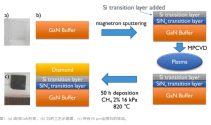
A research team led by Jiaqi Zhu at the Harbin Institute of Technology has achieved a significant breakthrough in the growth of thick-film diamond on Gallium Nitride (GaN) substrates, addressing a critical bottleneck in the thermal management of high-power electronic devices. As applications in AI servers, 5G communications, and high-frequency radar demand higher power densities, the self-heating effects in GaN devices have become a major limitation. While diamond offers superior thermal conductivity compared to traditional silicon carbide, directly growing diamond on GaN is challenging due to high-temperature hydrogen plasma degradation and interface delamination caused by thermal expansion mismatches.

To overcome these obstacles, the team developed a novel SiNx/Si double interlayer strategy, which was published in the journal Diamond & Related Materials. The SiNx layer serves to protect the GaN surface from plasma damage and maintain interfacial stability, while a thin ~5 nm Si layer enhances the nucleation and adhesion of carbon species. This dual-layer approach effectively prevents the film ablation and delamination issues that typically occur during microwave plasma chemical vapor deposition (MPCVD) at temperatures around 820°C.
1779394422027.png
Experimental results demonstrated the success of this method, with the team depositing a continuous, dense polycrystalline diamond film approximately 50 μm thick over a 50-hour process. Advanced analyses, including TEM and Raman spectroscopy, confirmed the high quality of the film, showing no significant graphitization or Ga diffusion into the interface. The resulting structure exhibits a stable, abrupt heterogeneous interface with a preferred <111> orientation, proving that the SiNx/Si interlayer successfully balances GaN protection with effective diamond nucleation. This achievement provides a promising, simplified alternative to complex wafer bonding techniques for creating "GaN-on-diamond" structures.​

Please, Log in or Register to view URLs content!
 

Michael90

Senior Member
Registered Member
keep in mind that this actually hasn't happened yet.

Chinese big tech are still using a lot of Nvidia chips through the offshore data centers, mostly in Southeast Asian countries. Nvidia and SMCI know this and turn a blind eye to it.
Yes, I don’t think here’s anybody who doesn’t realize this today actually. lol I’m just surprise US hawks are not pressuring the administration to put sanctions on entities renting and aiding Chinese companies use this loophole . lol
 
Top