Chinese semiconductor thread II

tphuang

General
Staff member
Super Moderator
VIP Professional
Registered Member
Please, Log in or Register to view URLs content!

Update on this project
深圳平湖实验室 and 镓仁半导体/Garen Semi worked together to develop > 10 kV ultra-low on-resistance Ga2O3 photoconductive switches. Will have < 10 ohms & < 1ns response time. This has application in high voltage DC power transmission, high power pulse generatio, particle accelerators and defense equipment.
found 2026/5
This has now been Mg doped instead of Fe doped as of 2026/5. It has achieved better on/off ratio, faster response & 220 kV.cm breakdown field. It solved problem of can't turn off cleanly/leaks too much.
这款超万伏级Mg掺杂氧化镓光导开关,是瞄准国家重大需求,应用场景覆盖高压直流输电、脉冲功率科学装置、先进雷达等多个关键领域。
read the last 2: advanced radar and pulsed power scientific devices. I'm going to post something more here. but this is a big deal, especially for radar/RF applications.
 

tokenanalyst

Lieutenant General
Registered Member

12-inch SiC Inspection Equipment Successfully Delivered​


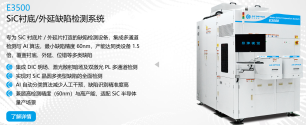
Recently, Onkun Semiconductor Co., Ltd., a domestic Chinese semiconductor testing equipment manufacturer, announced the successful delivery of China's first independently developed 12-inch silicon carbide (SiC) wafer defect inspection system, model E3500 G4XP. This milestone represents a major breakthrough for China's semiconductor industry, particularly in the field of ultra-large-size third-generation semiconductor manufacturing. The equipment shipment provides crucial support for the industry's transition toward larger wafer sizes and scaled production capabilities.

The growing demand for silicon carbide substrates is being driven by rapid expansion in applications such as new energy vehicles, AI data centers, photovoltaic energy storage, and smart grids. Within this context, 12-inch SiC substrates have emerged as a strategic focus for reducing production costs and increasing manufacturing capacity globally. However, producing these larger wafers presents significantly greater technical challenges compared to the current mainstream 6-inch and 8-inch products. The complexity of crystal growth, cutting, polishing, and epitaxial fabrication makes large-size substrates more prone to defects such as microtubes, dislocations, cracks, and stacking faults—all of which directly impact device yield and long-term reliability.

To address these challenges, high-precision defect detection equipment has become essential for ensuring wafer quality and process stability. Historically, China has lacked mature domestic solutions in this specialized field, creating a bottleneck for the mass production of 12-inch SiC wafers. The newly delivered E3500 G4XP system was specifically engineered to meet the inspection demands of 12-inch SiC wafers. It integrates multiple advanced technologies, including bright-field differential interferometry, laser dark-field scattering, and laser PL fluorescence detection, enabling comprehensive identification of diverse defect types. The equipment incorporates technical features comparable to mainstream international inspection systems and is capable of detecting multiple critical defects in ultra-large-size SiC wafers, thereby enhancing the consistency and reliability of both substrate and epitaxial products.​
1779292452592.png

In terms of operational intelligence, the system supports multi-task parallel processing and rapid analysis of massive datasets, with capabilities for automatic identification and classification of typical defects such as triangles, micropipes, scratches, and particles. Additionally, the equipment features an intelligent operating interface designed to lower the technical threshold for operators, improve overall inspection efficiency, and better accommodate batch production needs in complex manufacturing environments.

Industry experts view this delivery as having significant implications for China's semiconductor ecosystem. First, it is expected to help domestic SiC manufacturers overcome quality control challenges during production scale-up, accelerating the industrialization and cost reduction of 12-inch substrates. Second, it provides Chinese wafer fabs with a more cost-effective, locally sourced testing solution, reducing both procurement and maintenance expenses while fostering coordinated development across the supply chain. Most importantly, this achievement signals China's gradual reduction of reliance on imported high-end SiC testing equipment. As global competition intensifies in the third-generation semiconductor sector, self-sufficiency in core process equipment like defect inspection systems is becoming increasingly strategic. Looking ahead, as the 12-inch SiC industry continues to mature, the market for related inspection equipment is poised for substantial growth.​

Please, Log in or Register to view URLs content!
 

jx191

Junior Member
Registered Member
HW according to its own presentations makes its own HBM standard which I assume it does its own advanced packaging (since it has the patent for that). You are basing projection of their 950DT production on some Korean Media article about CXMT HBM3. How exactly are these things related?
I was initially assuming that HW's HBM will somewhat relied on CXMT production, despite having proprietary design. And if CXMT is delayed for HBM3 production then Huawei's Ascend plans would be in trouble. The media report seemed fairly credible, the main argument was CXMT has not placed any mass production orders.
 

tphuang

General
Staff member
Super Moderator
VIP Professional
Registered Member
I was initially assuming that HW's HBM will somewhat relied on CXMT production, despite having proprietary design. And if CXMT is delayed for HBM3 production then Huawei's Ascend plans would be in trouble. The media report seemed fairly credible, the main argument was CXMT has not placed any mass production orders.
Why would CXMT place any mass production orders? They are not the end user.

There are in fact several players in China working on HBM (it's just advanced packaging after all), who are not CXMT. I would think they are using CXMT DRAM dies, but again, no firm proof on that either. you can certainly have LTA with Samsung or SK that you stack together also.

Whoever Huawei sources DRAM dies from does not change the idea that it has its own HBM designs so it is probably making its own HBMs. Now, there is obviously the chance that it just designs & doesn't do the actual packaging, but that seems unlikely, given the investment it has put in advanced packaging.

If we look at CXMT, it made 50B RMB in just Q1 & expect another 60-70B in Q2. I would venture to guess not all of that will just be installed as DDR5 into servers. A lot of that is sold to companies like Huawei looking to package into HBMs or in other advanced packaging designs.
 

tokenanalyst

Lieutenant General
Registered Member

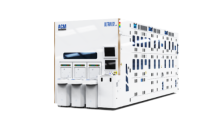
ACM Shanghai: Expanding into emerging fields of advanced packaging, simultaneously covering both wafer-level and panel-level markets.​


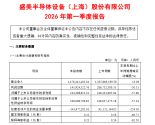
ACM Research Shanghai is expanding its semiconductor equipment portfolio into the mid-end advanced packaging sector to address capacity constraints driven by surging demand for AI chips and high-performance computing. The company reported robust financial performance, with 2025 revenue increasing 20.8% to RMB 6.786 billion and Q1 2026 revenue growing 13.1% year-over-year, bolstered by rapid growth in its electroplating division (+46%) and advanced packaging wet processing equipment (+37%). Technologically, ACM has developed vacuum flux cleaning capabilities to overcome penetration challenges in sub-40μm chiplets and HBM applications, ensuring effective cleaning of fine structures where traditional methods fail, while its electroplating solutions continue to deliver high gross margins and significant revenue contribution.
1779306968657.png
In addition to wafer-level advancements, ACM is aggressively pursuing panel-level fan-out packaging (FOPLP), launching a suite of core equipment including edge wet etching and negative pressure flux cleaning systems. A highlight is the Ultra ECP ap-p panel-level horizontal electroplating tool, which utilizes rotation and independent multi-anode control to ensure plating uniformity while minimizing cross-contamination, making it ideal for large panels with submicron RDLs and micropillars. Showcasing its technical leadership, ACM Vice President Jia Zhaowei will present on electroplating challenges in 3D chip integration at the upcoming CIMC Conference, underscoring the company's commitment to driving innovation and fostering collaboration across the advanced packaging ecosystem.

1779306950343.png

Please, Log in or Register to view URLs content!
 

tokenanalyst

Lieutenant General
Registered Member

Formic acid reflux technology leads to a new breakthrough in advanced packaging with domestically produced process equipment entering the high-precision era.​


As traditional semiconductor node scaling approaches physical and economic limits, the industry has entered a post-Moore’s Law era where further miniaturization is increasingly costly and inefficient. In response, the focus has shifted decisively toward advanced packaging as the primary engine for continued performance gains and system-level integration. By leveraging processes like RDL interconnects, through-silicon vias (TSVs), and precision bump formation at the package level, advanced packaging now reconstructs chip functionality to extend Moore’s Law while mitigating rising manufacturing expenses and thermal challenges.

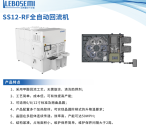
At the core of this shift is formic acid reflow technology, which fundamentally overhauls traditional bump soldering processes. Unlike conventional flux-based methods that require separate coating, reflow, and cleaning steps, formic acid reflow eliminates these phases entirely, slashing equipment costs, conserving cleanroom footprint, and accelerating production cycles. The approach triples throughput to over 48 wafers per hour compared to just 15–20 with legacy systems, while simultaneously boosting yield and reliability by removing the risk of flux residue contamination in increasingly microscale bumps.

Jiangsu Leibo Microelectronics Equipment Co., Ltd., have successfully scaled fully automated domestic formic acid reflow systems that now benchmark competitively against leading international models. These homegrown machines feature optimized internal mechanisms, improved serviceability, and proven reliability on high-density 8-inch test wafers with copper pillar and SnAg bumps. This advancement underscores China’s growing capability in high-end semiconductor equipment, reducing foreign dependency and strengthening the resilience of the global advanced packaging supply chain.​

1779307787052.png


Please, Log in or Register to view URLs content!
 

tokenanalyst

Lieutenant General
Registered Member
When are these IPO happenning?
Are thy listing in Hong Kong or Shanghai?
China’s leading memory chipmaker Yangtze Memory Technologies is taking a major step toward a domestic stock market debut. According to filings published by China’s securities regulator, Yangtze Memory Technologies Holding Co. has completed IPO tutoring registration with the Hubei branch of the China Securities Regulatory Commission, with CITIC Securities acting as its sponsor for a planned public listing. Reuters previously reported that the company could formally submit its application for Shanghai’s STAR Market as early as mid-June 2026.

Please, Log in or Register to view URLs content!
 

jx191

Junior Member
Registered Member
Why would CXMT place any mass production orders? They are not the end user.

There are in fact several players in China working on HBM (it's just advanced packaging after all), who are not CXMT. I would think they are using CXMT DRAM dies, but again, no firm proof on that either. you can certainly have LTA with Samsung or SK that you stack together also.

Whoever Huawei sources DRAM dies from does not change the idea that it has its own HBM designs so it is probably making its own HBMs. Now, there is obviously the chance that it just designs & doesn't do the actual packaging, but that seems unlikely, given the investment it has put in advanced packaging.

If we look at CXMT, it made 50B RMB in just Q1 & expect another 60-70B in Q2. I would venture to guess not all of that will just be installed as DDR5 into servers. A lot of that is sold to companies like Huawei looking to package into HBMs or in other advanced packaging designs.
Thanks for the clarification. It seems Huawei's move to advanced packaging could really pay off as they aren't completely reliant on one external source for something as important as HBM.
 

tokenanalyst

Lieutenant General
Registered Member
The only company in the lithography supply chain that is putting some information. Moray Optics (MLOPTIC). They are competing against Gopptix (Guowang Optics) for supplying optical components for China lithography industry. They are getting a foothold in metrology, manufacturing of KrF and ArF illumination optical systems, they already are shipping.
MLoptics seem to be more aggressive in I-line, KrF/ dry ArF subsystems while all the patents from Gopptix points towards immersion.

Optical Measurement Technology for Defects in Photolithography Front End machine
The expected R&D tasks have been fully completed, and the prototype of the ultraviolet detection system has been successfully prepared and delivered. It is currently in the small-batch mass production stage.
We develop and design various optical systems operating in the 193nm~365nm spectral range, including microscopy, projection, and illumination systems, as well as the capability to process and test related high-precision optical devices.

Research on high-precision optical device processing and testing technology for lithography machine illumination systems
The development of high-precision optical lenses for the KrF lithography machine illumination system has been completed. After actual verification by the customer, all indicators meet the requirements of the optical system.
The optical system is one of the core functional components of a lithography machine, characterized by high performance requirements and significant foreign technological embargoes. The illumination system's main function in a lithography machine is to provide a specific spectral and intensity distribution of illumination light for the projection lens imaging. Located at the intersection of the light source and optical elements, it constructs a complex and precise non-imaging optical architecture, providing a solid foundation for the precision and quality of lithography.

High-precision interferometer main system
The first prototype has been assembled, debugged, and tested.
Complete the hardware and software development of the high-precision interferometer, ensuring that repeatability and system ITF meet the requirements.
High-precision interferometers improve phase resolution and repeatability, and can detect mid-to-high frequency surface shape errors.

The company's lithography business will rely on i-line expansion in the short term and DUV industrialization in the long term , and its growth potential can be clearly calculated:

Shanghai Microelectronics plans to build 150 i-line lithography machines per year, with clear demand for lens outsourcing, making the company a core candidate. Based on a lithography business revenue of 150-160 million yuan in 2025, revenue could reach 150/400/750-900 million yuan under conservative/basic/aggressive scenarios, representing several times the growth potential.

Small-batch verification of KrF lithography in 2026-2027, stable mass production in 2027-2028, with a unit value of 50 million yuan with the localization of mature 28nm and above processes, the domestically produced KrF/ArF lithography machines can sell dozens of units annually, the company's DUV business could easily reach billions of yuan , a key step from "hundreds of millions" to "billions of yuan".​
 
Last edited:
Top