Chinese semiconductor thread II

tokenanalyst

Lieutenant General
Registered Member

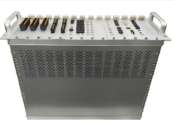
Reference-grade ultra-high precision temperature acquisition system​


The reference-grade ultra-high precision temperature acquisition system achieves a temperature measurement accuracy of ±0.0001℃ and a high temperature measurement rate of 1 second/time within a narrow temperature range of +18~+26℃. It is widely used in high-end manufacturing, semiconductor, and biomedical fields and is suitable for high-end temperature measurement scenarios.

1778706122526.png

High-precision temperature measurement and control embedded hardware and software system​


This system is equipped with a fully domestically produced high-end precision temperature measurement board with independent intellectual property rights, achieving a measurement accuracy of ±0.1mK (0.0001℃), reaching the international forefront and leading level in China, while its size is only 10% of that of international products with the same performance. The underlying control software and control logic of the temperature control board can be flexibly modified and are easy to integrate with software. The measurement speed is fast, 1 second per channel, and each temperature measurement board has 8 channels. It supports NTC thermistors, PT1000 and other platinum resistance temperature sensors. The modular design makes the system flexible, easy to integrate and has good scalability. The temperature is monitored in real time, and the data can be saved and exported.​

1778706180071.png

Please, Log in or Register to view URLs content!
 

tokenanalyst

Lieutenant General
Registered Member

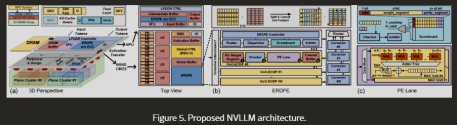
NVLLM: A 3D NAND-Centric Architecture Enabling Edge on-Device LLM Inference​

Abstract.​

The rapid growth of LLMs demands high-throughput, memory-capacity-intensive inference on resource-constrained edge devices, where single-batch decoding remains fundamentally memory-bound. Existing out-of-core GPU-based and SSD-like accelerators are limited by DRAM-bound weight movement and inefficient storage access granularity. We present NVLLM, a 3D NAND-centric inference architecture that offloads feed-forward network (FFN) computation into the Flash while executing attention on lightweight CMOS logic with external DRAM. Through wafer-to-wafer stacking, NVLLM tightly integrates multi-plane 3D NAND with compute pipelines, error correction code (ECC) units, and buffers, enabling page-level FFN weight access without DRAM traversal. All GEMM/GEMV operations are decomposed into dot-product primitives executed by out-of-order PE lanes, operating directly on raw NAND reads with integrated ECC. Attention weights remain in DRAM, and a KV-cache-aware scheduler sustains throughput as the context length grows. Evaluated on OPT and LLaMA models with up to 30B parameters, NVLLM achieves a 16.7×–37.9× speedup over A800-based out-of-core inference and up to 4.7× speedup over SSD-like designs, with only 2.7% CMOS area overhead.

1778707168151.png

Please, Log in or Register to view URLs content!
 

tokenanalyst

Lieutenant General
Registered Member

Breaking through the barriers of semiconductor equipment, Ounuo Semiconductor completes a new round of financing​

Recently, Hangzhou Ounuo Semiconductor Equipment Co., Ltd. completed a new round of financing, led by Zhejiang Merchants Venture Capital, with Dapu Capital serving as the exclusive financial advisor for this round. The funds will primarily be used for product research and development, capacity expansion, and market development, further solidifying its leading position in the semiconductor furnace equipment field. In the long chip manufacturing industry chain, equipment is one of the "bottleneck" links. Furnace equipment, in particular, is a key piece of equipment in wafer manufacturing, covering a wide range of processes, with high technological barriers, and long dominated by overseas monopolies. Ounuo Semiconductor's rapid gain of capital recognition is precisely because it has made a genuine breakthrough in domestic production in this niche market.  

Furnace Tube Equipment is a Key Bottleneck in Advanced Processes semiconductor equipment is a core link in the chip industry chain for self-reliance and control, and furnace tube equipment is a key piece of equipment that runs through the entire process of wafer manufacturing—front-end, mid-end, and back-end—undertaking core processes such as oxidation, diffusion, annealing, and thin film deposition. In mature processes, furnace tube-related processes account for approximately 20–30 layers; in advanced processes below 14nm, the proportion of furnace tube processes further increases to over 30 layers, making it a key piece of equipment determining chip yield and performance.

Ounuo addresses industry pain points through two proprietary technologies:​
  1. Cavity-based Membrane Ultra-Clean Technology: A metal-free solution that improves step coverage, reduces void formation, and achieves particle defect control below 10 particles. It has verified performance matching top-tier international standards with a 50% faster verification cycle than the industry average.​
  2. Precise Cryogenic Control Technology: Solves the lack of high-precision low-temperature control (below 200°C) required for advanced packaging and HBM bonding, offering superior temperature uniformity compared to domestic competitors.​
1778710816181.png
This financing round validates Ounuo's ability to break through technological barriers in niche, high-value equipment markets, aiming to reduce reliance on overseas monopolies and accelerate the localization of semiconductor manufacturing processes in China.

Please, Log in or Register to view URLs content!
 

tokenanalyst

Lieutenant General
Registered Member

Compound semiconductor materials manufacturer Zhuzhou Keneng is once again attempting to list on the Science and Technology Innovation Board (STAR Market). Its IPO application has been accepted by the Shanghai Stock Exchange, with a planned fundraising of 560 million yuan.​


Zhuzhou Keneng New Materials Co., Ltd. has successfully secured its second attempt to list on the Shanghai Stock Exchange's Science and Technology Innovation Board (STAR Market), becoming the seventh accepted IPO project in 2026. Following an initial application in 2023 that was withdrawn in October 2025, the company re-submitted its filing with Shengang Securities as the sponsoring institution. The prospectus indicates a planned fundraising of 560 million yuan, which marks a significant step forward for this core enterprise in high-purity rare and dispersed metal materials after more than six months since its previous withdrawal.

The raised capital will be strategically allocated to three main areas: 330 million yuan for a new 500-ton-per-year semiconductor high-purity materials project including recycling capabilities; 130 million yuan for constructing an advanced R&D center focused on rare and dispersed metals; and the remaining 100 million yuan for supplementing working capital. These funds aim to expand production capacity, strengthen research and development, and meet surging demand from downstream sectors such as compound semiconductors (e.g., indium phosphide, gallium arsenide) and flat-panel display targets like ITO and IGZO, positioning the company to address domestic gaps in high-end electronic materials.
1778711328859.png

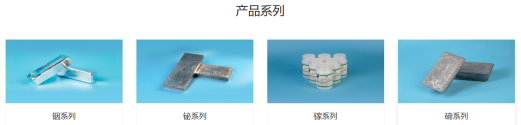
Founded in 2001, Zhuzhou Keneng has demonstrated strong financial growth, with operating revenue rising from approximately RMB 609 million in 2023 to over RMB 1.027 billion in 2025, reflecting a three-year compound annual growth rate exceeding 30%. As a major global supplier of refined indium and key materials for domestic chip manufacturers like Mitsui Metals and Sanan Optoelectronics, the company is well-placed to capitalize on rising demand from AI chips, advanced displays, and new energy sectors. Currently, its application has entered the review process, with the final listing outcome dependent on how it responds to regulatory inquiries and progresses through registration.

Please, Log in or Register to view URLs content!
 

snake070

New Member
Registered Member
New patents related to EUV from SIOM

An apparatus and method for batch cleaning of nozzles in an extreme ultraviolet (EUV) light source


Technical Field
[0001] The present invention belongs to the technical field of extreme ultraviolet (EUV) light source manufacturing and maintenance, and specifically relates to an apparatus and method for batch cleaning of nozzles in an EUV light source, which is particularly suitable for batch, efficient, and precise removal of processing residues and contaminants from the interior of nozzles.

Background Art
[0002] In the field of extreme ultraviolet (EUV) lithography, the droplet generator is one of the core components of an EUV light source. It ejects micron-sized tin droplets through a precision nozzle to serve as a plasma target for generating 13.5 nm wavelength EUV light. The processing and manufacturing techniques of the nozzle directly affect the droplet size, velocity, and stability, which in turn determine the conversion efficiency and lithography performance of the EUV light source.

[0003] During the fabrication stage of the nozzle, its micron-scale flow channels require high-precision machining, such as laser ablation, electrochemical etching, or mechanical grinding. However, the following problems are prone to occur during the machining process:

  1. Accumulation of processing residues: Laser ablation or etching processes may leave behind metal debris, slag, chemical etching by-products, glass debris, etc. These residues adhere to the inner walls or flow channels of the nozzle.
  2. Risk of contaminant introduction: Particles, grease, or oxide layers from the manufacturing environment may block the flow channels, affecting the initial performance testing of the nozzle.
[0004] Currently, the cleaning of such high-precision nozzles mostly relies on manual operation or single-unit cleaning equipment, which suffers from low efficiency, poor consistency, and susceptibility to secondary contamination. In particular, the lack of batch cleaning capability makes it difficult to meet the demands of large-scale production and maintenance. Moreover, traditional cleaning methods often rely on a single physical or chemical means, with limited effectiveness in removing firmly adhered micro- and nano-scale particles. They also lack in-line monitoring and integrated process control, making it difficult to ensure cleaning quality.

[0005] Therefore, there is an urgent need to develop an apparatus and method capable of batch and automated nozzle cleaning, integrating ultrasonic agitation, alternating positive and negative pressure flushing, and post-cleaning in-situ inspection, so as to improve cleaning efficiency, ensure cleaning quality, and meet the high standards required for EUV light source manufacturing and maintenance.


极紫外清洗装置.png
 

latenlazy

Brigadier
I dont know how advance is China Optics modeling in software..in East Asia China is strongest in software and math modeling, beats japan, korea and Taiwan.
Optical modeling is generally not a weak point for Chinese industry. Anything involving high dimensional optimization algorithms is something that China has put a lot of developmental work into over the decades, and good optics in particular is an essential technical priority purely from the standpoint of military needs. You can also make some pretty straightforward inferences about this based on where China sits globally in technological domains like lasers.
 

latenlazy

Brigadier
New patents related to EUV from SIOM

An apparatus and method for batch cleaning of nozzles in an extreme ultraviolet (EUV) light source


Technical Field
[0001] The present invention belongs to the technical field of extreme ultraviolet (EUV) light source manufacturing and maintenance, and specifically relates to an apparatus and method for batch cleaning of nozzles in an EUV light source, which is particularly suitable for batch, efficient, and precise removal of processing residues and contaminants from the interior of nozzles.

Background Art
[0002] In the field of extreme ultraviolet (EUV) lithography, the droplet generator is one of the core components of an EUV light source. It ejects micron-sized tin droplets through a precision nozzle to serve as a plasma target for generating 13.5 nm wavelength EUV light. The processing and manufacturing techniques of the nozzle directly affect the droplet size, velocity, and stability, which in turn determine the conversion efficiency and lithography performance of the EUV light source.

[0003] During the fabrication stage of the nozzle, its micron-scale flow channels require high-precision machining, such as laser ablation, electrochemical etching, or mechanical grinding. However, the following problems are prone to occur during the machining process:

  1. Accumulation of processing residues: Laser ablation or etching processes may leave behind metal debris, slag, chemical etching by-products, glass debris, etc. These residues adhere to the inner walls or flow channels of the nozzle.
  2. Risk of contaminant introduction: Particles, grease, or oxide layers from the manufacturing environment may block the flow channels, affecting the initial performance testing of the nozzle.
[0004] Currently, the cleaning of such high-precision nozzles mostly relies on manual operation or single-unit cleaning equipment, which suffers from low efficiency, poor consistency, and susceptibility to secondary contamination. In particular, the lack of batch cleaning capability makes it difficult to meet the demands of large-scale production and maintenance. Moreover, traditional cleaning methods often rely on a single physical or chemical means, with limited effectiveness in removing firmly adhered micro- and nano-scale particles. They also lack in-line monitoring and integrated process control, making it difficult to ensure cleaning quality.

[0005] Therefore, there is an urgent need to develop an apparatus and method capable of batch and automated nozzle cleaning, integrating ultrasonic agitation, alternating positive and negative pressure flushing, and post-cleaning in-situ inspection, so as to improve cleaning efficiency, ensure cleaning quality, and meet the high standards required for EUV light source manufacturing and maintenance.


View attachment 174970

These are only problems you’d be working on if you already have multiple articles of something in regular use. Make of that what you will.

EDIT to be clear I mean multiple articles of nozzles, but multiple nozzles being regularly used implies at minimum one instrument that’s actively getting a lot of runs.
 
Last edited:

snake070

New Member
Registered Member
The patents related to EUV from CIOMP‌ ‌‌

A preparation method and processing equipment for a collector mirror of an extreme ultraviolet (EUV) light source

The present invention uses silicon carbide (SiC) material to fabricate the collector mirror substrate, solving the problem of significant thermal deformation of AlSi substrates. By modifying the collector mirror surface with silicon on the SiC substrate, the issue of the large difference in linear expansion coefficients between the aluminum-silicon alloy substrate and the nickel layer material is avoided, thereby achieving the goal of improving the surface stability and focusing performance of the collector mirror. To reduce the processing difficulty of the grating structure on the collector mirror surface, a curved-surface lithography process is employed to fabricate the grating structure, which solves the problem of insufficient precision when using ultra-precision lathes to machine the grating structure on the silicon-modified collector mirror surface, while also preventing damage to the surface quality of the already polished collector mirror. Furthermore, an exposure apparatus specifically developed for lithographic processing of microstructures on curved collector mirror surfaces addresses the exposure problem after resist coating on the curved collector mirror surface microstructure.

碳化硅收集镜.png
 

ForcedTrend

Junior Member
Registered Member
Nothing changed it seems


  • Approved Chinese firms include Alibaba, Tencent, ByteDance, sources say
  • Lenovo and Foxconn win US approval as H200 distributors, sources say
  • No H200 deliveries made despite U.S. approval for Chinese buyers
  • Beijing's new supply chain rules tighten scrutiny of foreign tech dependencies
  • U.S. hardliners argue Nvidia sales to China could erode American AI leadership


NO SALES YET​

Despite U.S. approval, deals have stalled, as Chinese firms pulled back after guidance from Beijing, one source said.
The shift in China was partly triggered by changes on the U.S. side, ‌though exactly ⁠what changed remains unclear, the person added.
In Beijing, pressure is mounting to block or tightly vet the orders, a separate fourth source said.
Commerce Secretary Howard Lutnick echoed that view, telling a Senate hearing last month that "the Chinese central government has not let them, as of yet, buy the chips, because they're trying to keep their investment focused on their own domestic industry."
Beijing's hesitation reflects a strategic calculation, as it fears imports could weaken a push to develop homegrown AI chips. While China's AI chips still lag Nvidia, firms like DeepSeek increasingly
Please, Log in or Register to view URLs content!
their reliance on domestic
Please, Log in or Register to view URLs content!
including those developed by Huawei.
Their pivot to Huawei underscores Nvidia's precarious position in China. Huang has warned that U.S. export controls are eroding the company's foothold in the market, saying ⁠its share of AI accelerators in China has effectively fallen to zero.

Please, Log in or Register to view URLs content!
 
Top