Chinese semiconductor thread II

sunnymaxi

Colonel
Registered Member
View attachment 174844

Is going to be controversial but I think this is it, I have seen this design before when Havok was the main source of information in 2021. This picture was circulating back in the time I know is not the KrF scanner and is I think is just seems to big to be the I-Line scanner.

Usually Immersion scanners are paired with KrF for less critical layers in Mix and Match production. Just food for thought.


View attachment 174852
but that rectangle shape of this scanner doesn't match with the OVC 2024 presentation in which 28nm scanner have different size/shape or is it the different machine.
 

tokenanalyst

Lieutenant General
Registered Member
but the shape of this scanner doesn't match with the OVC 2024 presentation in which 28nm scanner have different size/shape. or is it the different machine.
Good question, I had never seen that one, it could be another type and the guy use it as reference because he didn't had the real shape. But I had seen the Havok one for while in this forum.
 

LanceD23

Junior Member
Registered Member
My guess you referring to the piezoelectric actuators used to correct aberrations.
By old I was referring to the interchangeable diffractive optical elements the same was developed by SMEE in 2009, this was changed by a programmable micro array with the flexray with advent of source mask optimizations techniques like in 2010 allowing smaller resolutions.
Yes is a marvel of engineering but for EUV given that everything has be done in vacuum so the software and controls are more complex.
first level using mechanical lorentz motor to adjust len, if that doesn't work, second level spot heating a spot on len using infrared to rid of distortion and if that doesn't work, adjust dosage of ArF laser which going through len to rid of distortion. Zernike polynomials.

Isn't China still using interferometer for measurement? it's prone to air fluctuation. Now all using planar encoder with Grid plate which is more stable than interferometer.

Their core control still based on Proportional-Integral-Derivative, state-space algorithm krF, DUV or EUV.
 
Last edited:

tokenanalyst

Lieutenant General
Registered Member
first level using mechanical lorentz motor to adjust len, if that doesn't work, second level spot heating a spot on len using infrared to rid of distortion and if that doesn't work, adjust dosage of ArF laser which going through len to rid of distortion. Zernike polynomials.
Exactly.
 

tokenanalyst

Lieutenant General
Registered Member
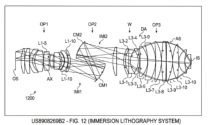
View attachment 174875
NA=1.3 len stackup for DUV using both lens and mirror (CM1, CM2)

a catadioptric design
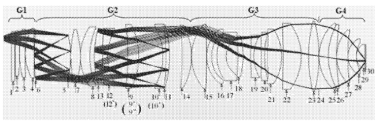
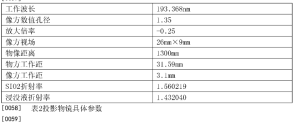
When the development of the immersion lithography machine in China started in 2011 CAS developed the first immersion projection lens in 2014 and was granted a patent in 2016.

1778631378546.png
1778631444968.png

The design has been optimized even further using more advanced optical design tools.
 

tokenanalyst

Lieutenant General
Registered Member
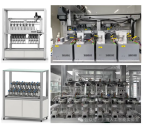
Automated photoresist production machines, that is likely to make nervous resist companies.

Chinese researchers achieve breakthroughs in photoresist development for semiconductors​


Chinese researchers have developed a new platform powered by artificial intelligence (AI) that enables the stable production of high-purity, highly consistent and efficient krypton fluoride (KrF) photoresist resin, the Shanghai Artificial Intelligence Laboratory (Shanghai AI Lab) said on Tuesday.

Industry analysts said that as China's chip manufacturing technology continues to achieve breakthroughs, the country's progress toward greater self-reliance in the semiconductor industry is steadily advancing.

Built on the laboratory's Intern AI model, the system integrates "AI decision-making + automated synthesis" into a closed-loop research and development framework. Researchers said that the platform enables the production of KrF photoresist resin with high purity, high consistency and improved efficiency, according to the Shanghai AI Lab.

The achievement was made by a team led by the Shanghai AI Laboratory in collaboration with Xiamen University, Suzhou National Laboratory and other partners.

1778643049016.png

Please, Log in or Register to view URLs content!
 

snake070

New Member
Registered Member
SIOM is developing an alignment system similar to ASML's ORION system.

EUV对准系统.png


A Multi-Wavelength Vortex Beam Projection Lithography Alignment Sensor System

Technical Field

[0001] The present invention relates to the technical field of lithography machines, and in particular to a multi-wavelength vortex beam projection lithography alignment sensor system.

Background Art
[0002] In advanced-node semiconductor manufacturing, overlay accuracy is a core performance metric of a lithography machine. This metric quantifies the positional deviation between the newly exposed circuit pattern and the pattern of the previous layer during the lithography process. In immersion, extreme ultraviolet (EUV), and high-numerical aperture (High-NA) EUV lithography, in order to achieve precise fabrication of complex three-dimensional structures in integrated circuits, the overlay accuracy must be controlled within 2 nm. Among the contributors, wafer alignment measurement error accounts for approximately one-third of the total overlay error budget. Therefore, to achieve the target of sub-2 nm overlay accuracy, the wafer alignment measurement precision must reach the sub-nanometer level, making wafer alignment measurement an extremely challenging key technology in lithography.

[0003] Wafer alignment measurement is realized by detecting the positions of phase wafer alignment marks on a wafer through an alignment sensor system. The alignment marks diffract under illumination from a light source, and the position of the alignment mark is calculated from the interference signal between the positive and negative diffraction orders, offering very high alignment accuracy (see prior art US6961116B2, US10508906B2, and CN202510594890.1). During integrated circuit manufacturing, process factors (such as chemical mechanical polishing, etching, deposition, etc.) cause changes in the topography of the alignment marks. When the optical depth of the alignment mark approaches an integer multiple of half the wavelength of the incident light, destructive interference of the illumination light occurs, causing a significant decrease in the intensity of the diffraction signal to be detected, thereby affecting the wafer position measurement accuracy. When the optical depth equals an integer multiple of half the wavelength of the incident light, the intensity of the diffraction signal to be detected becomes zero. Meanwhile, the photoresist on the wafer surface absorbs visible light, further weakening the illumination light. These process factors will render wafer alignment measurement impossible.

Summary of the Invention
[0004] In view of the above, the present invention proposes a multi-wavelength vortex beam projection lithography alignment sensor system to solve the problems of destructive interference and absorption of the illumination light during the alignment process. The system features a simple structure and can realize high-precision detection of the position of wafer alignment marks

 

tokenanalyst

Lieutenant General
Registered Member
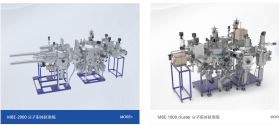
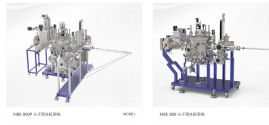
MBE is one of those technology in the Wassenaar Agreement banned because allows to make thin films for really advanced semiconductors, looks like is becoming less of an issue in China.

Feimian Technology, a high-end instrument and equipment manufacturer, has completed a Series C financing round of hundreds of millions of yuan.​


Feimian Technology, a Shanghai-based high-end instrument and equipment manufacturer founded in 2012, has successfully completed a Series C financing round amounting to hundreds of millions of yuan. The investment was jointly led by over ten national-level industrial capital firms and renowned institutions, including Furong Investment, Fudan Science and Technology Innovation, Industrial Mother Machine Fund, Yuanhe Puhua, and Shenzhen Capital Group. According to the company, the newly raised funds will be strategically allocated to strengthen R&D efforts, expand patent portfolios, enhance production capacity, accelerate market expansion, and reinforce organizational development.

Over the past decade, Feimian Technology has established itself as a leading domestic supplier of high-end scientific instruments, earning recognitions such as Shanghai High-Tech Enterprise, Shanghai Specialized and Innovative Enterprise, and Shanghai Science and Technology Little Giant Cultivation Enterprise. The company has built fully independent and controllable technical capabilities in four core areas: ultra-high vacuum, precision temperature control, thin film preparation, and plasma technology. With more than 200 patents accumulated, Feimian stands among the few Chinese companies in its sector to achieve full-chain independent control of critical instrument technologies.

These four foundational technologies address pivotal bottlenecks across the advanced electronic materials value chain—from fundamental research to industrial manufacturing. Ultra-high vacuum systems ensure material preparation purity; precision temperature control enables accurate property testing and crystal growth; thin film preparation supports core semiconductor and optoelectronic fabrication processes; and plasma technology facilitates surface treatment, etching, and material modification. Leveraging this technical foundation, Feimian has developed four mature product lines: scientific instruments, plasma technology solutions, semiconductor thin-film systems, and industrial measurement equipment, creating a comprehensive product matrix that scales from laboratory research to full production lines.

The company's offerings have gained strong traction among top-tier clients. Its ultra-high vacuum interconnect systems and quantum material preparation platforms serve prestigious institutions including Tsinghua University, Peking University, Fudan University, and the Chinese Academy of Sciences. In plasma technology, Feimian's independently developed high-brightness ultraviolet light sources and testing systems are widely adopted in semiconductor metrology and R&D, with one UV light source product successfully replacing previously dominant imported alternatives. Meanwhile, its semiconductor thin-film products—such as wafer-level MBE systems and ultra-high vacuum cleavage coating systems—are benchmarked against international leaders and have been batch-delivered to leading domestic semiconductor firms, supporting cutting-edge applications in 5G communications, infrared detection, LiDAR, and quantum computing.

Cluster Molecular Beam Epitaxy.
1778646186709.png
1778646230595.png
Please, Log in or Register to view URLs content!


Top