Chinese semiconductor thread II

interestedseal

Junior Member
Registered Member
MBE is one of those technology in the Wassenaar Agreement banned because allows to make thin films for really advanced semiconductors, looks like is becoming less of an issue in China.

Feimian Technology, a high-end instrument and equipment manufacturer, has completed a Series C financing round of hundreds of millions of yuan.​


Feimian Technology, a Shanghai-based high-end instrument and equipment manufacturer founded in 2012, has successfully completed a Series C financing round amounting to hundreds of millions of yuan. The investment was jointly led by over ten national-level industrial capital firms and renowned institutions, including Furong Investment, Fudan Science and Technology Innovation, Industrial Mother Machine Fund, Yuanhe Puhua, and Shenzhen Capital Group. According to the company, the newly raised funds will be strategically allocated to strengthen R&D efforts, expand patent portfolios, enhance production capacity, accelerate market expansion, and reinforce organizational development.

Over the past decade, Feimian Technology has established itself as a leading domestic supplier of high-end scientific instruments, earning recognitions such as Shanghai High-Tech Enterprise, Shanghai Specialized and Innovative Enterprise, and Shanghai Science and Technology Little Giant Cultivation Enterprise. The company has built fully independent and controllable technical capabilities in four core areas: ultra-high vacuum, precision temperature control, thin film preparation, and plasma technology. With more than 200 patents accumulated, Feimian stands among the few Chinese companies in its sector to achieve full-chain independent control of critical instrument technologies.

These four foundational technologies address pivotal bottlenecks across the advanced electronic materials value chain—from fundamental research to industrial manufacturing. Ultra-high vacuum systems ensure material preparation purity; precision temperature control enables accurate property testing and crystal growth; thin film preparation supports core semiconductor and optoelectronic fabrication processes; and plasma technology facilitates surface treatment, etching, and material modification. Leveraging this technical foundation, Feimian has developed four mature product lines: scientific instruments, plasma technology solutions, semiconductor thin-film systems, and industrial measurement equipment, creating a comprehensive product matrix that scales from laboratory research to full production lines.

The company's offerings have gained strong traction among top-tier clients. Its ultra-high vacuum interconnect systems and quantum material preparation platforms serve prestigious institutions including Tsinghua University, Peking University, Fudan University, and the Chinese Academy of Sciences. In plasma technology, Feimian's independently developed high-brightness ultraviolet light sources and testing systems are widely adopted in semiconductor metrology and R&D, with one UV light source product successfully replacing previously dominant imported alternatives. Meanwhile, its semiconductor thin-film products—such as wafer-level MBE systems and ultra-high vacuum cleavage coating systems—are benchmarked against international leaders and have been batch-delivered to leading domestic semiconductor firms, supporting cutting-edge applications in 5G communications, infrared detection, LiDAR, and quantum computing.

Cluster Molecular Beam Epitaxy.
View attachment 174895
Please, Log in or Register to view URLs content!


MBE also important for niche areas like IR, RF, quantum, opto/photonics
MBE from CAS SKY:
Please, Log in or Register to view URLs content!


MBE from CETC:
Please, Log in or Register to view URLs content!


MBE from Harbin HIT spinoff
Please, Log in or Register to view URLs content!
 

ForcedTrend

Junior Member
Registered Member
this is going to be another attempt to force H200 approval
i think it's a mistake that china even allows them to make specific inferior products for china, they should demand to sell them either the latest and great things or nothing at all.
Like Apple selling Iphone 14 to china and Iphone 17 to the global market.

 
Last edited:

LanceD23

Junior Member
Registered Member
ASML is not an assembler of third party parts like most assumed.

When ASML first started, their foundation is their software much like a cadence and synopsis or ansys, their expertise in optics and mathematics modeling basically give them an advanced optics simulation tool. Their software can model all physical components and how they affect the optics. Their software is much like zemax, ray tracing tool. From the len stack up they can predict the resolution and how the ray travel through the lens.

Before their scanner start up they already predict how everything works. As soon as their sensors detect something off or they can predict what could go wrong based on current physical parameters they immediately make adjustment before troubles show up.

One has to have advance math modeling and software for optics and many other factors.

So japan lost lithography race is no surprise a nd inevitable. Japan is not known for their expertise in software and math modeling. Hardware they are good but not in software side.

I dont know how advance is China Optics modeling in software..in East Asia China is strongest in software and math modeling, beats japan, korea and Taiwan.
 
Last edited:

oracular

Just Hatched
Registered Member
ASML is not an assembler of third party parts like most assumed.

When ASML first started, their foundation is their software much like a cadence and synopsis or ansys, their expertise in optics and mathematics modeling basically give them an advanced optics simulation tool. Their software can model all physical components and how they affect the optics. Their software is much like zemax, ray tracing tool. From the len stack up they can predict the resolution and how the ray travel through the lens.

Before their scanner start up they already predict how everything works. As soon as their sensors detect something off or they can predict what could go wrong based on current physical parameters they immediately make adjustment before troubles show up.

One has to have advance math modeling and software for optics and many other factors.

So japan lost lithography race is no surprise a nd inevitable. Japan is not known for their expertise in software and math modeling. Hardware they are good but not in software side.

I dont know how advance is China Optics modeling in software..in East Asia China is strongest in software and math modeling, beats japan, korea and Taiwan.
The reason behind this is that lithography is a market where the winner takes all, and that as much as Nikon etc. had the technical capacity eventually to compete, they were late to the fray, and consequently there could no longer be expected any significant returns on such initiatives. Clearly, this is inapplicable where the monopolist is excluded from the market where their competitors are operating on asinine geopolitical grounds.

Of course the same is quite true of foundries. E.g., just as TSMC and Samsung would certainly be glad of any competition with ASML, so would fabless companies desire competition against TSMC, but alas...

Anyway, the people who are aware of domestic developments in this regard will mostly keep under the radar, and those whom you find feeding the rumor mill (be it the Financial Times or domestic independent media outlets) are not credible. Progress is being made, and some of it may be seen from primary sources, but that is all.
 

LanceD23

Junior Member
Registered Member
The reason behind this is that lithography is a market where the winner takes all, and that as much as Nikon etc. had the technical capacity eventually to compete, they were late to the fray, and consequently there could no longer be expected any significant returns on such initiatives. Clearly, this is inapplicable where the monopolist is excluded from the market where their competitors are operating on asinine geopolitical grounds.

Of course the same is quite true of foundries. E.g., just as TSMC and Samsung would certainly be glad of any competition with ASML, so would fabless companies desire competition against TSMC, but alas...

Anyway, the people who are aware of domestic developments in this regard will mostly keep under the radar, and those whom you find feeding the rumor mill (be it the Financial Times or domestic independent media outlets) are not credible. Progress is being made, and some of it may be seen from primary sources, but that is all.
What i am saying is even if Japan jumps into immersion earlier, my prediction japan would still fall behind due to their software and math modeling is not as advanced. Lithography is most involved in such area than any other semi equipments.
 

tokenanalyst

Lieutenant General
Registered Member
ASML is not an assembler of third party parts like most assumed.

When ASML first started, their foundation is their software much like a cadence and synopsis or ansys, their expertise in optics and mathematics modeling basically give them an advanced optics simulation tool. Their software can model all physical components and how they affect the optics. Their software is much like zemax, ray tracing tool. From the len stack up they can predict the resolution and how the ray travel through the lens.

Before their scanner start up they already predict how everything works. As soon as their sensors detect something off or they can predict what could go wrong based on current physical parameters they immediately make adjustment before troubles show up.

One has to have advance math modeling and software for optics and many other factors.

So japan lost lithography race is no surprise a nd inevitable. Japan is not known for their expertise in software and math modeling. Hardware they are good but not in software side.

I dont know how advance is China Optics modeling in software..in East Asia China is strongest in software and math modeling, beats japan, korea and Taiwan.
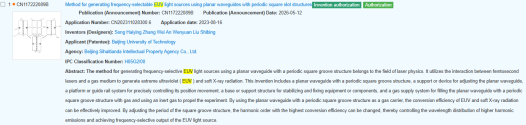
Research show that they are using genetics algorithms combine with swarm optimization for EUV probably the same for DUV, probably running in their supercomputers or GPU clusters


tokenanalyst

Lieutenant General
Registered Member

Nanochip Microelectronics introduces the NSI7117 solid-state relay, addressing the electromagnetic challenges of automotive BMS systems with superior EMC performance.​


Nanochip Microelectronics has officially launched its new NSI7117 series of solid-state relays, specifically engineered to address the complex electromagnetic challenges faced by Battery Management Systems (BMS) in new energy vehicles. As automotive designs evolve toward lightweighting through multi-material battery casing architectures, traditional metal shielding becomes less effective, exposing BMS systems to harsher electromagnetic environments. The NSI7117 series is designed to counteract this by delivering superior Electromagnetic Compatibility (EMC) performance, ensuring stable operation for sampling and control functions even in complex conditions where conventional designs might struggle.

The device achieves industry-leading reliability through comprehensive enhancements in both Interference Suppression and Immunity. In terms of emission control, the NSI7117 passes rigorous testing including ±8kV Electrostatic Discharge (ESD) immunity in power-down mode and meets Class 4 Electrical Fast Transient Burst standards. Furthermore, it satisfies strict CISPR 25 regulations for conducted and radiated emissions, significantly reducing system-level electromagnetic radiation during switching operations. On the immunity front, the relay withstands high-current injection tests up to 200mA across all frequencies and clears both radiated and handheld transmitter immunity tests, effectively minimizing false triggering and abnormal switching risks inherent in multi-material structures.

Built on a foundation of advanced semiconductor technology, the NSI7117 integrates two Silicon Carbide (SiC) MOSFETs capable of withstanding voltages up to 1700V. This architecture provides exceptional avalanche protection and transient overvoltage tolerance, allowing the device to maintain stability during battery surges and voltage spikes that could typically compromise mechanical or optocoupler relays. Additionally, the NSI7117 demonstrates outstanding leakage current control; at a working voltage of 1000V and an operating temperature of 125°C, it maintains leakage levels within 1μA. This feature significantly improves insulation impedance and detection accuracy under extreme conditions, enhancing overall human-machine interaction safety in high-voltage environments.

To facilitate seamless adoption by OEMs and battery manufacturers, the NSI7117 is packaged in a SOW12 footprint that is compatible with mainstream optocoupler relays. It meets rigorous IEC creepage distance requirements with secondary-side spacing of 5.91mm and primary-secondary spacing of 8mm, while leveraging Nanochip's mature capacitor isolation technology to achieve up to 5kVrms withstand voltage. The device complies with major safety certifications including UL, CQC, and VDE, simplifying the verification process for clients. Available in both automotive-grade (NSI7117-Q1) and industrial versions, the product features a fully domestic supply chain designed for long-term stability, with the automotive variant supporting an operating range from -40°C to 125°C as it moves toward mass production.

Please, Log in or Register to view URLs content!
 

tokenanalyst

Lieutenant General
Registered Member

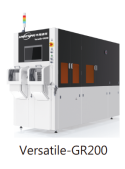
Huahai Qingke Launches Versatile-GR200: China's First 8-Inch Wafer Thinner with Ring Retention Capability


On May 13, 2026, Huahai Qingke Co., Ltd. successfully shipped its newly developed Versatile-GR200, the company's first 8-inch wafer thinning machine featuring ring retention technology. This milestone marks a significant step in Huahai Qingke's "equipment + service" strategy and strengthens China's independent semiconductor supply chain.
1778688481386.png1778688548184.png

The Versatile-GR200 addresses long-standing challenges where ultra-thin wafers (below 80 micrometers) are prone to warping or breakage. By retaining the outermost ring as a support structure, the machine enables stable processing of high-density power devices without requiring additional carriers. Is wquipped with high-precision closed-loop control and ultra-detection units, it achieves industry-leading accuracy in thickness deviation and ring width control, ensuring reliability for subsequent packaging processes like film lamination.

The machine features an integrated footprint to save production space while maintaining high output per square meter. It supports both 6-inch and 8-inch wafers (silicon and compound semiconductors), offering modular customization to adapt quickly to evolving line needs.

Driven by surging demand in new energy vehicles, energy storage, and industrial control, the industry has shifted from viewing ring-based thinning as optional to seeing it as essential. Previously dominated by international manufacturers due to high technical barriers, this breakthrough positions Huahai Qingke to provide cost-effective domestic solutions for power device miniaturization.

As part of its diversified product matrix including CMP, ion implantation, and scribing the Versatile-GR200 will integrate with other Huahai Qingke equipment to offer a complete one-stop manufacturing solution. The company reaffirms its commitment to "Self-reliance Achieves Excellence," continuing heavy R&D investment to ensure the security and high-quality development of China's industrial chain.

Please, Log in or Register to view URLs content!
 
Top