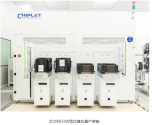
The research results of the research team led by Professor Song Chung of Tsinghua University are now at a key turning point in the transition from basic research to the Prototype stage. Putting together the mid-March Guanchun Forum and recently announced materials, the expected flow to commercialization is as follows.
1. Commercialization Phase: Current Location
Currently, we are going beyond 'laboratory-level performance' and are entering the 'prototype production' stage.
* 2026 Status: The research team said it has already "brought down a major gap between basic research and applications," and is currently manufacturing and testing a spintronics prototype device.
* Technical completeness: Because we have succeeded in 'fully electric switching' where data is written and read only by electricity without an external magnetic field, we only have a process optimization step to integrate it into real semiconductor chips.
2. Estimated Commercialization Timeline
Considering the development cycle of typical next-generation semiconductor technologies, the following steps are expected.
* Short term (within 1 to 3 years): special purpose elements and sensors
* The first areas to be commercialized are ultra-sensitivity magnetic sensors or terahertz (THz) band communication parts. Its structure is simpler than ordinary memory and can be applied faster.
* Medium (within 3 to 5 years): Specific industrial non-volatile memory (MRAM)
* It is likely to enter the special memory market first used in wearable devices or extreme environments (space, military) where low power is essential.
* Long term (within 5-10 years): Universal Next Generation Memory Market
* Commercialization as a general-purpose memory that replaces or supplements existing DRAM or NAND flash is expected to be around the 2030s, when problems with securing Fab yields and reducing costs are resolved.
3. Key to commercialization (success factor)
The challenges that this technology needs to address in order to get to market quickly are as follows.
* Process Compatibility: How well it combines with existing CMOS (silicon-based semiconductor) processes is key.
* Material Supply and Demand: The fact that chiral antiferromagnetic materials such as manganese-tin (Mn_3Sn), the main research material, are common elements that can replace rare earths is a very favorable factor for mass production.
* National Support: The project is fully supported by China's "Unconventional Innovation" program and the National Natural Science Fund, so laboratory performance is expected to move very quickly to industrial sites.