I don’t think it has been cleared yet by the US?Reuters is reporting that H200 sales have been approved by Beijing. Specific customers and volumes remain to be seen.

You are using an out of date browser. It may not display this or other websites correctly.
You should upgrade or use an alternative browser.
You should upgrade or use an alternative browser.
Chinese semiconductor thread II
- Thread starter vincent
- Start date
China entire gallium oxide industry chain enters the device verification stage.
FugaGallium Industry, an incubated company of the Hangzhou Institute of Optics, Fine Mechanics and Physics, in collaboration with Shanghai Gongcheng Semiconductor Technology Co., Ltd., is conducting collaborative research across the entire industry chain—from materials to devices to applications—focusing on key technologies for the industrialization of fourth-generation gallium oxide (GaO). The project has currently progressed to the device verification stage. This practice is considered China's first attempt to integrate the entire industry chain in the field of GaO, and it is of landmark significance for promoting the transition of ultra-wide bandgap semiconductors from research and development to application.
This technological breakthrough closely aligns with the strategic direction outlined in the "15th Five-Year Plan for National Economic and Social Development of the People's Republic of China," which calls for "accelerating the upgrading of the wide-bandgap semiconductor industry and promoting the industrialization of ultra-wide-bandgap semiconductors such as gallium oxide and diamond." On the application side, the project focuses on scenarios such as new energy storage and data center liquid cooling systems, while also meeting the product development needs of Gongcheng Semiconductor's 400V motor drive platform, achieving several key technological breakthroughs.
At the materials and device level, relying on the high-quality MOCVD gallium oxide epitaxial wafers independently developed by FugaGallium Industry, the team successfully fabricated high-performance gallium oxide vertical Schottky diode (SBD) devices, with subsequent packaging and application verification work completed by Gongcheng Semiconductor. Currently, the device has passed chip-level testing and packaging testing, and is advancing application verification in liquid cooling modules , laying the foundation for subsequent large-scale commercial applications and providing important support for the independent control of core technologies for China's fourth-generation semiconductors.
From a product and technology perspective, FugaGa has established systematic capabilities in gallium oxide equipment, materials, and epitaxy. In terms of equipment, the company has developed the EFG crystal growth equipment with a "one-click crystal growth" function, supporting 2-6 inch crystal fabrication, and has obtained numerous domestic and international patents. Simultaneously, the company has independently developed fully automated VB method crystal growth equipment, achieving a breakthrough in 6-inch gallium oxide single crystal growth in China, and can provide equipment and supporting process solutions according to customer needs.
This technological breakthrough closely aligns with the strategic direction outlined in the "15th Five-Year Plan for National Economic and Social Development of the People's Republic of China," which calls for "accelerating the upgrading of the wide-bandgap semiconductor industry and promoting the industrialization of ultra-wide-bandgap semiconductors such as gallium oxide and diamond." On the application side, the project focuses on scenarios such as new energy storage and data center liquid cooling systems, while also meeting the product development needs of Gongcheng Semiconductor's 400V motor drive platform, achieving several key technological breakthroughs.
At the materials and device level, relying on the high-quality MOCVD gallium oxide epitaxial wafers independently developed by FugaGallium Industry, the team successfully fabricated high-performance gallium oxide vertical Schottky diode (SBD) devices, with subsequent packaging and application verification work completed by Gongcheng Semiconductor. Currently, the device has passed chip-level testing and packaging testing, and is advancing application verification in liquid cooling modules , laying the foundation for subsequent large-scale commercial applications and providing important support for the independent control of core technologies for China's fourth-generation semiconductors.
From a product and technology perspective, FugaGa has established systematic capabilities in gallium oxide equipment, materials, and epitaxy. In terms of equipment, the company has developed the EFG crystal growth equipment with a "one-click crystal growth" function, supporting 2-6 inch crystal fabrication, and has obtained numerous domestic and international patents. Simultaneously, the company has independently developed fully automated VB method crystal growth equipment, achieving a breakthrough in 6-inch gallium oxide single crystal growth in China, and can provide equipment and supporting process solutions according to customer needs.

I don’t think it has been cleared yet by the US?
No, US has already approved. From the same article:
Despite strong demand from Chinese firms and U.S. approval for exports, Beijing's hesitation to allow imports has been the main barrier to shipments of the H200 chips to China.
Nvidia had been waiting for licenses from both the U.S. and China for months. It has received some U.S. approvals, and a source familiar with the matter said the company had now also received licenses for many customers in China from Beijing.
CNBC also reported on Tuesday that Huang told them the company now has clearance from both the U.S. and China.
Hejian Software Releases China's First Self-Developed Agentic AI EDA Platform
Hejian Software officially released Agentic UDA 2.0, marking a historic shift in China's semiconductor industry. This platform is the first domestically developed EDA tool to evolve from an "intelligent assistant" into a true "agentic AI" capable of autonomously executing entire chip design workflows—from initial requirements to final optimization—without constant human intervention.
Unlike previous versions that offered single-point assistance, UDA 2.0 functions as an autonomous decision-making hub with the following capabilities:
- End-to-End Autonomy: It can understand natural language instructions, plan tasks, and independently call internal EDA tools (such as UVSYN for synthesis and UVS+/UVD+ for simulation/debugging) to complete closed-loop processes: Design → Verification → Error Correction → Optimization.
- Multi-Agent Collaboration: The system utilizes multiple specialized agents working in tandem to handle architecture, code generation, testing, and documentation.
- Full-Stack Localization: Built entirely on self-developed domestic architectures compatible with Chinese large models (e.g., DeepSeek) and GPUs, ensuring data security and supply chain independence.
- Paradigm Shift: The release signals a move from "AI + EDA" (tools assisting engineers) to "Agentic EDA" (agents leading design). This frees engineers to focus on high-level architectural innovation rather than repetitive implementation details.
- Industry Standing: Following the launch of UDA 1.0 in early 2025, UDA 2.0 confirms that China's domestic digital EDA capabilities are now keeping pace with international leaders in intelligence and automation.
- Adoption & Education: The platform is already deployed by leading IC companies and academic institutions (including Tsinghua University), where it serves as both a productivity engine for industry professionals and an advanced teaching tool for next-generation engineers.

Dr. He Peixin (CTO) Emphasized that UDA 2.0 drives the industry from "intelligent assistance" to "autonomous execution," allowing teams to return to strategic decision-making rather than mundane debugging tasks. Zhang Chun (Tsinghua University) Noted that while previous versions were coding assistants, UDA 2.0 acts as a proactive "virtual teammate" capable of validating new ideas and accelerating scientific research in chip design.
By achieving full-process automation within a secure, domestic ecosystem, Hejian Software's Agentic UDA 2.0 represents a critical milestone in China's effort to overcome semiconductor bottlenecks and drive the global evolution toward more intelligent and efficient chip manufacturing.
Yanwei Semiconductor: New Metal ALD Equipment Officially Delivered to Major Domestic Memory Customer
The Spritz tALD device independently developed by Yanwei (Jiangsu) Semiconductor Technology Co., Ltd. was officially delivered to a leading domestic storage company.
With its advanced technical architecture and superior performance, the Spritz tALDdevice from Yanwei Technology has shown broad application prospects in the semiconductor manufacturing field:
- It has a wide range of applications: covering HKMG metal layer deposition, NAND, WL, DRAM bWL and SN region thin film filling, fully meeting the diverse needs of logic chip and memory chip manufacturing.
- Significant technological innovations : The revolutionary air intake, mixing, and flow equalization systems elevate film uniformity to a new level in the industry while significantly reducing particle generation.
- Outstanding economic benefits: Through continuous technological innovation, Spritz tALD equipment has achieved significant improvements in capacity and stability, bringing customers significant cost advantages.
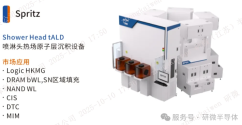
As a core process in semiconductor chip manufacturing, metal ALD technology directly affects the performance, yield, and advanced process breakthroughs of memory chips, playing a key role in the manufacturing of mainstream memory chips such as 3D NAND and DRAM.
The new metal ALD equipment delivered by Yanwei Semiconductor this time relies on years of technical accumulation and R&D breakthroughs in the field of thin film deposition. It has been optimized and upgraded in core indicators such as thin film uniformity, particle control, and production capacity stability. It can fully adapt to the mass production needs of advanced production lines of major domestic memory customers, while effectively reducing the cost of use for customers. It provides a reliable domestic equipment solution for the R&D and production of advanced memory chip processes.
Latest news: The 28nm DUV lithography machine is scheduled to commence formal mass production in the third quarter. Twelve units have already been trial-produced, achieving a domestic yield rate exceeding 80%. The operational efficiency of these machines is 1.3 times that of imported counterparts (interpreted as lithography throughput capacity).
All photoresists used are domestically sourced.
Furthermore, EUV lithography is projected to enter small-scale trial production by the end of the year, with multiple technological pathways progressing smoothly.

how credible he is?
Latest news: The 28nm DUV lithography machine is scheduled to commence formal mass production in the third quarter. Twelve units have already been trial-produced, achieving a domestic yield rate exceeding 80%. The operational efficiency of these machines is 1.3 times that of imported counterparts (interpreted as lithography throughput capacity).
All photoresists used are domestically sourced.
Furthermore, EUV lithography is projected to enter small-scale trial production by the end of the year, with multiple technological pathways progressing smoothly.
So Twinscan 1980 Duvi analogue??how credible he is?
ICRD is 20k per month
This presentation is from 2019–2020, and so far there’s no indication that Huahong/HLMC has a 16/14nm process in mass production. We’ll have to wait for a TechInsights teardown to confirm it.
So Twinscan 1980 Duvi analogue??