Chinese semiconductor thread II

tokenanalyst

Lieutenant General
Registered Member

Hunan University has developed a sub-ppm-level high-precision voltage reference chip to support precision measurement applications such as industrial sensing.​


High-precision voltage references are core components of precision measurement systems such as industrial sensors and smart meters. These systems typically require voltage references to have an ultra-low temperature coefficient of less than 1 ppm/℃ within an industrial temperature range (−40℃ to 85℃). However, traditional bandgap references are limited by the inherent nonlinear curvature of the base-emitter voltage of bipolar transistors, making it difficult for their temperature drift performance to break through the 1 ppm/℃ bottleneck.

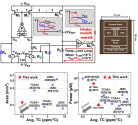
To address the aforementioned challenges, Professor Chen Zhuojun's team at the School of Semiconductors, Hunan University, innovatively proposed a hybrid compensation technology combining electrical and thermal methods. Based on a 65nm CMOS process, they successfully designed and fabricated a high-precision voltage reference chip. In the high-temperature region (10℃ to 85℃), a second-order curvature correction technique was employed to offset the higher-order nonlinear terms of the bipolar transistor. In the low-temperature region (−40℃ to 10℃), a segmented chip self-heating technology and a temperature-locked loop were constructed. Through the closed-loop negative feedback of the temperature-locked loop, the chip temperature was locked at 10℃, reducing the maximum heating power consumption by 49.7% compared to full-segment self-heating technology. Chip testing results show that the chip has an average temperature coefficient of only 0.5 ppm/℃ within the industrial-grade temperature range of −40℃ to 85℃. The chip core area is only 0.12 mm² . Compared with contemporary advanced work, this chip achieves optimal performance in terms of temperature drift performance and area efficiency.​
1771777091039.png


The related research findings, titled "A 0.5-ppm/°C Voltage Reference With Sub-Ranging On-Chip Self-Heating and Second-Order Compensation in 65-nm CMOS," were published in the prestigious international journal in the field of integrated circuits, * IEEE Journal of Solid-State Circuits *. The first author of the paper is Dr. Wenzhao Lü from Hunan University, and the corresponding authors are Professors Zhuojun Chen and Lei Liao.
Please, Log in or Register to view URLs content!
 

tokenanalyst

Lieutenant General
Registered Member

According to reports, TCL surpassed Samsung to become the world's number one TV seller in December last year.​


TCL has overtaken Samsung to become the world’s top TV seller by monthly shipment volume in December 2023, according to Counterpoint Research. TCL achieved a 16% market share surpassing Samsung’s 13% marking a significant shift in the global TV industry. Despite a only 1.6% year-on-year growth in total global TV shipments, TCL recorded over 10% growth during the period.

The reversal began in October when TCL started gaining ground, narrowing the gap with Samsung to just 1 percentage point by November and overtaking it in December. While Samsung still led in quarterly performance (October–December), TCL now leads in monthly sales rankings.

Hisense came in third with a 12% share, though its domestic demand declined by 23%, highlighting weakening Chinese market sentiment. LG ranked fourth at 8%, down 1 percentage point year-on-year.

TCL’s rise is primarily driven by strong performance in emerging markets Asia, the Middle East, and Africa especially amid U.S. sanctions affecting its access to certain Western markets. At CES 2026, TCL launched its LCD-based Super Quantum Dot (SQD) Mini-LED TV, combining quantum dot technology with precise screen control to enhance color and performance.

Hisense also entered the high-end segment by unveiling the world’s first four-color micro-RGB TV, challenging Samsung and LG in premium LCD markets.

Meanwhile, South Korean firms continue to dominate the high-end OLED space: Samsung sold ~2 million OLED TVs (a 38.1% year-on-year increase), while LG sold about 3.22 million, maintaining its top spot in OLED sales. However, industry experts warn that Chinese companies’ aggressive expansion into the high-end LCD segment could erode South Korea’s profit margins and market advantages.

Adding to TCL's momentum, the company’s acquisition of Sony’s TV business is seen as a strategic move to enhance its technology portfolio and brand strength — potentially accelerating growth in both premium LCD and OLED markets.

Please, Log in or Register to view URLs content!
 

tokenanalyst

Lieutenant General
Registered Member

Leadstar KST Achieves New Year Success: Repurchase Order for Domestic Ion Implanters Completed and Delivered​

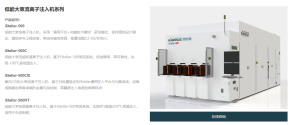
At the start of the new year, KST Semiconductor Co., Ltd., a subsidiary of Lead Technology Group, achieved a "good start" by successfully delivering a repurchase order for a new low-energy high-current ion implanter to a leading domestic chip manufacturing customer.
It is understood that during the Spring Festival, the R&D and production teams of KST remained at their posts and worked continuously to efficiently complete the testing, inspection and shipping of the machines before delivery, ensuring that the equipment was delivered to the customer's production line on time with excellent quality and to meet the delivery requirements as scheduled.

1771859716454.png

The new products delivered this time are next-generation products developed by KST based on international advanced equipment, existing technology and industrialization experience, and relying on the domestic supply chain, targeting advanced logic chip and advanced memory chip manufacturing processes. The equipment has achieved independent breakthroughs in particulate matter control, beam stability, and process reliability. Multiple units have been delivered and the equipment has entered a new stage of industrialization verification and mass application.

With the collaborative support of Lead Technology Group, KST is accelerating the development of new product technologies and the continuous upgrading of mature products, building a multi-scenario, full-spectrum product matrix to meet the differentiated needs of various customers. At the same time, the company focuses on overcoming the "bottleneck" problem of core components, consolidating the foundation of supply chain security, and empowering customers to innovate processes and improve quality and efficiency with independent and controllable full-cycle one-stop service solutions.

KST stated that in the new year, it will continue to focus on tackling key challenges in ion beam control technology, deepen collaborative innovation with domestic integrated circuit customers, accelerate the technical verification and market introduction of more new products, and contribute to the rapid development of the national integrated circuit industry.

Please, Log in or Register to view URLs content!
 

tokenanalyst

Lieutenant General
Registered Member

Xinji Energy: Empowered by the Fab-Lite Model, with Double Breakthroughs from SiC Capacity Expansion and Tesla's Entry.​


Xinjieneng, a leading second-tier Chinese power semiconductor company, has gained strong momentum in 2025 through two key breakthroughs: the expansion of its SiC production line and entry into Tesla’s supply chain. Leveraging its Fab-Lite hybrid model—focused on design while building internal packaging/testing capabilities—the company achieves flexible R&D-production synergy, enabling rapid response to downstream demand.

The firm operates in a high-growth sector driven by new energy vehicles (NEVs), AI servers, and photovoltaic inverters. With the global power semiconductor market projected at $52 billion in 2025 and a CAGR of 12.5%, domestic substitution is accelerating. Xinjieneng’s core strengths lie in superjunction MOSFETs, IGBT design, and automotive-grade packaging, with key customers including BYD, Tesla, Sungrow Power, and major cloud platforms like Alibaba Cloud and Tencent Cloud.

Financially, the company exhibits exceptional stability: a debt-to-equity ratio below 15%, a cash reserve of RMB 1.5 billion, and net profit margins reaching 24% above industry averages. Revenue grew at a CAGR of 23.8% (2023–2024), with automotive-grade IGBTs and photovoltaic products becoming dominant revenue engines, while overseas sales rose from 8% to 15%. R&D investment is strategically concentrated on SiC/GaN technologies, accounting for 60% of spending in 2024.

Despite its progress, Xinjieneng faces significant challenges: intensified competition from domestic (e.g., Silan Micro) and international players (Infineon), lagging GaN deployment, slower automotive-grade certification, rising raw material costs (silicon wafers up 10%, silver up 15%), and potential export restrictions due to U.S. sanctions on high-performance SiC devices.

To mitigate risks, the company has implemented targeted measures optimizing supply chain diversification, improving inventory efficiency via SAP ERP (reducing slow-movements from 15% to 10%), accelerating packaging line utilization, and expanding into Southeast Asia. It also strengthens customer ties through direct sales and distribution networks across China and 15 international markets.

Looking ahead, Xinjieneng is poised for steady growth in NEVs, AI servers, and solar inverters, supported by its full-scale 12-inch wafer line and expanded SiC capacity. Long-term success hinges on overcoming technological gaps—especially in GaN—and achieving deeper market penetration in automotive-grade and overseas segments. With strong financial footing and strategic execution, the company aims to evolve from a second-tier player into a first-tier global power semiconductor leader through domestic substitution and innovation.​

Please, Log in or Register to view URLs content!
 

tokenanalyst

Lieutenant General
Registered Member
More companies are entering the critical area of lithography metrology. In this case high end gratings for ultra precision motion.

Damian Optics has applied for a patent for a zero-optical-path-difference dual-frequency heterodyne grating ruler and a displacement measurement method, which significantly improves the environmental stability of the system.​

According to information from the State Intellectual Property Office, Damman Optical Instruments (Guangzhou) Co., Ltd. has applied for a patent entitled "A Zero Optical Path Difference Dual-Frequency Heterodyne Grating Ruler and Displacement Measurement Method", with publication number CN121520980A and application date of December 2025.

1771863581970.png1771863624914.png

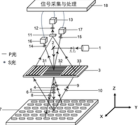
The patent abstract reveals a zero-optical-path-difference dual-frequency heterodyne grating ruler comprising a light source and signal detection and processing system, a polarizing beam splitter, a first quarter-wave plate, a right-angle prism, a second quarter-wave plate, a third quarter-wave plate, a total reflection mirror, a strip prism, a reference grating, and a 45° polarizer. The system maintains zero optical path difference between the two measurement optical paths, ensuring measurement accuracy and significantly improving environmental stability. This provides a high-precision, robust measurement solution for precision equipment such as lithography machines and precision motion platforms.

Looks like they are mass producing the materials for these high end metric devices:

Damian Optics has applied for a patent for a method for processing large-diameter flat glass. The standardized operating procedure facilitates stable mass production.
Daman Optical Instruments (Guangzhou) Co., Ltd. has applied for a patent entitled "A processing method, processing equipment, large-diameter flat glass and optical equipment", with publication number CN121374298A and application date of November 2025.

The patent abstract discloses a processing method, processing equipment, large-diameter flat glass, and optical equipment, relating to the field of optical component processing technology. The method includes pre-processing a blank flat glass to obtain a first intermediate state glass, and then detecting the first PV value corresponding to the first intermediate state glass through interferometry. When the first PV value is ≤5 waves, the first intermediate state glass is repeatedly subjected to rough processing until a second intermediate state glass is obtained, where the second intermediate state glass has a second PV value ≤3 waves, a single scratch length ≤30mm, a scratch width ≤30µm, and a total number of scratches ≤10. The second intermediate state glass is then repeatedly subjected to fine processing until a target state glass is obtained, where the target state glass has a third PV value ≤300nm, and the scratch parameters meet a preset level requirement superior to the first preset condition. The operation process is standardized and uniform, facilitating stable mass production.

They built a big production and research facility back in 2023 and they are expanding their production according to more recent environmental documents .

The grating research and development laboratory project of Daman Optical Instruments (Guangzhou) Co., Ltd. project aims to conduct grating esearch, with an annual production capacity of 100 gratings. The project covers an area of 1300 square meters, with a total building area of 1300 square meters.
 

tokenanalyst

Lieutenant General
Registered Member
That means that are already 3 companies in china providing Ultra Precision High End metrology grating systems products and services domestically. That can be use in high end photolithography steppers, high end bonding tools, Nano Imprint lithography, high end metrology tools like mask overlay tools (DBO and IBO) and so on.

-Tsinghua Beijing U-precision Tech Co
-Harbin Ruiyunwei Technology (Shanghai) Co., Ltd
-Damman Optical Instruments (Guangzhou) Co., Ltd.​
 
Last edited:

tokenanalyst

Lieutenant General
Registered Member

Demand-driven dynamic control points insertion for high-fidelity and efficient curvilinear optical proximity correction​

Abstract​

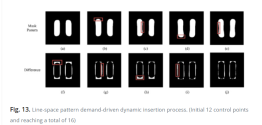
Curvilinear optical proximity correction is critical for advanced technology nodes. However, conventional methods rely on a uniform or static control points distribution. Such a strategy neglects the correction demands of different regions and the influence of adjacent regions, leading to inefficient resource allocation and sub-optimal imaging fidelity. A demand-driven dynamic control point insertion framework is introduced to overcome the control points distribution inefficiency in curvilinear optical proximity correction. Our method begins with a sparse initial set of control points and iteratively identifies critical regions. By leveraging the local support property of B-spline curves, our method dynamically inserts a new control point near the critical region and adjusts adjacent points to shift the critical region. By bypassing redundant uniform initialization, this method achieves high-fidelity and efficient curvilinear optical proximity correction while resolving inherent resource misallocation. This paper presents a novel dynamic control point insertion framework designed to address the fundamental flaws in the initial control point distribution for a curvilinear mask. Simulations demonstrate the proposed method’s capability to establish rational control point distributions, achieving lower pattern error with up to 20% fewer control points compared to uniform sampling, demonstrating superior efficiency and fidelity.

1771866005011.png

Please, Log in or Register to view URLs content!
 

tokenanalyst

Lieutenant General
Registered Member

The Hubei Pan-Semiconductor Intelligent Manufacturing Base project, worth over 2.6 billion yuan, has commenced construction.​

The groundbreaking ceremony for the Hubei Pan-Semiconductor Intelligent Manufacturing Base Project (Phase I) was held in the Honglian Lake Industrial Park in the southern part of Wuhan New City. The project has a total investment of 2.61 billion yuan, covers an area of 325 mu, and has a total construction area of approximately 315,000 square meters.

The first phase covers 146.45 acres and includes the construction of 7 standardized factory buildings and R&D, power, and supporting facilities, with a building area of approximately 150,000 square meters. The construction period is 24 months, and it is expected to be completed in February 2028.

The project focuses on new displays, upstream and downstream supporting industries of integrated circuits and pilot production lines. It adopts the "fund + industrial park" model to create a professional pan-semiconductor industry carrier that can be set up and settled in with complete tools. It will further take over the spillover of industries from Optics Valley, strengthen the supporting capabilities of the regional industrial chain, and help Hubei build a world-class "optical chip display terminal network" industrial cluster.

Please, Log in or Register to view URLs content!
 

gotodistance

Junior Member
Registered Member
Is Chinese AI computing resources really serious?

ZpuAI, one of China's leading artificial intelligence (AI) companies listed on the Hong Kong stock market in January this year, saw its stock price plunge 23% on the 23rd due to a lack of computing resources. Although ZpuAI's stock price recovered most of the previous day's losses, analysts say that the incident revealed the chronic weakness of China's AI, which is difficult to use high-performance AI semiconductors in the United States.

Carol Linzfu, CEO of International, publicly said last week that she wants to partner with companies that operate high-end graphics processing unit (GPU) clusters. Earlier, while ZpuAI's subscription AI product, "GLM Coding Plan," was severely delayed due to lack of computing power, ZpuAI has unusually sought global computing cooperation.

This is the first time that a Chinese AI company, which had been "self-sufficient" with Chinese AI semiconductors such as Huawei, Alibaba, Baidu, and Moorsread, has asked for help from overseas companies. The market accepted this as ZpuAI's recognition of its limitations in computing resources, and a "panic cell" continued at one point with the start of the market on the 23rd.

The lack of computing resources is the same for other Chinese AI companies. Companies such as Alibaba and Tencent are also focusing their computing resources on their most popular models due to the lack of high-performance GPUs, and as a result, quality degradation is common in unpopular models that are delayed for a long time.

Experts believe that if the U.S. continues to regulate semiconductors, the gap in AI semiconductor performance between the U.S. and China will widen and hamper China's AI growth. Currently, Nvidia's highest performance products are about five times stronger than Huawei's latest products, and the gap is expected to widen to 17 times in 2027.

Due to this gap, Chinese companies are actually training AI models with U.S. GPUs, not with their own semiconductors. Reuters quoted a senior U.S. official as saying on Sunday that DeepSeek's latest AI model "V4," which will be unveiled next week, has been trained based on Nvidia's latest AI chip, Blackwell. "As AI develops in China, the 'bottleneck' phenomenon' that lacks computing power will intensify," an AI industry source said. "The convenience of these companies to borrow computing resources owned by foreign companies or smuggle Nvidia's GPUs will increase further."

Please, Log in or Register to view URLs content!
 
Top