Chinese semiconductor thread II

tphuang

General
Staff member
Super Moderator
VIP Professional
Registered Member
i agree with this, why was nvidia sitting on 700K unsold H200s?

all the sales figures of blackwell and rubin are probably fake too to boost their stock market with fake deals
if you follow their marketing blackwell is now useless because it consumes more power for lower compute than rubin

Nvidia is sitting on that much H200 because once Blackwell becomes available, nobody wants Hopper anymore.

The entire Rubin hype is just getting out of control. Each chip uses up to 3600W of power!!!!!!! To put things in perspective, each Ascend-910B uses 310W.

full NVIDIA NVL576 system Rubin Ultra will use 600kW of power.

So if you get even 200 of those SuperNodes, you need 120MW of steady power. lol, that's hard to find in America.
 

BoraTas

Major
Registered Member
Nvidia is sitting on that much H200 because once Blackwell becomes available, nobody wants Hopper anymore.

The entire Rubin hype is just getting out of control. Each chip uses up to 3600W of power!!!!!!! To put things in perspective, each Ascend-910B uses 310W.

full NVIDIA NVL576 system Rubin Ultra will use 600kW of power.

So if you get even 200 of those SuperNodes, you need 120MW of steady power. lol, that's hard to find in America.
To clarify from the start, I am not denigrating Nvidia's foresight and technical capabilities. But the company was also a hype machine for its entire history. People were making mockery of the charts it shared even a decade ago.
 

tokenanalyst

Lieutenant General
Registered Member

Hengkun New Materials: The Hefei lithography material factory has completed part of its planning and construction.​

In its investor relations activity record released on January 8, Hengkun New Materials mentioned that the company's lithography material factory in Hefei has completed part of the planning and construction and will gradually release its production capacity.

Hengkun New Materials is reportedly dedicated to the research and industrial application of key materials in the integrated circuit field, and is one of the few innovative enterprises in China with the capability to research and mass-produce key materials for 12-inch integrated circuit wafer manufacturing. Hengkun New Materials stated that its strategic plan includes two lithography material factories the Zhangzhou factory and the Hefei factory. Currently, lithography material production capacity is concentrated in the Zhangzhou factory, which can no longer meet future customer demand. The Hefei factory covers 100 acres and has completed part of its planning and construction, and will gradually release its production capacity.

Regarding precursor material planning, Hengkun New Materials stated that the company currently produces silicon-based precursors, which have achieved stable mass production. Metal-based precursors are in the research and development and testing stage and have not yet been sold.

In addition, Hengkun New Materials also mentioned that in the first half of 2025, the company's ArF photoresist production had already generated hundreds of thousands of yuan in revenue, and it is expected that the revenue of this segment will continue to grow in 2026.

Please, Log in or Register to view URLs content!
 

tokenanalyst

Lieutenant General
Registered Member

HGTECH: 800G LPO optical modules have begun delivery​


HGTECH has announced the commencement of deliveries for its 800G LPO (Low Power Optics) optical modules from its overseas factories, with further volume increases expected in 2026.

The company specializes in ultra-high-speed connectivity products (800G, 1.6T, 3.2T, 6.4T), leveraging advanced technologies like optoelectronic integration, silicon photonics, and various packaging routes (DPO/LRO/LPO/CPO). HGTECH highlights its full self-developed design capabilities, including a single-wavelength 200G silicon photonics chip for its 1.6T optical modules, which are already in mass production with small batch orders shipped.

HGTECH projects significant growth in both overseas (400G/800G modules) and domestic markets (100G-800G products). To meet this demand, the company has expanded its production capacity: a new domestic production base opened in August 2025 with a peak capacity of 1 million modules per month, and overseas factories currently produce 150,000-200,000 units monthly, with ongoing expansion.

Please, Log in or Register to view URLs content!
 

tokenanalyst

Lieutenant General
Registered Member

Sirui Intelligent successfully delivered two ion implanter units, marking a strong start to a new journey of domestic substitution.​


Qingdao Sirui Intelligent Technology Co., Ltd. has successfully delivered two high-end ion implanters its SRII-8M (high-energy) and SRII-60 (high-current) to leading domestic semiconductor customers, marking a strong start to its journey in domestic substitution.
1767972461370.png

The SRII-8M, a breakthrough in independent R&D, signifies Sirui’s entry into rapid industrial expansion and full coverage of core semiconductor manufacturing. The company has now built a complete product lineup for both silicon and compound semiconductors, including high-energy silicon carbide and hydrogen ion implanters.

The SRII-60 also secured repeat orders, reflecting strong market confidence in its performance and reliability in mass production environments.

With over 500 global customers across more than 40 countries, Sirui has deeply integrated its ALD and ion implantation (IMP) technologies into major manufacturers' production lines. Looking ahead, the company will continue investing in independent innovation to develop internationally competitive equipment and strengthen the resilience of China’s semiconductor supply chain through collaboration with industry partners.

Please, Log in or Register to view URLs content!
 

bsdnf

Senior Member
Registered Member
I know this is a cliché, but NVIDIA still has a huge advantage by only releasing hardware with the same computing power, because CUDA remains a technological moat.

CANN is still very immature. There's a joke that when you contact NVIDIA's on-site engineers, you usually ask how to optimize performance; when you contact AMD's on-site engineers, you ask why the accuracy is wrong again; and when you contact Huawei's on-site engineers, you ask why this thing is down again. Even Huawei's own employees find this thing very difficult to use. There's no way around it; CANN still needs a lot of time to reinvent the wheel.
 

tokenanalyst

Lieutenant General
Registered Member
Shanghai Institute of Optics and Fine Mechanics makes progress in photonic sieve self-interference hyperplane wavefront sensing

Recently, a research team from the Joint Laboratory of High Power Laser Physics at the Shanghai Institute of Optics and Fine Mechanics, Chinese Academy of Sciences, achieved ultra-flat wavefront sensing and measurement based on photon-seive self-interferometry, solving the problem of interferometric measurement of weakly distorted wavefronts. The related research results, titled " Micror -defocus photon-seive radial-shearing interferometer for ultra-flat wavefront sensing," were published in Optics and Lasers in Engineering .

Interferometry plays a crucial role in various wavefront measurement techniques, and high-precision interferometry has greatly promoted the development of different disciplines. Different optical path structures have vastly different resistance to interference from the external environment. Compared with multi-path interferometry structures, self-interfering common-path structures are more robust and have a much higher resistance to interference. Interference fringes generated by weakly distorted wavefronts change very little, resulting in extremely low signal-to-noise ratios in the interferograms, making them difficult to measure with high precision.

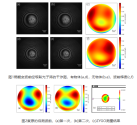
Based on previous research on photon sieves, the research team introduced a spherical wave carrier frequency into the interference signal using a micro-defocused cascaded photon sieve. This caused the weakly distorted wavefront to produce strongly varying interference fringes at the recording location, which were then recorded by a photodetector. Finally, the wavefront was reconstructed using interferogram demodulation technology. Figure 1 shows the experimental interferograms (a, b, d, e) acquired at different times , with corresponding wavefront gradients (c, f) . Figure 2 (a, b) shows the reconstructed wavefronts from the two experiments, consistent with the ZYGO measurement results in (c) . This research was supported by the National Natural Science Foundation of China and the Strategic Priority Research Program of the Chinese Academy of Sciences ( Category A ).

1767973385209.png
Please, Log in or Register to view URLs content!
 

Michael90

Senior Member
Registered Member
Exactly. I'm ultimately still against the Chinese use of non-Chinese products when a Chinese product of similar performance is already available for this very reason. Then again, China has a very poor history of getting addicted to foreign products in more ways than one. It's highly problematic and CPC needs to manage it very carefully. There need to be punitive measures for individuals and institutions who select Nvidia for personal preference hidden behind thinly veiled business rationale. If supply of the Chinese product is insufficient, that is one thing. If they just prefer using foreign products for biased or hanjian libshit racist China-disliking/hating reasons, that's another issue entirely and perhaps needs to be penalized.
I agree, funny enough Chinese are more open to US/western products than the Japanese for example despite China being a rival and hostile relationship with the US and the national security implications, while Japan is an ally and so should’ve much more open to western products
 

tokenanalyst

Lieutenant General
Registered Member

Suzhou Lianxun Instruments Co., Ltd. (Lianxun Instruments), a leading domestic high-end testing instrument manufacturer, is set to have its IPO reviewed on the Shanghai Stock Exchange’s Science and Technology Innovation Board​

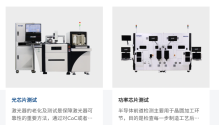
The company specializes in electronic measuring instruments and semiconductor testing equipment.

Driven by national policy support and strong market demand, Lianxun has shown remarkable growth: operating revenue rose from ¥214 million (2022) to ¥789 million (2024), with net profit turning from loss to a record ¥140 million in 2024. In the first nine months of 2025, revenue reached ¥806 million and net profit stood at ¥96.643 million, reflecting improved profitability.

The company maintains high gross margins—ranging from 43.6% to 63.6%—outperforming industry averages. It expects 2025 revenue between ¥1.15 billion and ¥1.2 billion (a 45.8–52.2% YoY increase) and net profit growth of 3.2–17.4%, indicating strong future potential.

Lianxun has built a core technology platform in high-speed, weak-signal processing, and ultra-precision motion control, mastering 16 key technologies. It has broken overseas monopolies by becoming the second global manufacturer to mass-produce testing instruments for 1.6T optical modules and holds top domestic market shares in critical segments:​
  • 3rd place (among top 5) in China’s optical communication test instruments;​
  • First place in optoelectronic device testing;​
  • First place in silicon carbide power device testing with a 21.7% share, including 43.6% market share for wafer-level aging systems.​
With rising demand from AI, new energy, and semiconductors—especially data centers, 5G/6G networks, EVs, and domestic chip substitution—Lianxun’s products directly support downstream industry upgrades, creating a virtuous cycle of innovation and growth.
1767977837777.png
For its IPO, Lianxun plans to raise ¥1.711 billion for five key projects:​
  • Next-gen optical communication testing equipment;​
  • Automotive-grade chip and storage testing equipment;​
  • Digital testing instruments;​
  • Next-generation R&D center construction.​
This marks a significant step in China’s high-end instrumentation sector, highlighting Lianxun's technological leadership and role in domestic industrial substitution.​

Please, Log in or Register to view URLs content!
 
Top