Probably, D.S. makes CAD-CAE software .interesting that they have Dassault Systemes (Dassault rafal) as a partner

You are using an out of date browser. It may not display this or other websites correctly.
You should upgrade or use an alternative browser.
You should upgrade or use an alternative browser.
Chinese semiconductor thread II
- Thread starter vincent
- Start date
Breakthrough in diamond wire cutting technology by Shandong University team.
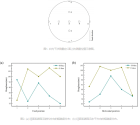
A Shandong University research team has achieved a breakthrough in diamond wire cutting technology for 12-inch 4H-SiC wafers, critical for next-generation high-power electronics. As wafer sizes grow, traditional high-speed cutting causes increased surface roughness, deep wire marks, and subsurface damage—reducing yield and material efficiency. The team conducted a systematic study revealing that the C-surface suffers more severe plastic deformation (due to abrasive plowing and ductile-brittle transition), while the Si-surface experiences brittle fracturing. Central regions suffer due to poor slurry flow and debris buildup.
By reducing the feed rate by 10%, they significantly lowered surface roughness and line mark depth, suppressed brittle cracks on the Si-surface, reduced plastic deformation on the C-surface, and improved overall surface smoothness without compromising cutting speed or throughput. The findings highlight the critical role of coolant dynamics in damage mechanisms and offer a practical, scalable solution for low-damage slicing. Published at the 2025 IEEE Solid State Lighting & Wide Bandgap Semiconductor Forum, this research advances efficient, high-yield SiC wafer manufacturing with significant implications for cost reduction and performance in high-power semiconductor devices.
Because you don't want to become reliant on a competitor.Why is that? Is there a particular Chinese companies don’t want to use CAAN?
But broadly speaking, the concern over H200 is, IMO, vastly overblown. Even if 2 million H200s are sold in China, this isn't really a huge deal in my opinion. The H200 is simply a bridging tech, so that Chinese labs have access to the computer they want/need for the forseeable future while domestic alternatives scale and mature. The threat to becoming "addicted" is overhyped.
Also, the reason why Nvidia wants to sell chips has much less to do with concerns over losing market share in China. Firstly, that ship has already sailed anyway due to geopolitics. Second, Nvidia's chips are being accessed by Chinese labs anyway, the labs just happen to be physically located off-shore instead of inside China.
Nvidia's actual concern is maximizing revenue/profit now, while H200 is still valuable and while the opportunity is still there. Because the opportunity might not be there in the future.
HP is looking to add in Chinese memory suppliers into its supply chain
Improving the Lithographic Performance of Tetranuclear Organotin Resist via Additives with Active Ligands
A series of tetranuclear organotin clusters (Sn-mCl, Sn-opy, Sn-mMe, and Sn-dMe) with different carboxylate ligands (mCl, meta-chloromethylbenzoate; opy, picolinate; mMe, meta-methylbenzoate; dMe, 3,5-dimethylbenzoate) were synthesized and characterized. Evaluations on thermostability and film-forming capability demonstrate the potential of Sn-opy cluster and the mixture of Sn-opy with Sn-mCl cluster additive (m1/m2 = 9 : 1, designated as Resist-91) as negative-tone non-chemically amplified resist (n-CAR) materials. The lithographic performances of Resist-91 and Sn-opy resist were evaluated by using electron beam lithography. Sn-opy resist can only resolve the best 22 nm half-pitch (HP) pattern at 2000 μC·cm–2. Resist-91 exhibits superior lithographic performance and resolves 20 nm HP patterns at 1450 μC·cm–2, demonstrating a significantly improving of the sensitivity and resolution by the introduction of Sn-mCl. Further extreme ultraviolet lithography demonstrates the capability of Resist-91 to form 20 nm HP patterns at a dose of 39 mJ·cm–2, with the best Z-factor of 2.1 × 10⁻⁷ mJ·nm3 among ladder-shaped tetranuclear organotin resists. Extensive mechanistic analysis of Resist-91 and model films demonstrates the substitution of Cl atom by pyridine ligand, and the generation of a network consisting of tin oxides and organics with the assistance of Sn-mCl cluster, highlighting the critical role of additives with active ligands.

Ironic, given US claims of "overcapacity" and "dumping" chips from China, these US companies are certainty embracing in Chinese chip suppliers for cheaper RAM and SSDs. The irony...HP is looking to add in Chinese memory suppliers into its supply chain

Estimates of SME self-sufficiency rose to 35% last year, exceeding targets.
Some companies are called out by name.
China’s drive for chip manufacturing equipment self-sufficiency advanced so rapidly in 2025 that even the country’s planners were caught by surprise, as the ratio of domestically developed semiconductor equipment surged to 35 per cent by the year’s end, up from 25 per cent in 2024. The ratio was higher than Beijing’s target of 30 per cent, set in early 2025 to encourage China’s semiconductor industry to favour local suppliers over US rivals such as Applied Materials, Lam Research and KLA, according to a report by Jiemian News, a Chinese media outlet.
Some companies are called out by name.
Progress had been particularly evident in critical segments such as etching and thin-film deposition, where adoption of local equipment had surpassed 40 per cent, thanks to the progress of local manufacturers such as Naura Technology Group and Advanced Micro-Fabrication Equipment.
Oxidation and diffusion furnaces from Naura accounted for more than 60 per cent of the 28nm production lines at , China’s top foundry. Naura’s order backlog now extended into the first quarter of 2027.
Piotech doubled its share of plasma-enhanced chemical vapour deposition equipment at Yangtze Memory Technology’s 3D NAND production lines, bringing the company’s equipment share to 30 per cent from 15 per cent, according to the report.
The thing is that I hear AI labs in China don't want to use CANN for their training. That's why there is still plenty of H200 demand.
replaced by Cambricon
Ironic, given US claims of "overcapacity" and "dumping" chips from China, these US companies are certainty embracing in Chinese chip suppliers for cheaper RAM and SSDs. The irony...
Dell also. More ironic given both of these companies were actively phasing out Chinese parts, especially Dell with a target date of 2024.
Dell looks to phase out China-made chips by 2024 - Nikkei
PC maker HP Inc, one of Dell's rivals, has also started surveying its suppliers to gauge the feasibility of moving production and assembly away from China, the report said, citing sources with knowledge of the matter.
Tongfu Microelectronics raises 4.4 billion yuan to expand production.
Recently, Tongfu Microelectronics Co., Ltd. (stock code: 002156, hereinafter referred to as " Tongfu Microelectronics ") released a feasibility analysis report on the use of funds raised from the issuance of A-shares to specific targets in 2026. The company plans to raise no more than 4.4 billion yuan, focusing on capacity improvement in core areas such as memory chips, automotive electronics, wafer-level packaging, high-performance computing and communications.
Tongfu Microelectronics plans to invest 888 million yuan to build a capacity expansion project, which will add 849,600 wafers of memory chip packaging and testing capacity annually upon completion. Currently, the self-reliance and controllability of the semiconductor industry has risen to a national strategy, and multiple policy documents are promoting breakthroughs in core technologies in the integrated circuit field, creating a favorable environment for domestic substitution of memory chips. With the expansion of fields such as AI, smart terminals, and new energy vehicles, the market demand for high-bandwidth, high-capacity storage products is surging. The Chinese memory chip market reached 460 billion yuan in 2024 and is expected to exceed 550 billion yuan in 2025. Tongfu Microelectronics already possesses full coverage capabilities for mid-to-high-end FLASH and DRAM products in the memory packaging and testing field, and has core technologies in wafer thinning and high-stack packaging. This capacity expansion will further consolidate its industry advantages. The project is implemented by Tongfu Tongke (Nantong) Microelectronics Co., Ltd., with a construction period of 3 years. The investment project filing certificate has been obtained, and the environmental impact assessment is underway.
Tongfu Microelectronics plans to invest 888 million yuan to build a capacity expansion project, which will add 849,600 wafers of memory chip packaging and testing capacity annually upon completion. Currently, the self-reliance and controllability of the semiconductor industry has risen to a national strategy, and multiple policy documents are promoting breakthroughs in core technologies in the integrated circuit field, creating a favorable environment for domestic substitution of memory chips. With the expansion of fields such as AI, smart terminals, and new energy vehicles, the market demand for high-bandwidth, high-capacity storage products is surging. The Chinese memory chip market reached 460 billion yuan in 2024 and is expected to exceed 550 billion yuan in 2025. Tongfu Microelectronics already possesses full coverage capabilities for mid-to-high-end FLASH and DRAM products in the memory packaging and testing field, and has core technologies in wafer thinning and high-stack packaging. This capacity expansion will further consolidate its industry advantages. The project is implemented by Tongfu Tongke (Nantong) Microelectronics Co., Ltd., with a construction period of 3 years. The investment project filing certificate has been obtained, and the environmental impact assessment is underway.