
You are using an out of date browser. It may not display this or other websites correctly.
You should upgrade or use an alternative browser.
You should upgrade or use an alternative browser.
Chinese semiconductor thread II
- Thread starter vincent
- Start date

manqiangrexue
Brigadier
If it materializes... the Chinese goverment always has to step in to be the adult because private companies act like children grabbing for free candy from a pedo in a trenchcoat whenever an easy path to profits emerges."
"Nvidia, meanwhile, is hoping to ship its newly approved H200 chips to Chinese customers before the Lunar New Year holiday in mid-February, Reuters reported. Chinese technology groups had shown strong interest in the processor, Nvidia’s second-most powerful AI chip, although Beijing had yet to approve any purchases and the timetable could shift depending on regulatory decisions, the report said."
Qiangyi Technology, a MEMS probe card company invested by Huawei, has successfully listed on the Science and Technology Innovation Board.
Qiangyi Technology, a leading Chinese MEMS probe card manufacturer backed by Huawei’s Shenzhen Hubble Technology (6.4% stake), successfully listed on China's STAR Market on December 30, 2025, becoming the 600th company to do so. The stock surged over 200% on debut, hitting a high of 276.82 yuan one of the best performances among semiconductor IPOs that year.
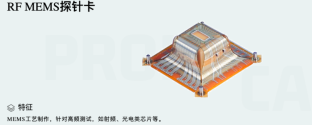
As the only domestic player to enter the global top ten in probe card manufacturing, Qiangyi has broken foreign monopolies (e.g., FormFactor, Tokyo Seimitsu) and now ranks sixth globally in market share as of 2024. The company specializes in 2D and 2.5D MEMS probe cards, with ongoing R&D on advanced 3D MEMS cards for DRAM chips.
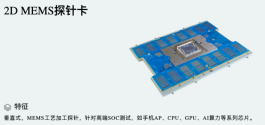
Founded in Suzhou in 2015, Qiangyi overcame technical barriers through a decade of innovation: building its own MEMS fabrication facility in 2018, achieving mass production of 2D MEMS cards by 2020, and reaching global top-tier status by 2023. It holds 182 patents (72 invention patents), establishing a robust technological moat.
Financially, Qiangyi has seen explosive growth Revenue rose from RMB 254M (2022) to RMB 641M (2024), with projected 2025 revenue of RMB 950–1.05 billion (+48%–64%). Net profit soared to RMB 233 million in 2024, up from RMB 16M in 2022, with expected growth of over 50%. The company serves over 400 semiconductor firms, including Huahong Group, GigaDevice, and JCET.
The IPO raised RMB 1.5 billion, with RMB 1.2 billion allocated to a new Nantong R&D and production facility, RMB 300 million for expanding its Suzhou headquarters and R&D center.
In the short-term plans to expand high-end product lines in computing (GPUs, CPUs, NPUs, FPGAs), improve testing frequency up to 110GHz (current max: 67GHz), accelerate verification for YMTC, Hefei Changxin, and GigaDevice, and scale shipments of HBM and CMOS image sensor probe cards.
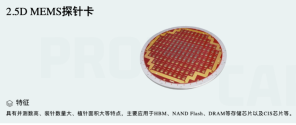
In the long-term term plans to target breakthroughs in 220GHz thin-film cards, develop 3D MEMS probes for DRAM, achieve full independent production of glass-based substrates and electroplating solutions, and master the MLC manufacturing process for 2.5D/3D cards. Qiangyi Technology is positioning itself as a pivotal “hidden champion” in China’s semiconductor ecosystem driving technological self-reliance in critical probe card infrastructure.
Below Reuters article talks about total demand from China and that Nvidia has 700,000 already in stock. If they have so much stock, demand must have dried out in non-Chinese markets. No wonder they are so desperate to sell it to China, despite a lower margin resulting from a lower price ($27k), a cut for US government, extra unnecessary transport fees for shipping the cards to US and back to East Asia, etc.
Chinese technology companies have placed orders for more than 2 million H200 chips for 2026, while Nvidia currently holds just 700,000 units in stock, two of the people said.
Nvidia has decided which H200 variants it will offer to Chinese clients and price them around $27,000 per chip, the sources said.
Of Nvidia's current 700,000-unit inventory, around 100,000 are GH200 Grace Hopper superchips, which combine Nvidia's Grace CPU with the Hopper GPU architecture, while the remainder are standalone H200 chips, one of them said.
Last edited:
Below Reuters article talks about total demand from China and that Nvidia has 700,000 already in stock. If they have so much stock, demand must have dried out in non-Chinese markets. No wonder they are so desperate to sell it to China, despite a lower margin resulting from a lower price ($27k), a cut for US government, extra unnecessary transport fees for shipping the cards to US and back to East Asia, etc.
I still don't understand why nvidia spent so much political capital to get H200 exports to China unbanned. They claim to have "infinite demand" and are supply constrained, so why couldn't they just sell the 700k inventory to non-Chinese customers?
I still don't understand why nvidia spent so much political capital to get H200 exports to China unbanned. They claim to have "infinite demand" and are supply constrained, so why couldn't they just sell the 700k inventory to non-Chinese customers?
If they had infinite demand, they wouldn't have have had to do circular investments (paying other companies to buy their chips) and the CEO wouldn't have had to go around the world begging the governments of every country that could buy some chips. Almost all of their AI revenues are being driven by a handful of companies.
Seem that a lot of people aren´t understanding the concept of free-trade. Means that Chinese companies should have unrestricted access to the entire global semiconductor ecosystem, from the latest Nvidia GPUs to ASML High-NA EUV machines.
But I can understand that some nations says "We want to keep the cutting edge at home" and they sell Nvidia previous generation GPUs instead of the latest generation and ASML Low-NA machines instead of High-NA machines, that is understandable but is already pushing it.
What is NOT acceptable and is NOT Free Trade is to want to keep a China multiple generation behind and entire decade behind by banning products that where previously sold in the same country. At the point the benefits of Free Trade is over, is just become weaponized dependency. If China is going to be restricted I think it would be much better to depend more on their own domestic products and having multiple domestic companies competing against each other in their own domestic Free Trade environment.
But I can understand that some nations says "We want to keep the cutting edge at home" and they sell Nvidia previous generation GPUs instead of the latest generation and ASML Low-NA machines instead of High-NA machines, that is understandable but is already pushing it.
What is NOT acceptable and is NOT Free Trade is to want to keep a China multiple generation behind and entire decade behind by banning products that where previously sold in the same country. At the point the benefits of Free Trade is over, is just become weaponized dependency. If China is going to be restricted I think it would be much better to depend more on their own domestic products and having multiple domestic companies competing against each other in their own domestic Free Trade environment.