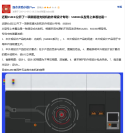
After all that lobbying for more sanctions on China including blanket bans of DUVi, Micron CEO Sanjay Mehrotra is part of Trump entourage. Surprisingly, Jensen Huang, who is the most vocal about selling to China, is missing, even though he did say he wanted to join. So Trump must have left him out for some reason.

You are using an out of date browser. It may not display this or other websites correctly.
You should upgrade or use an alternative browser.
You should upgrade or use an alternative browser.
Chinese semiconductor thread II
- Thread starter vincent
- Start date
After all that lobbying for more sanctions on China including blanket bans of DUVi, Micron CEO Sanjay Mehrotra is part of Trump entourage. Surprisingly, Jensen Huang, who is the most vocal about selling to China, is missing, even though he did say he wanted to join. So Trump must have left him out for some reason.
These ceo should be sanctioned for lobbying against Chinese companies.

SpaceMIT releases X200 3rd generation RISC-V CPU uses Xiangshan Kunming lake architecture. Single chip can achieve as many as 128 core connecting together with shared L3 cache (up to 32M cache).
Also, the RVA23 support allows for it to do AI processing. Expects to mass produce X200 by 2027.
the 28 nm lithography machine has always existed. However, the level of secrecy surrounding it is currently so high that those who have seen the physical machine cannot speak about it, while those who haven't can only make wild guesses based on photos. As a result, it has been constantly criticized.


A Reflective-Type Heterodyne Grating Interferometer for Three-Degree-of-Freedom Subnanometer Measurement
Abstract:
A heterodyne grating interferometer (HTGI) able to simultaneously measure the three-axis translational displacements of ultraprecision motion stages with a subnanometer resolution is demonstrated. The HTGI is composed of two main parts: a reflective planar grating with a uniform micron-scale period in two orthogonal directions and a reading head. Thanks to the reflective grating, the reading head design manages to make main optical paths common and located on the same side of this compact structure, potentially resulting in low Abbe errors and environmental variations. Relying on a laboratory-made dual-frequency laser source at 780 nm, two heterodyne interferometric measurement modules for X- / Y- direction motions and Z- direction motion were realized based on first-order and zeroth-order diffractions, respectively. Experiments show that the proposed HTGI, in all three axes, can distinguish a 0.5 nm step or even better, perform an up to 2.5×10 -5 linearity in a range of 80μm , and hold a 5 nm stability within 300 s. These performances confirm that the proposed HTGI can greatly benefit nanoscience and technology, where multiaxis ultraprecision positioning is required, such as wafer stage in next-generation lithography machine, and so forth.Towards multi-dimensional atomic-level measurement: integrated heterodyne grating interferometer with zero dead-zone
Abstract
This study proposes a novel heterodyne grating interferometer designed to meet the multi-dimensional atomic-level measurement demands of next-generation lithography systems and large-scale atomic-level manufacturing. By utilizing a dual-frequency laser source, the interferometer enables simultaneous three-degree-of-freedom (3-DOF) displacement measurements. Key innovations include a compact, zero dead-zone optical path architecture, which enhances measurement robustness by minimizing sensitivity to laser source instabilities and atmospheric refractive index fluctuations. In addition, we present a systematic crosstalk error analysis, coupled with a corresponding compensation algorithm, effectively reducing crosstalk-induced errors to below 5%. Experimental evaluation of the 90 × 90 × 40 mm3 prototype demonstrates outstanding performance metrics: sub-nanometer resolutions (0.25 nm for X/Y-axes, 0.3 nm for Z-axis), superior linearity coefficients (6.9 × 10⁻⁵, 8.1 × 10⁻⁵, 16.2 × 10⁻⁵ for X-, Y-, and Z-axes, respectively), high repeatability (0.8 nm@1000 nm for all axes), exceptional long-term stability (20 nm XY-plane drift, 60 nm Z-axis drift over 1000 s), and practical measurement ranges exceeding 10 mm in-plane and 2 mm axially. Comparative analysis with state-of-the-art sensors demonstrates significant advantages in measurement precision, system integration, and multi-axis capability. This advancement highlights excellent potential for applications in integrated circuit fabrication, atomic-scale manufacturing, and ultra-precision metrology for aerospace systems.2022 Annual Project Application Guide for the Key Special Project of the "National Quality Infrastructure (NQI) System"
3.1 Research and Application of High-Speed Ultra-Precision Dynamic Calibration Technology for Lithography Machines
Objectives and Requirements:
To address the issue that the working accuracy, performance, and stability of domestic lithography machines cannot be guaranteed during integration and in-service operation, there is an urgent need to overcome the "bottleneck" challenges in dynamic calibration and in-service calibration of high-speed ultra-precision laser interferometer measurement systems. This project will research multi-axis high-speed ultra-precision laser interferometer dynamic calibration and in-service calibration technologies, develop calibration devices, achieve independent control of key technologies, and hold independent intellectual property rights. The specific objectives are as follows:
(1) Multi-axis high-speed ultra-precision interferometer measurement system dynamic calibration technology and devices for lithography machine integration: calibration range ≥600 mm, maximum velocity ≥2 m/s, measurement uncertainty ≤1 nm + 2×10⁻⁹ L (k=2), where L is the displacement value.
(2) In-service calibration technology and devices for high-speed ultra-precision laser interferometer systems with over 20 axes embedded in the lithography machine: relative uncertainty of laser wavelength calibration better than 6×10⁻¹⁰ (k=2), resolution ≤0.2 nm, measurement uncertainty ≤2 nm + 3×10⁻⁹ L (k=2), where L is the displacement value.
(3) Establish two calibration specifications for high-speed ultra-precision laser interferometers used in lithography machines, set up standards at the highest national metrology technical institution, form an effective national measurement system for the lithography industry, and conduct international comparisons with authoritative international metrology institutions.
(4) Carry out application acceptance at the domestic advanced lithography machine R&D and manufacturing organizations China Electronics Technology Group Corporation (CETC) and Shanghai Micro Electronics Equipment (Group) Co., Ltd. (SMEE), and within 4 years meet the calibration needs of high-speed ultra-precision laser interferometers for domestic 28 nm lithography machines.
(5) Upon project completion, pass accuracy and stability tests and obtain a user test acceptance report; mean time between failures (MTBF) ≥3000 hours, and technology readiness level (TRL) ≥8.
Timeline: R&D duration is 4 years, with a "milestone" review conducted 24 months after project initiation.
3.1面向光刻机的高速超精密动态校准技术研究与应用
需求目标:针对国产光刻机整机集成时和在役工作时工作精 度、性能与稳定性无法保证,亟待解决高速超精密激光干涉测量 系统动态校准和在役校准的“卡脖子”难题,研究甚多轴高速超精 密激光干涉测量系统动态校准技术和在役校准技术,研制校准装 置,关键技术自主可控,具有自主知识产权,具体需求目标如下:
(1)光刻机集成时的多轴高速超精密干涉测量系统动态校准 技术和装置,校准范围≥600mm,最大速度≥2m/s,不确定度 ≤1nm+2×10⁻⁹L(k=2),L为位移值
(2)嵌入光刻机的20轴以上高速超精密激光干涉仪系统的 在役校准技术和装置,激光波长校准的相对不确定度优于6×10⁻¹⁰ (k=2),分辨力≤0.2nm,不确定度≤2nm+3×10⁻⁹L(k=2),L为 位移值。
(3)制定光刻机用高速超精密激光干涉仪校准规范2项,在 国家最高计量技术机构建标,形成面向光刻机产业的有效国家测量体系,并与国际权威计量机构进行国际比对。
(4)在国产先进光刻机研制生产单位中国电子科技集团和上 海微电子装备有限公司开展应用验收,4年内可满足国产28nm光刻机高速超精密激光干涉仪校准需求。
(5)项目完成时通过准确性和稳定性测试,并取得用户测试 验收报告,平均故障间隔时间≥3000小时,技术就绪度≥8级。 时间节点:研发时限为4年,立项24个月后开展“里程碑”考 核。
3.1 Research and Application of High-Speed Ultra-Precision Dynamic Calibration Technology for Lithography Machines
Objectives and Requirements:
To address the issue that the working accuracy, performance, and stability of domestic lithography machines cannot be guaranteed during integration and in-service operation, there is an urgent need to overcome the "bottleneck" challenges in dynamic calibration and in-service calibration of high-speed ultra-precision laser interferometer measurement systems. This project will research multi-axis high-speed ultra-precision laser interferometer dynamic calibration and in-service calibration technologies, develop calibration devices, achieve independent control of key technologies, and hold independent intellectual property rights. The specific objectives are as follows:
(1) Multi-axis high-speed ultra-precision interferometer measurement system dynamic calibration technology and devices for lithography machine integration: calibration range ≥600 mm, maximum velocity ≥2 m/s, measurement uncertainty ≤1 nm + 2×10⁻⁹ L (k=2), where L is the displacement value.
(2) In-service calibration technology and devices for high-speed ultra-precision laser interferometer systems with over 20 axes embedded in the lithography machine: relative uncertainty of laser wavelength calibration better than 6×10⁻¹⁰ (k=2), resolution ≤0.2 nm, measurement uncertainty ≤2 nm + 3×10⁻⁹ L (k=2), where L is the displacement value.
(3) Establish two calibration specifications for high-speed ultra-precision laser interferometers used in lithography machines, set up standards at the highest national metrology technical institution, form an effective national measurement system for the lithography industry, and conduct international comparisons with authoritative international metrology institutions.
(4) Carry out application acceptance at the domestic advanced lithography machine R&D and manufacturing organizations China Electronics Technology Group Corporation (CETC) and Shanghai Micro Electronics Equipment (Group) Co., Ltd. (SMEE), and within 4 years meet the calibration needs of high-speed ultra-precision laser interferometers for domestic 28 nm lithography machines.
(5) Upon project completion, pass accuracy and stability tests and obtain a user test acceptance report; mean time between failures (MTBF) ≥3000 hours, and technology readiness level (TRL) ≥8.
Timeline: R&D duration is 4 years, with a "milestone" review conducted 24 months after project initiation.
R&D project of ZETOP Technologies Co., Ltd., possibly an EUV exposure system.
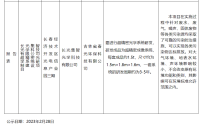
This project involves the research and development of ultra-precision optical systems, with the final deliverables being ultra-precision imaging systems. Each system weighs approximately 1.5 metric tons, measures about 1.5 m × 1.8 m × 1.6 m, and has a development cycle of around 3 to 5 years per system.
This project involves the research and development of ultra-precision optical systems, with the final deliverables being ultra-precision imaging systems. Each system weighs approximately 1.5 metric tons, measures about 1.5 m × 1.8 m × 1.6 m, and has a development cycle of around 3 to 5 years per system.
the 28 nm lithography machine has always existed. However, the level of secrecy surrounding it is currently so high that those who have seen the physical machine cannot speak about it, while those who haven't can only make wild guesses based on photos. As a result, it has been constantly criticized.
View attachment 174839
View attachment 174840
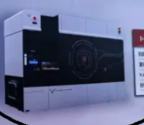
Is going to be controversial but I think this is it, I have seen this design before when Havok was the main source of information in 2021. This picture was circulating back in the time I know is not the KrF scanner and is I think is just seems to big to be the I-Line scanner.
Usually Immersion scanners are paired with KrF for less critical layers in Mix and Match production. Just food for thought.