Chinese semiconductor thread II

tphuang

General
Staff member
Super Moderator
VIP Professional
Registered Member
I've wrote about helium and Russia several times now. Russia was running at below capacity for a few years. So there is distinct possibility they can fill majority of the demand gap for China. But it's possible that China may be short on certain semi grade helium supply.
 

Phead128

Major
Staff member
Moderator - World Affairs
for example there has been ban on Chinese drones being sold in the US few months ago,
Nope, only new models are not FCC approved. Existing models unaffected and freely imported. See Amazon.
TP link and other Chinese routers recently being outlawed because of its Chinese origins which its founders are trying everything to cut their foreign branch from china to show they are not really beholden to china/ Chinese
Nope, only new models are not FCC approved. Existing models unaffected and freely imported. See Amazon. Reading comprehension isn't your strong suit.
. lol etc etc China hasn’t retaliated because it’s not really something that affect all Chinese goods like the blanket imposing of high Tarriffs.
Its a one year trade truce so US can't do anything. China doesn't need to retaliate since existing models are unaffected and freely imported whether drones or routers.
So even if this bill passsed I don’t think China will do much apart from protesting it to be honest.
So if some people think says won’t keep enacting such sanction due to the rare earth issue then I think they are naive .
You forgot the rare earth ban was in retailiation for export controls (50% US content entity list)? Were you living under a rock? How can you say with a straight face China only protest and does nothing while ignoring the rare earths ban? Clueless.
 

sdkan

Junior Member
Registered Member
Nope, only new models are not FCC approved. Existing models unaffected and freely imported. See Amazon.

Nope, only new models are not FCC approved. Existing models unaffected and freely imported. See Amazon. Reading comprehension isn't your strong suit.

Its a one year trade truce so US can't do anything. China doesn't need to retaliate since existing models are unaffected and freely imported whether drones or routers.

You forgot the rare earth ban was in retailiation for export controls (50% US content entity list)? Were you living under a rock? How can you say with a straight face China only protest and does nothing while ignoring the rare earths ban? Clueless.

Correct. Trump's visit next month will also see him announce that the bilateral agreement will be extended for another year.

In fact, the United States will not be able to solve the rare earth problem within ten years.

Oh, Rare Earth has won time and again.
 

AndrewS

Brigadier
Registered Member
I've wrote about helium and Russia several times now. Russia was running at below capacity for a few years. So there is distinct possibility they can fill majority of the demand gap for China. But it's possible that China may be short on certain semi grade helium supply.

Izvestia is reporting that Russia has 55-60 million CBM capacity for Helium.

In 2025, production was 20 million CBM and domestic Russian consumption was 4 million CBM. It looks like exports to China accounted for the rest (15-16 million CBM).

---

It does look like Russia can replace all of China's imports from Qatar (15 million CBM) and still have 25-30 million CBM for other customers.

iz.ru/en/node/2074376
 

AndrewS

Brigadier
Registered Member
Bro to complement the domestic Helium production of 250 million cubic feet from 0 commercial production in 2019/2020

Please, Log in or Register to view URLs content!

©Shutterstock

China and Russia raise domestic helium capacity in response to Gulf supply cuts​

Please, Log in or Register to view URLs content!

By
Please, Log in or Register to view URLs content!
01 Apr 20262 min read
Please, Log in or Register to view URLs content!


China is to add 250 million standard cubic feet (mmscf) a year of domestic helium capacity from next month and Russia plans to add 700 mmscf/year from the third quarter.
It takes China’s helium capacity to 750 mmscf annually. The increases were announced at OilChem China Gas Week.
China imports around 85% of its helium, split between Russia and Qatar.
Links with Russia have strengthened over the last month with Qatar’s Ras Laffan LNG and helium production plants down, which have impacted global supply chains and particularly Asian markets.
Last October, Tom Deng, President of G-gas, speaking at gasworld’s Helium Super Summit, said Russian helium, thanks to its aggressive low-price strategy over the past two years, made up 40% of imports – a figure which is now sure to rise with Qatar out of the frame.
China produces its domestic helium primarily by extracting it from natural gas in major onshore basins across the central and western regions, with significant breakthroughs in ultra-high-purity extraction recently concentrated in Shaanxi Province.
Customers of suppliers with heavy exposure to Qatar will face the most significant curtailments, according to Carlos Nulman, Business Development & Global Projects at Mitsui & Co./Air Water Inc.
“Spot market activity will be significant in terms of price and attention, but modest in volume. For many, the holes that this disruption is creating are too large to be meaningfully filled with occasional spot loads. End-users with major downstream exposure should pursue spot opportunities where available, but should try to avoid relying on them as a primary mitigation strategy,” he writes.
Executives across the technology sector, where Asia is dominant, have begun flagging
Please, Log in or Register to view URLs content!
during the
Please, Log in or Register to view URLs content!
, a development that coincides with the accelerating commercial scale of AI platforms and intensifying demand for the semiconductor hardware that powers them.


Key milestones in China's domestic helium development include:
  • 2020: Opening of the first major commercial-scale helium plant to extract helium from natural gas.
  • 2021-2023: Significant breakthroughs in extracting high-purity helium from coal bed methane, with specialized, award-winning technology applied in Shanxi province.
  • 2023: Commissioning of the world's first high-purity helium extraction plant from coal bed methane.
  • 2024–2025: Rapid expansion of domestic capacity to reduce import dependence, including utilizing international resources (e.g., in Tanzania).
    Facebook +4
By early 2026, China was still heavily importing, but had increased domestic capacity, and was planning to add significant further domestic production capacity by May 2026, according to. The push is driven by the need for high-tech applications, particularly in semiconductors and manufacturing, according to.
Facebook +2

This implies that China has activated its emergency Helium supply?

2025 consumption looks ~1100 mmscf, with 1000 mmscf of imports.

And China is increasing domestic production by 250 mmscf next month. So that's about 25% of imports, which would cover about half of the previous supply from Qatar.

---
Russia is also doubling helium production from 700 to 1400 mmscf by September 2026.

That could cover all of China's requirements and there would be spare for Japan, Korea and Taiwan
 
Last edited:

ansy1968

Brigadier
Registered Member
This implies that China has activated its emergency Helium supply?

2025 consumption looks ~1100 mmscf, with 1000 mmscf of imports.

And China is increasing domestic production by 250 mmscf next month. So that's about 25% of imports, which would cover about half of the previous supply from Qatar.

---
Russia is also doubling helium production from 700 to 1400 mmscf by September 2026.

That could cover all of China's requirements and there would be spare for Japan, Korea and Taiwan
This will crush Qatar as a major global supplier of Helium Gas for years to come and may not recover with its major customer becoming a competitor with its self sufficiency program.
 

tokenanalyst

Lieutenant General
Registered Member

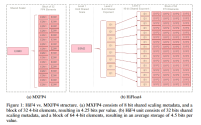
HiFloat4 Format for Language Model Pre-training on Ascend NPUs​


Large foundation models have become central to modern machine learning, with performance scaling predictably with model size and data. However, training and deploying such models incur substantial computational and memory costs, motivating the development of low-precision training techniques. Recent work has demonstrated that 4-bit floating-point (FP4) formats--such as MXFP4 and NVFP4--can be successfully applied to linear GEMM operations in large language models (LLMs), achieving up to 4x improvements in compute throughput and memory efficiency compared to higher-precision baselines. In this work, we investigate the recently proposed HiFloat4 FP4 format for Huawei Ascend NPUs and systematically compare it with MXFP4 in large-scale training settings. All experiments are conducted on Ascend NPU clusters, with linear and expert GEMM operations performed entirely in FP4 precision. We evaluate both dense architectures (e.g., Pangu and LLaMA-style models) and mixture-of-experts (MoE) models, where both standard linear layers and expert-specific GEMMs operate in FP4. Furthermore, we explore stabilization techniques tailored to FP4 training that significantly reduce numerical degradation, maintaining relative error within 1% of full-precision baselines while preserving the efficiency benefits of 4-bit computation. Our results provide a comprehensive empirical study of FP4 training on NPUs and highlight the practical trade-offs between FP4 formats in large-scale dense and MoE models.​

1776094065369.png

Please, Log in or Register to view URLs content!
 

tokenanalyst

Lieutenant General
Registered Member

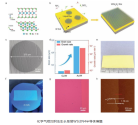
A major breakthrough by a Chinese team! This will provide key materials for achieving independent control over chip technology.​


A significant breakthrough in semiconductor research was achieved by a joint team from China's National University of Defense Technology and the Institute of Metal Research, Chinese Academy of Sciences. Published in the top international journal National Science Review, their work addresses critical bottlenecks in post-Moore's Law chip development by overcoming long-standing issues with two-dimensional (2D) semiconductors. Specifically, previous materials suffered from structural imbalances that favored electron-rich N-type properties while lacking high-performance P-type counterparts. This team successfully developed a novel chemical vapor deposition method using liquid gold/tungsten bimetallic substrates to grow wafer-level monolayer WSi₂N₄ (silicon tungsten nitride) films with precise, controllable doping capabilities.

The new fabrication technique not only enables the creation of sub-millimeter-scale single-crystal regions but also features a growth rate approximately 1000 times faster than prior methods. The resulting monolayer WSi₂N₄ devices demonstrate superior electrical performance, boasting high hole mobility and high on-state current density alongside excellent thermal dissipation and chemical stability. These attributes make the material an ideal candidate for future CMOS integrated circuits, offering essential materials support for achieving independent control over chip technology in the era beyond Moore's Law.​

1776095324795.png

Please, Log in or Register to view URLs content!
 

tokenanalyst

Lieutenant General
Registered Member

The construction of the Chengdu Silan Automotive Semiconductor Packaging (Phase II) Plant Project is more than halfway complete!​


The construction of Silan Microelectronics' Chengdu Automotive Semiconductor Packaging Phase II Plant project has surpassed the halfway mark as of April 2026. Located in the Jintang Economic Development Zone (Chengdu-Aba Industrial Park) in Sichuan Province, this initiative commenced in November 2025 and is currently advancing toward its final stages. With equipment installation and commissioning scheduled to begin in August 2026, the project aims to achieve full trial operation by the end of that year, marking a significant step forward for advanced semiconductor manufacturing infrastructure in Southwest China.

Upon reaching full production capacity, the completed facility is projected to deliver a monthly output of 3 million automotive-grade power modules, contributing an annual economic value of 300 million yuan. This expansion will substantially bolster Silan Microelectronics' position as the sole dedicated power semiconductor packaging base for the company within China, further enhancing its domestic leadership in silicon epitaxy and advanced packaging technologies. The new capacity is designed to support the company's consistent high growth trajectory, maintaining an annual compound growth rate of over 30% by leveraging its existing scale and cutting-edge production capabilities.

Silan Chengdu has established itself as a critical player in the global supply chain, supplying diverse sectors including large white goods, new energy vehicles, industrial controls, and photovoltaic storage systems. The branch currently holds a top-three global market share for Intelligent Power Modules (IPM) with over 40% penetration in the white goods sector, significantly boosting "Made in Chengdu" electronics' integration into international markets. Once the Phase II plant operationalizes, it will solidify Silan's reputation as an industry leader, providing high-performance power devices and modules to leading domestic enterprises while driving continued innovation in the Chinese automotive semiconductor landscape.

Please, Log in or Register to view URLs content!
 
Top