Chinese semiconductor thread II

tokenanalyst

Lieutenant General
Registered Member

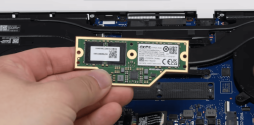
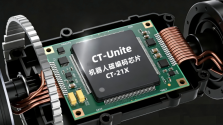
China's first domestically produced GaN magnetic encoding chip for humanoid robot joints released.​


Zhongke Wireless Semiconductor (referred to in the text as CAS Wireless/DT Semiconductor) released the CT-21X series, marking a historic milestone as China's first domestically produced Gallium Nitride (GaN) magnetic encoding chip specifically designed for humanoid robot joints.
1776095889754.png
This development addresses critical technical bottlenecks in core perception and control systems for humanoid robots, aligning with the "15th Five-Year Plan" goals to enhance industrial self-sufficiency and reduce reliance on imported high-end components. Unlike previous attempts, this chip was built from scratch using a complete GaN technology system covering materials, devices, processes, and packaging. The company holds multiple core patents, ensuring full independent controllability over the supply chain.
Leveraging GaN's superior third-generation semiconductor properties (high temperature/radiation resistance), the chip utilizes digital-analog hybrid integration to execute FOC algorithms in hardware.​
  • Latency: Loop computation latency of <0.2ns.​
  • Temperature: Stable operation up to 180°C, with tolerance for extreme environments between 250–400°C (allowing direct placement near motor coils).​
  • Precision: Angular accuracy of 30–100 arcseconds and resolution up to 21 bits.​
  • Global Competitiveness: While noting a slight gap compared to international leaders, the technology has entered the same global tier, demonstrating rapid progress in wide-bandgap integrated circuits.​
The CT-21X series is designed for high-reliability scenarios requiring precise dynamic motion control and lightweight design. Its primary application markets include:​
  • Humanoid and collaborative robots.​
  • Industrial servo systems.​
  • Aerospace equipment.​
By simplifying heat dissipation structures and extending operating temperatures, this chip facilitates the domestic substitution of core robotic sensors, expected to accelerate the overall development of China's embodied intelligence industry.

Please, Log in or Register to view URLs content!
 

tokenanalyst

Lieutenant General
Registered Member

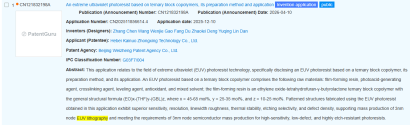
Improvement of EUV emission through reducing opacity in laser-produced plasma by adjusting Sn concentration in Sn-Al alloy targets.​

Abstract​

During the escape of 13.5 nm extreme ultraviolet emission from laser- produced plasma, plasma opacity significantly influences the EUV source output. To reduce plasma opacity, we fabricated Sn-Al alloy targets with low Sn concentrations by alloying Al into a Sn matrix. Calculations of the opacity of Sn plasmas at varying initial plasma densities revealed that the opacity within a 2% bandwidth centered at 13.5 nm wavelength is higher than that at other wavelengths. Experimental spectral results indicate that relative to the pure Sn target, EUV in-band intensity is almost invariant, whereas spectral purity near 13.5 nm is enhanced by a factor of approximately 1.6 when the Sn concentration in the target is lowered to the range of 10%–20%. These experimental observations can be qualitatively explained by the opacity calculations. Plasmas generated by targets with reduced Sn concentrations exhibit lower opacity, which is attributed to the decreased plasma density as confirmed by Nomarski interferometry measurements. Our findings suggest that appropriately designed alloy targets can further enhance the performance of EUV sources.​

1776096056946.png

Please, Log in or Register to view URLs content!
 

tokenanalyst

Lieutenant General
Registered Member

Wafer defect semantic reasoning via a three-stage retrieval-augmented system in semiconductor manufacturing.​

Abstract​

Wafer defect detection is a crucial part of semiconductor manufacturing, requiring both high generalization across distribution shifts and interpretable explanations for diverse engineering roles. Existing deep learning methods often fall short in semantic reasoning and domain transferability. To address these challenges, we propose WaferDSR-RAG, a novel retrieval-augmented framework that integrates a bimodal wafer defect knowledge graph (BWDKG) with a three-stage semantic adaptation strategy, comprising defect visual-semantic alignment, defect-relevant knowledge retrieval and screening, and role-adaptive explanation generation. This design allows the system to dynamically adapt to unseen defect distributions and generate expert-aligned explanations tailored to different engineering responsibilities. Extensive experiments on both in-distribution and cross-fab wafer maps demonstrate that WaferDSR-RAG consistently outperforms state-of-the-art baselines in both detection accuracy and explanation quality. Compared to GPT-4o and Gemini 1.5 Pro, our method generates more semantically accurate and practically useful explanations for engineers with different roles, as validated by automatic metrics and domain expert evaluations. WaferDSR-RAG represents a scalable solution for wafer defect detection and reasoning in real-world semiconductor production.​

Please, Log in or Register to view URLs content!
 

tokenanalyst

Lieutenant General
Registered Member

Newray Materials: Certified and mass-produced by the top two semiconductor application equipment manufacturers in the United States.​

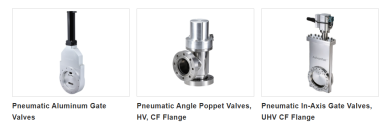
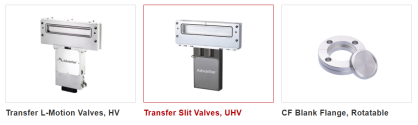
Xinlai Materials stated on its interactive platform on April 9th that its surface treatment processes for key components of high-cleanliness vacuum systems and high-cleanliness gas transport systems for semiconductors are advanced and can meet the stringent requirements of high-cleanliness applications. AdvanTorr brand vacuum products and NanoPure brand gas products both possess mature technical adaptability, covering equipment manufacturers and end-users across the entire semiconductor industry chain. On the equipment side, the company supplies equipment manufacturers directly; on the plant side, it mainly supplies indirectly through engineering companies (as specified by the end user). The company has been certified by the top two semiconductor application equipment manufacturers in the United States and has become their Tier 1 supplier. It has already begun mass production, and order volume continues to grow steadily.

Newray Materials' two core brands, "AdvanTorr" and "NanoPure," specialize in vacuum systems and high-purity gas delivery systems , respectively . Simply put, the former is responsible for creating a vacuum inside chip manufacturing equipment, while the latter ensures the delivery of specialized gases. According to reports, the AdvanTorr vacuum system has a leakage rate as low as 10⁻⁹ Pa·m/s, meeting the ultra-high vacuum environment requirements of the 2nm GAA process ; the NanoPure gas pipeline system can control gas impurities to the ppt (parts per trillion) level, breaking the long-term monopoly of international giants such as DuPont and VAT. In October 2025, Newray Materials' ALD valve component manufacturing process reached below the 3-nanometer level and achieved mass production, making it the first domestic company to achieve full localization of vacuum gas system production .

1776113298132.png1776113336122.png
1776113359442.png

Please, Log in or Register to view URLs content!
 

ansy1968

Brigadier
Registered Member
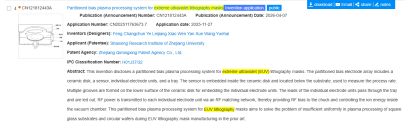
@tokenanalyst , prof is this significant?, what usage is this lithography used for?


Please, Log in or Register to view URLs content!


Please, Log in or Register to view URLs content!

Please, Log in or Register to view URLs content!


Please, Log in or Register to view URLs content!


147 views18 minutes ago

Please, Log in or Register to view URLs content!

Please, Log in or Register to view URLs content!


As the U.S.-China chip war heats up, researchers at the State Key Laboratory in Hangzhou have delivered a stunning ...
New


Please, Log in or Register to view URLs content!
(MEBDW) technology, using over 10,000 electron beams working in parallel, is designed to overcome the low throughput limitations of traditional single-beam lithography. It enables high-resolution, maskless patterning, making it suitable for advanced, high-mix, low-volume production and prototyping where mask costs are prohibitive.
Design And Reuse +3
Key Applications & Usage
  • Next-Generation Semiconductor Manufacturing: Targeted for 20-nm half-pitch and beyond, as well as 22-nm and 16-nm nodes.
  • Maskless Lithography (Direct-Write): Eliminates the need for expensive photomasks (which can cost $5–20 million per layer set), reducing costs for low-volume or prototyping runs.
  • Rapid Prototyping and R&D: Used in research institutions and to create high-frequency, optical, and quantum semiconductor devices.
  • High-Resolution Nano-Patterning: Capable of sub-10 nm resolution, used for creating nanostructures, NEMS (Nano-Electro-Mechanical Systems), and magnetic recording heads.
  • High-Volume Manufacturing (Future Goal): Systems like those developed by MAPPER aimed for 10+ wafers per hour (WPH).
    Design And Reuse +7
Performance Characteristics
  • Throughput: By utilizing over 10,000 beams, the technology significantly increases the speed of scanning compared to single-beam tools.
  • Data Handling: 10,000-beam systems generate massive data rates, exceeding 1,000 Terabits per second (Tbps), requiring high-speed data reduction and 10 Gbps fiber links for each beam.
  • System Examples: The
    Please, Log in or Register to view URLs content!
    offers high throughput with a max writing area of 12".
    Design And Reuse +4
Advantages Over Conventional Methods
  • No Photomasks: Drastically reduces turnaround time and costs for chip revisions.
  • Flexibility: Easily adaptable for changes in design without creating new physical masks.
  • High Precision: Combines the resolution of electron beams with the efficiency of parallel processing.
 
Top