Chinese semiconductor thread II

tokenanalyst

Lieutenant General
Registered Member

A high-end optoelectronic device manufacturer has received over 100 million yuan in investment; its technology originates from Academician Luo Yi's team at Tsinghua University.​

MEMS Consulting learned that on April 9, 2026, Huayi Yingfei, a developer of high-end optoelectronic devices, announced the completion of a Pre-A round of financing exceeding 100 million yuan. This round was led by Yuanhe Puhua, with strategic investors including Huagong Investment, Changfei Fund, Novartis Capital, and Yangtze River Venture Capital. Follow-on investors included the Beijing-Tianjin-Hebei Venture Capital Guidance Fund, Zhongguancun Capital, Yizhuang Science and Technology Innovation Phase II Fund, CMB International Capital, and Xinrongbang Capital.

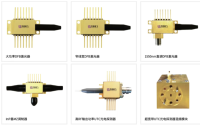
Huayi Yingfei's core technology originates from Academician Luo Yi's team in the Department of Electronic Engineering at Tsinghua University. The company possesses independent innovative technologies across the entire process of chip design, material epitaxy, process technology, and packaging testing. It focuses on the research and development and production of products such as high-speed single-mode semiconductor laser chips, high-speed modulator integrated light sources, and high-speed, high-saturation photodetectors. Its products are widely used in 5G communications, broadband fiber optic networks, data transmission, artificial intelligence, and LiDAR.
1775920610919.png

According to publicly available data, the domestic production rate of optical chips for speeds of 2.5G and below exceeds 90%, and the domestic production rate of 10G optical chips is about 60%. However, the domestic production rate of high-end optical chips for speeds of 25G and above is only 4%, still dominated by overseas manufacturers. Huayi Yingfei's recent financing of over 100 million yuan is a crucial step in breaking through this "4% predicament."

The funds raised in this round will be used for the iteration of high-end optoelectronic chip products, capacity expansion, and cooperation with upstream and downstream partners in the industry chain, as well as to promote the verification and adoption of core products by downstream customers. Meanwhile, the Beijing Information Optoelectronic Chip Platform, jointly built by Huayi Yingfei and Beijing Lingchuang Optoelectronics, is expected to be fully commissioned and operational by June 2026.​

Please, Log in or Register to view URLs content!
 

ForcedTrend

Junior Member
Registered Member

U.S. Bill Blocks All Semiconductor Equipment Exports to China​


The U.S. Congress is advancing a bill to completely block exports to China not only of equipment for advanced semiconductor manufacturing but also of equipment for general-purpose semiconductor production. While previous sanctions focused on curbing China’s technological catch-up in advanced processes, the new measure aims to halt its production capacity by restricting access to core equipment. If enacted, Chinese memory and foundry (semiconductor contract manufacturing) companies could face direct impacts, potentially slowing growth in the AI industry.


Please, Log in or Register to view URLs content!
 

tokenanalyst

Lieutenant General
Registered Member

U.S. Bill Blocks All Semiconductor Equipment Exports to China​


The U.S. Congress is advancing a bill to completely block exports to China not only of equipment for advanced semiconductor manufacturing but also of equipment for general-purpose semiconductor production. While previous sanctions focused on curbing China’s technological catch-up in advanced processes, the new measure aims to halt its production capacity by restricting access to core equipment. If enacted, Chinese memory and foundry (semiconductor contract manufacturing) companies could face direct impacts, potentially slowing growth in the AI industry.


Please, Log in or Register to view URLs content!
Given that 20%-30% of US companies revenue still come from China I think that US toolmakers are going to lobby the hell out the Trump Administration to veto the bill.

But even then they wont have to worry for too long as is highly probably that China is going to introduce Import Controls on US tools given that domestic equipment manufacturers stepped up their domestication effort and is very probably that China semiconductor domestic equipment and domestic EDA market become the largest in the world in a few years. It could also force foreign companies to move production to China and use more Chinese made components, sub-systems and software and who knows, given that China is building an entire supply chain for lithography machines it may force ASML to create a Chinese based company for domestic lithography. Pretty much like ACM Research Shanghai.

With all that said, is incredible how dogmatic and irrational US politicians are. There is no rational thinking there anymore, there is no nuance in Washington, just dogma. Everyone with a few functional brain cells will tell you, it will accelerate China semiconductor domestic supply chains at the expense of US companies, it will affect components manufacturers in the US as foreign companies try to move away of US supply chains, it will affect the revenue of semiconductor companies in the US and that will have an effect their R&D, it will cost good paying jobs, it will accelerate offshoring. They don't even have a plan to compensate US companies for their losses. Furthermore as these years of export controls has demonstrated it would probably be unenforceable, it will stretch the department of commerce so much all over the world that it will be virtually useless.
And that not even counting that China may retaliate by cutting critical materials that US need to make their own semiconductors or introduce their own version of the 0% Foreign Direct Product Rule blocking the exports of equipment and tools to the US semiconductor industry.
 

Michael90

Senior Member
Registered Member
Given that 20%-30% of US companies revenue still come from China I think that US toolmakers are going to lobby the hell out the Trump Administration to veto the bill.

But even then they wont have to worry for too long as is highly probably that China is going to introduce Import Controls on US tools given that domestic equipment manufacturers stepped up their domestication effort and is very probably that China semiconductor domestic equipment and domestic EDA market become the largest in the world in a few years. It could also force foreign companies to move production to China and use more Chinese made components, sub-systems and software and who knows, given that China is building an entire supply chain for lithography machines it may force ASML to create a Chinese based company for domestic lithography. Pretty much like ACM Research Shanghai.

With all that said, is incredible how dogmatic and irrational US politicians are. There is no rational thinking there anymore, there is no nuance in Washington, just dogma. Everyone with a few functional brain cells will tell you, it will accelerate China semiconductor domestic supply chains at the expense of US companies, it will affect components manufacturers in the US as foreign companies try to move away of US supply chains, it will affect the revenue of semiconductor companies in the US and that will have an effect their R&D, it will cost good paying jobs, it will accelerate offshoring. They don't even have a plan to compensate US companies for their losses. Furthermore as these years of export controls has demonstrated it would probably be unenforceable, it will stretch the department of commerce so much all over the world that it will be virtually useless.
And that not even counting that China may retaliate by cutting critical materials that US need to make their own semiconductors or introduce their own version of the 0% Foreign Direct Product Rule blocking the exports of equipment and tools to the US semiconductor industry.
lol I have no doubt this bill has a high probability of going through. Since nobody in Washington wants to be seen as being soft on China. In fact the only thing in the world that the democrats and republicans agree on is to contain/put sanctions on China , and as China advances and catches up with each passing year, the pressure will be even more on the US to pressure/enact newer sanctions .
so sanctions will only increase not decrease
 

Phead128

Major
Staff member
Moderator - World Affairs
lol I have no doubt this bill has a high probability of going through. Since nobody in Washington wants to be seen as being soft on China. In fact the only thing in the world that the democrats and republicans agree on is to contain/put sanctions on China , and as China advances and catches up with each passing year, the pressure will be even more on the US to pressure/enact newer sanctions .
so sanctions will only increase not decrease
Highly unlikely because China imposed rare earths ban after US violated the Madrid consensus by unilaterally imposing the 50% export controls to China, which ultimately resulted in US eliminating 50% export controls in the Busan consensus in Oct 2025 and removal of all liberation day tariffs and even allowing Nvidia H200 exports.

Congress can introduce many draft bills, many never end up laws as State dept and White House do not want to risk the 1 year trade truce and risk rare earths retailiation again by violating Busan consensus. The trope about bipartisan agreement only matter when White House isn't leading ongoing trade negotiations, which Greer and Bessent are in full control over, not Congress. I can't count the countless of proposed bills that never make into reality, draft proposals are a dime a dozen.
 

ansy1968

Brigadier
Registered Member
Russia is able to replace Qatar in supplying helium to China and plans to increase the production of cryogenic storage tanks.

Please, Log in or Register to view URLs content!
Bro to complement the domestic Helium production of 250 million cubic feet from 0 commercial production in 2019/2020

Please, Log in or Register to view URLs content!

©Shutterstock

China and Russia raise domestic helium capacity in response to Gulf supply cuts​

Please, Log in or Register to view URLs content!

By
Please, Log in or Register to view URLs content!
01 Apr 20262 min read
Please, Log in or Register to view URLs content!


China is to add 250 million standard cubic feet (mmscf) a year of domestic helium capacity from next month and Russia plans to add 700 mmscf/year from the third quarter.
It takes China’s helium capacity to 750 mmscf annually. The increases were announced at OilChem China Gas Week.
China imports around 85% of its helium, split between Russia and Qatar.
Links with Russia have strengthened over the last month with Qatar’s Ras Laffan LNG and helium production plants down, which have impacted global supply chains and particularly Asian markets.
Last October, Tom Deng, President of G-gas, speaking at gasworld’s Helium Super Summit, said Russian helium, thanks to its aggressive low-price strategy over the past two years, made up 40% of imports – a figure which is now sure to rise with Qatar out of the frame.
China produces its domestic helium primarily by extracting it from natural gas in major onshore basins across the central and western regions, with significant breakthroughs in ultra-high-purity extraction recently concentrated in Shaanxi Province.
Customers of suppliers with heavy exposure to Qatar will face the most significant curtailments, according to Carlos Nulman, Business Development & Global Projects at Mitsui & Co./Air Water Inc.
“Spot market activity will be significant in terms of price and attention, but modest in volume. For many, the holes that this disruption is creating are too large to be meaningfully filled with occasional spot loads. End-users with major downstream exposure should pursue spot opportunities where available, but should try to avoid relying on them as a primary mitigation strategy,” he writes.
Executives across the technology sector, where Asia is dominant, have begun flagging
Please, Log in or Register to view URLs content!
during the
Please, Log in or Register to view URLs content!
, a development that coincides with the accelerating commercial scale of AI platforms and intensifying demand for the semiconductor hardware that powers them.


Key milestones in China's domestic helium development include:
  • 2020: Opening of the first major commercial-scale helium plant to extract helium from natural gas.
  • 2021-2023: Significant breakthroughs in extracting high-purity helium from coal bed methane, with specialized, award-winning technology applied in Shanxi province.
  • 2023: Commissioning of the world's first high-purity helium extraction plant from coal bed methane.
  • 2024–2025: Rapid expansion of domestic capacity to reduce import dependence, including utilizing international resources (e.g., in Tanzania).
    Facebook +4
By early 2026, China was still heavily importing, but had increased domestic capacity, and was planning to add significant further domestic production capacity by May 2026, according to. The push is driven by the need for high-tech applications, particularly in semiconductors and manufacturing, according to.
Facebook +2
 

Michael90

Senior Member
Registered Member
Highly unlikely because China imposed rare earths ban after US violated the Madrid consensus by unilaterally imposing the 50% export controls to China, which ultimately resulted in US eliminating 50% export controls in the Busan consensus in Oct 2025 and removal of all liberation day tariffs and even allowing Nvidia H200 exports.

Congress can introduce many draft bills, many never end up laws as State dept and White House do not want to risk the 1 year trade truce and risk rare earths retailiation again by violating Busan consensus. The trope about bipartisan agreement only matter when White House isn't leading ongoing trade negotiations, which Greer and Bessent are in full control over, not Congress. I can't count the countless of proposed bills that never make into reality, draft proposals are a dime a dozen.
China took that step due to the tariffs US imposed. Not due to some congress laws or government law on banning Chinese companies from buying or selling to/from the US.
for example there has been ban on Chinese drones being sold in the US few months ago, TP link and other Chinese routers recently being outlawed because of its Chinese origins which its founders are trying everything to cut their foreign branch from china to show they are not really beholden to china/ Chinese . lol etc etc China hasn’t retaliated because it’s not really something that affect all Chinese goods like the blanket imposing of high Tarriffs. So even if this bill passsed I don’t think China will do much apart from protesting it to be honest.
So if some people think says won’t keep enacting such sanction due to the rare earth issue then I think they are naive .
that’s a joker for china, so I think they know China won’t be too keen to keep using it as much. Since when you use something the leverage over that reduces over time . Sometimes the threat of using it is better than doing so.
 
Top