Low-cost thermal barrier coating preparation technology
Researchers at Qingdao National University Science Park have developed a breakthrough method for rapidly and affordably producing large-area thermal barrier coatings with advanced columnar structures that withstand repeated thermal cycling. The core innovation lies in replacing traditional organic solvents with novel water-based suspensions, paired with an optimized suspension plasma spraying (SPS) process. Water offers significant practical advantages: it is cheaper, safer to handle, easier to transport, and simpler to store than ethanol or other organic carriers. By carefully tuning the SPS parameters, researchers can control particle atomization and melting dynamics, ultimately forming a highly porous (>20%) columnar microstructure that delivers excellent thermal insulation and strong resistance to high-temperature sintering.
This advancement solves a long-standing industry dilemma in aerospace and power generation. Conventional atmospheric plasma spraying (APS) is cost-effective but produces layered coatings with poor strain tolerance, limiting their use to low-stress engine components. Conversely, electron beam physical vapor deposition (EB-PVD) creates highly durable columnar structures ideal for thermal shock resistance, but its extreme equipment costs and slow production rates have kept it out of widespread commercial use. The new water-based SPS technology effectively bridges this gap by merging the affordability and throughput of conventional spraying with the high-performance microstructures typically reserved for premium deposition methods. It requires less capital investment, accelerates manufacturing timelines, and dramatically lowers overall material expenses.
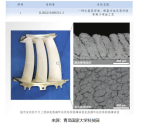
Targeted primarily for the hot-end metal components of gas turbines and aero engines, this coating technology is designed to extend component lifespan while improving thermal efficiency under extreme operating conditions. By enhancing both insulation performance and resistance to thermal fatigue, it enables more stable and efficient engine operation over longer maintenance cycles. As a result, high-performance thermal barrier protection becomes economically viable for broader industrial deployment, marking a significant practical advance in high-temperature materials engineering and aerospace manufacturing.