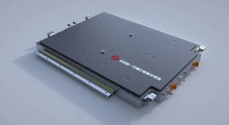
News on China's scientific and technological development.

tokenanalyst

Lieutenant General
Registered Member

Low-cost thermal barrier coating preparation technology​


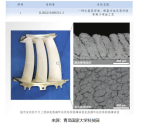
Researchers at Qingdao National University Science Park have developed a breakthrough method for rapidly and affordably producing large-area thermal barrier coatings with advanced columnar structures that withstand repeated thermal cycling. The core innovation lies in replacing traditional organic solvents with novel water-based suspensions, paired with an optimized suspension plasma spraying (SPS) process. Water offers significant practical advantages: it is cheaper, safer to handle, easier to transport, and simpler to store than ethanol or other organic carriers. By carefully tuning the SPS parameters, researchers can control particle atomization and melting dynamics, ultimately forming a highly porous (>20%) columnar microstructure that delivers excellent thermal insulation and strong resistance to high-temperature sintering.

This advancement solves a long-standing industry dilemma in aerospace and power generation. Conventional atmospheric plasma spraying (APS) is cost-effective but produces layered coatings with poor strain tolerance, limiting their use to low-stress engine components. Conversely, electron beam physical vapor deposition (EB-PVD) creates highly durable columnar structures ideal for thermal shock resistance, but its extreme equipment costs and slow production rates have kept it out of widespread commercial use. The new water-based SPS technology effectively bridges this gap by merging the affordability and throughput of conventional spraying with the high-performance microstructures typically reserved for premium deposition methods. It requires less capital investment, accelerates manufacturing timelines, and dramatically lowers overall material expenses.
1780959967618.png

Targeted primarily for the hot-end metal components of gas turbines and aero engines, this coating technology is designed to extend component lifespan while improving thermal efficiency under extreme operating conditions. By enhancing both insulation performance and resistance to thermal fatigue, it enables more stable and efficient engine operation over longer maintenance cycles. As a result, high-performance thermal barrier protection becomes economically viable for broader industrial deployment, marking a significant practical advance in high-temperature materials engineering and aerospace manufacturing.

Please, Log in or Register to view URLs content!
 

sunnymaxi

Colonel
Registered Member
China achieved GRCop-42 aerospace-grade copper-chromium-niobium powder domestic mass production, Breaking long term import dependency.

Xipman Additive Manufacturing Technology (Ningxia) Co., Ltd., located in Shizuishan High-tech Zone, has recently GRCop-42 aerospace-grade copper-chromium-niobium spherical powder continuously rolling off the production line. This material is used in the regenerative cooling combustion chamber of liquid rocket engines—the combustion chamber operates at temperatures exceeding 2000℃, requiring materials with high thermal conductivity, high temperature resistance, and creep resistance.

The company said that, the entire production process has completely independent intellectual property rights, the production line has the ability to deliver on a large scale

Please, Log in or Register to view URLs content!
 

tphuang

General
Staff member
Super Moderator
VIP Professional
Registered Member
Please, Log in or Register to view URLs content!


重齿公司 with domestic 30MW Ultra-High Line Speed Gearbox, it's a CSSC subsidiary.

gear line speed of 150m/s

breakthrough in China's high-speed gear transmission sector, specifically for high-power centrifugal compressor applications.

which btw, has many applications.
 

supercat

Colonel
According to the just released ranking of Nature Index, China remains the top contributor to high quality scientific research and is the only top 10 country with a double digit growth in research output.
Please, Log in or Register to view URLs content!

China also has the world's leading academic institutions.
Please, Log in or Register to view URLs content!

In addition, China leads in 3 out of 5 research subjects.
Please, Log in or Register to view URLs content!
 

tokenanalyst

Lieutenant General
Registered Member

100% domestically developed core technologies! Dongfeng's new solid-state battery will enter mass production and be installed in vehicles in the second half of the year, achieving a range of over 1000 kilometers.​


Dongfeng Motor has officially announced that its domestically developed solid-state battery technology is ready for mass production, with vehicles equipped to enter the market in the second half of this year. This breakthrough represents a significant milestone as it will be the first high-energy-density solid-state battery in China to achieve large-scale application, boasting an energy density of 350Wh/kg. Vehicles utilizing this new power source are expected to achieve a pure electric range exceeding 1,000 kilometers, fundamentally altering the driving experience by offering long-distance capability without the weight penalties associated with traditional batteries.

1781212846942.png

The core innovation lies in replacing flammable liquid electrolytes with solid-state alternatives, which drastically enhances safety and performance. Unlike conventional lithium-ion batteries prone to short circuits and thermal runaway, Dongfeng's battery can withstand extreme conditions such as deformation under stress or being placed in a 170°C chamber without catching fire. Achieving this required overcoming significant engineering hurdles, particularly the challenge of minimizing internal resistance caused by rigid solid materials; through optimizing contact interfaces and integrating advanced heat management systems, Dongfeng ensured stable current transmission even at ultra-low temperatures of -30°C, retaining over 74% charge capacity in the Mohe extreme cold tests.

This achievement is built upon a foundation of full-chain independent research and development, with all key technologies being self-developed to ensure national security and technological sovereignty. Since establishing its R&D team in 2018, Dongfeng has progressed from lab samples to a fully operational 0.2GWh pilot production line, supported by partnerships like the recently formed Hubei Solid-State Battery Industry Technology Innovation Consortium. While competitors like GAC and CATL are also advancing their own solid-state battery strategies, Dongfeng aims to maintain its lead while pushing forward with next-generation fast-charging technologies scheduled for deployment in 2027.

Please, Log in or Register to view URLs content!
 

ReanFean

New Member
Registered Member

100% domestically developed core technologies! Dongfeng's new solid-state battery will enter mass production and be installed in vehicles in the second half of the year, achieving a range of over 1000 kilometers.​


Dongfeng Motor has officially announced that its domestically developed solid-state battery technology is ready for mass production, with vehicles equipped to enter the market in the second half of this year. This breakthrough represents a significant milestone as it will be the first high-energy-density solid-state battery in China to achieve large-scale application, boasting an energy density of 350Wh/kg. Vehicles utilizing this new power source are expected to achieve a pure electric range exceeding 1,000 kilometers, fundamentally altering the driving experience by offering long-distance capability without the weight penalties associated with traditional batteries.

View attachment 176528

The core innovation lies in replacing flammable liquid electrolytes with solid-state alternatives, which drastically enhances safety and performance. Unlike conventional lithium-ion batteries prone to short circuits and thermal runaway, Dongfeng's battery can withstand extreme conditions such as deformation under stress or being placed in a 170°C chamber without catching fire. Achieving this required overcoming significant engineering hurdles, particularly the challenge of minimizing internal resistance caused by rigid solid materials; through optimizing contact interfaces and integrating advanced heat management systems, Dongfeng ensured stable current transmission even at ultra-low temperatures of -30°C, retaining over 74% charge capacity in the Mohe extreme cold tests.

This achievement is built upon a foundation of full-chain independent research and development, with all key technologies being self-developed to ensure national security and technological sovereignty. Since establishing its R&D team in 2018, Dongfeng has progressed from lab samples to a fully operational 0.2GWh pilot production line, supported by partnerships like the recently formed Hubei Solid-State Battery Industry Technology Innovation Consortium. While competitors like GAC and CATL are also advancing their own solid-state battery strategies, Dongfeng aims to maintain its lead while pushing forward with next-generation fast-charging technologies scheduled for deployment in 2027.

Please, Log in or Register to view URLs content!
Cool, but 0.2GWh isn't that much, seems like cost is still high to produce!
 
Top