
News on China's scientific and technological development.

tokenanalyst

Lieutenant General
Registered Member

Researchers develop programmable circular nucleic acid assembly platform​


From mRNA vaccines to siRNA drugs, from gene editing to protein replacement therapy, nucleic acid drugs, with their programmability and precise control capabilities, have become a new direction in the field of new drug development. However, due to rapid clearance, off-target accumulation, and low cellular uptake efficiency, delivering nucleic acid drugs systemically to tissues outside the liver still faces challenges.

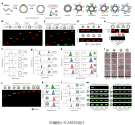
Recently, the Hangzhou Institute of Medical Sciences, Chinese Academy of Sciences, reported a programmable assembly platform called the Circular Functional Molecular Torch (o-FLARE). This platform can assemble various functional nucleic acid modules onto a circular single-stranded DNA template, providing a novel solution for tumor-targeted delivery of nucleic acid drugs.

This platform, based on ligase-mediated DNA template polymerization technology, hybridizes nucleic acid aptamers, oncogene silencing oligonucleotides, CpG motifs, and drug conjugate codons onto a circular template, forming a stable closed-loop structure with a defined composition and valence state. This platform exhibits a "flare" structure, is uniform in size, and possesses extremely high stability, allowing it to persist persistently in serum and achieve precise targeting.

The study loaded chemotherapy drugs with a STING agonist onto this platform. Upon entering the tumor, the chemotherapy drugs directly killed cancer cells and induced immunogenic cell death, while the STING agonist activated innate immunity. This indicates that combining immune checkpoint inhibitors can synergistically promote T-cell responses and provide long-term tumor suppression.
This study constructed a cyclic multivalent CpG adjuvant based on a CD16-targeting aptamer, selectively targeting dendritic cells and macrophages in lymph nodes and efficiently activating the TLR9 pathway. In a melanoma model, this adjuvant enhanced the infiltration and killing function of CD8 +  T cells, reversing the "cold tumor" microenvironment into a "hot tumor."

Targeting the KRAS oncogene, a frequently mutated oncogene in pancreatic cancer, this study screened and obtained oncogene silencing oligonucleotide sequences. The aptamers and oncogene silencing oligonucleotides were then assembled onto o-FLARE, allowing for efficient uptake by tumor cells without any transfection reagents. This system can achieve efficient KRAS gene silencing and inhibit tumor growth.

This platform can be further assembled with diverse structural and functional components, forming a new paradigm for "plug-and-play" nucleic acid drug engineering, and is expected to provide a universal platform for nucleic acid drug development.
1781280837419.png

Please, Log in or Register to view URLs content!
 

tokenanalyst

Lieutenant General
Registered Member

The ultra-high thermal conductivity graphene pad reduces CPU temperature by 12°C under full load and chip temperature by 18.2°C.​


5G, AI, and high-performance computing are driving the miniaturization and high integration of microelectronic devices. The surge in power density leads to increased device temperatures, resulting in decreased reliability and lifespan (e.g., for GaN RF devices, lifespan is halved for every 10°C increase in junction temperature). Traditional thermal interface materials (TIMs) face key bottlenecks: metal-based fillers have excessively high moduli (>100 GPa), polymer-based fillers have excessively low thermal conductivity (<10 W/mK), liquid metals are prone to leakage and corrosion, and vertical graphene films have moduli >60 GPa; none of these can simultaneously achieve high in-plane thermal conductivity and low compressive modulus. There is an urgent need to develop novel TIMs that combine ultra-high thermal conductivity with excellent flexibility to solve the heat dissipation challenges of high-power-density electronics.​

1781292624659.png

Please, Log in or Register to view URLs content!
 

sunnymaxi

Colonel
Registered Member

Demand for large car carriers continues to rise, with some companies holding orders for special marine steel until the year after next.​


China's automobile exports have grown rapidly in recent years, leading to a continuous increase in demand for car carriers. These high-end ship types require higher precision steel, necessitating the use of ultra-thin plates to strictly control the ship's center of gravity and ensure stable navigation. An executive from a Nanjing-based steel company revealed that this year's production of marine steel, including crack-arresting steel, wide and thin plates for cruise ships, high-strength ship plates, and polar cryogenic ship plates, is expected to exceed 2 million tons , with long-term orders already scheduled until 2028 .

Please, Log in or Register to view URLs content!
 

tokenanalyst

Lieutenant General
Registered Member

China National Nuclear Corporation (CNNC) has announced a major breakthrough by achieving the mass production of silicon-28 isotopes with a purity exceeding 99.99%, reaching international advanced standards.


This high-purity silicon-28 is critical for the development of silicon-based quantum computing, as it significantly reduces the environmental noise interference caused by other isotopes found in natural silicon. This achievement supports China's independent control of core quantum materials and is expected to benefit advanced fields such as high-end semiconductors, navigation, and metrology.​

Please, Log in or Register to view URLs content!
 
Top