
supercat
Colonel
Good luck attacking China's timing infrastructure.




响应速度达毫秒级:全国首套重型燃机柔性励磁系统成功投运
2026/2/15 7:33:59 来源: 作者:归泷 责编:归泷
2 月 15 日消息,据华电半山公司昨日分享,由杭州华电半山发电有限公司与国网浙江省电力有限公司联合研发的全国首套 9F 重型燃机柔性励磁系统,于 2 月 13 日在 2 号机组成功并网投运
Top neuroscientist Arthur Konnerth leaves Germany for full-time role in China
The Brain Prize winner, known for pioneering brain imaging techniques, joins the rapidly expanding Shenzhen Bay Laboratory
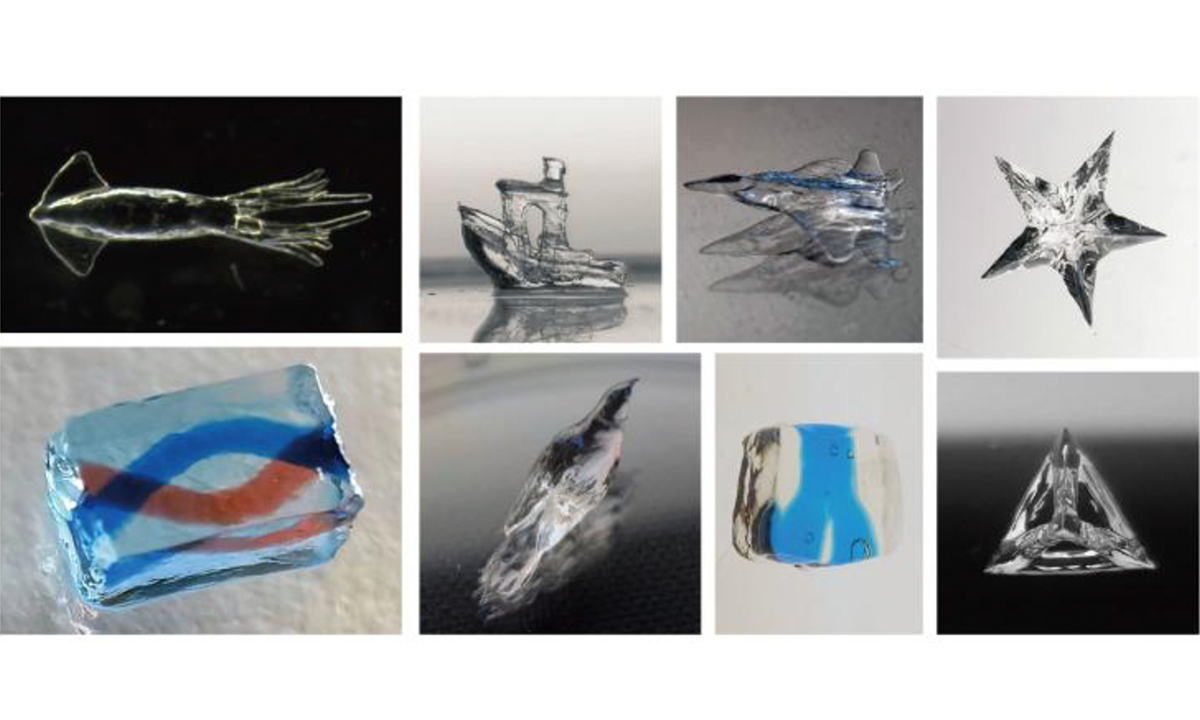
Chinese scientists achieve millimeter-scale 3D printing in just 0.6 seconds
Led by Dai Qionghai, an academician of the Chinese Academy of Engineering, the research team from the Laboratory of Imaging and Intelligent Technology at Tsinghua University drew on expertise in computational optics. They discovered that this approach can manipulate high-dimensional holographic light fields to form three-dimensional solid structures.
Experiments show that this technology can produce complex millimeter-scale structures in just 0.6 seconds, with feature sizes as small as 12 micrometers, and achieves a printing rate of up to 333 cubic millimeters per second.
This marks the fastest 3D printing speed reported to date, according to Wu Jiamin, an associate professor and member of the research team. Wu said that through an innovative optical system design, the digital incoherent synthesis of holographic light fields (DISH) technology overcomes the speed bottleneck of point-by-point or layer-by-layer scanning. It can accurately project complex 3D light intensity distributions in a short time, enabling rapid object fabrication.
Another advantage of this technology is its minimal container requirements. It requires only a single optical plane and no precise movement of the container during printing.
This advantage significantly broadens potential applications, particularly allowing printing materials to be placed directly inside ordinary fluid channels, enabling batch and continuous printing in fluid environments.
According to Dai, the DISH technology provides a new solution for advancing related technologies in related fields. For example, in engineering and manufacturing, the technology could be used to mass-produce miniature components such as photonic computing components and smartphone camera modules, as well as parts with sharp angles and complex curved surfaces. Future applications may include flexible electronics, micro-robots and high-resolution tissue models.
Chinese scientists hit breakthrough on 2D semiconductor wafers
Quest for next-generation materials that can deliver superior performance in the coveted chips has become a global priority
EU bans Chinese bodies from critical tech programmes, including AI and chips
Chinese space scientist Wu Ji doubts the policy will hurt China much and may instead ‘make Europe appear more isolated’

As much as I want to say that's good news, I have a strange feeling a big number of these (((Scientists))) are potential CIA plants.
