
You are using an out of date browser. It may not display this or other websites correctly.
You should upgrade or use an alternative browser.
You should upgrade or use an alternative browser.
News on China's scientific and technological development.
- Thread starter Quickie
- Start date

An overview of China's superalloy industry. Nickel based account for 80% of demand. Nickel accounts for 40% of cost. Midstream production involves casting, deformation (high temperature I think?), powder (for additive mfg?) metallurgy processes.
Aerospace account for 50% of demand, it is 40-60% of aero engine weight.
production from 2017 to 2023 increased from 19k ton to 49k ton.
2024 production expects to reach 57k ton.
Expecting global superalloy market to reach $30B in 2025 & Chinese market to be 120B RMB (this seems not right, since I don't think Chinese market is 60% of global market).
Domestic supply rate has increased from < 40% in 2020 to ~65% in 2025.
西部超导 is a major player here.
China has made major breakthrough in Chromium ore/铬铁矿 discovery. Essentially for aerospace industry and superalloy. Geological Survey of Ministry of Natural resources uncovered 萨尔托海 27 ore cluster, 20 ore bodies of 30.73% grade ore. Largest ore discovery in the region in 40 years.
Project by Air Liquide and 沙钢 group for world's larget Air separation unit (ASU) in 锦丰镇. $150m investment to produce world steel industry's largest, most advanced 100k class ASU. Will produce 1.34m ton liquid oxygen, 2.39m ton nitrogen, 60k ton argon, 3825 cbm krypton/Xenon and 153k cbm neon-helium.
While I'm sure most of this will be used for steel production. But if I remember correctly, neon and other noble gases are widely uses in semi manufacturing and neon-helium laser is a thing. So there are wide spread applications from this.


broadsword
Brigadier
Chinese scientists recover 98% of gold from old phones in 20 minutes at low cost
The process achieves over 98.2 percent gold leaching efficiency at room temperature.By
Jan 08, 2026 03:48 PM EST
Chinese researchers have discovered a fast, low-cost and environmentally cleaner method for extracting gold from electronic waste, that could significantly reshape e-waste recycling worldwide and reduce the need for traditional mining.
The novel technique, that can extract gold from discarded electronics in under 20 minutes at room temperature was developed by researchers from the Guangzhou Institute of Energy Conversion under the Chinese Academy of Sciences and South China University of Technology.
The team reported that the new process costs about one-third of current market prices for gold recovery which makes it the most cost-efficient method reported to date.
It also achieves more than 98.2 percent gold leaching efficiency from waste CPUs (central processing units) in old mobile phones and PCBs (printed circuit boards) from home appliances at room temperature.
Fast, cheap gold recycling
Electronic waste, or e-waste, is one of the fastest growing solid waste streams in the world. As per the (WHO), the annual generation of e-waste is rising by 2.6 million tons. It is expected to climb to 82 million tons by 2030.The most common e-waste items include computers, large household appliances, mobile phones and medical equipment. These items contain small but valuable amounts of , including gold (Au) and palladium (Pd) which are widely used for their excellent conductivity, stability and corrosion resistance.
Meanwhile, conventional often rely on toxic chemicals such as cyanide, posing serious environmental and health risks. To address the challenge the team developed a process based on a self-catalytic leaching mechanism.
The mechanism eliminates the need for corrosive reagents or external catalysts. In contrast it uses a simple aqueous solution of potassium peroxymonosulfate (PMS) and potassium chloride (KCl).
When the solution comes into contact with surfaces, the metals themselves behave as catalysts. On the metal surface, PMS and chloride ions (Cl⁻) are activated, producing highly reactive oxidants such as singlet oxygen and hypochlorous acid.
These oxidants then break down the metal atoms, and allow the chloride ions to bind to them and dissolve them into the solution for easy recovery. For the study, the team carried out quenching experiments and spectroscopic analysis.
Reinventing gold extraction
The researchers noted that the method achieves over 98.2 percent gold leaching efficiency from waste central processing units (CPUs) and printed circuit boards (PCBs), along with a 93.4 percent palladium recovery rate.This means that processing just 22 lbs (10 kilograms) of discarded circuit boards can yield around 1.4 grams of gold at a total cost of roughly USD 72. This is equal to about USD 1,455 per ounce, which is far below current market prices.
For comparison, in early January exceeded USD 4.400 per ounce for the first time in history. They’re expected to hit per ounce by the end of the decade.
Apart from cost savings, the new process consumes approximately 62.5 percent less energy than conventional techniques. It also cuts reagent costs by more than 93 percent compared to cyanide-based methods.
Moreover, it produces far less secondary waster, like toxic sludge. After leaching, the dissolved metals can be recovered through straightforward reduction and purification steps to obtain high-purity gold.
NUAA Researchers Demonstrate New Flexible Metamaterial With Possible Applications in Shape-Changing Aircraft Wings
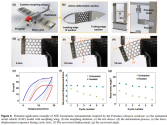
Nanjing University of Aeronautics and Astronautics (NUAA) researchers have created a new deforming metamaterial with potential applications in the aircraft industry, possibly allowing aircraft wings to change shape smoothly in flight.
Published in the International Journal of Extreme Manufacturing, they use a nickel-titanium shape memory alloy which they shape using high-precision metal 3D printing. This form of fabrication allowed them to manufacture wavy microstructures only 0.3 millimeters across, resulting in a metamaterial that is both lightweight and strong enough to withstand aerodynamic forces.
The authors went even farther, even creating a model demonstraitor for their tech, below.
You can read the article in full, .
Nanjing University of Aeronautics and Astronautics (NUAA) researchers have created a new deforming metamaterial with potential applications in the aircraft industry, possibly allowing aircraft wings to change shape smoothly in flight.
Published in the International Journal of Extreme Manufacturing, they use a nickel-titanium shape memory alloy which they shape using high-precision metal 3D printing. This form of fabrication allowed them to manufacture wavy microstructures only 0.3 millimeters across, resulting in a metamaterial that is both lightweight and strong enough to withstand aerodynamic forces.
The authors went even farther, even creating a model demonstraitor for their tech, below.
You can read the article in full, .
broadsword
Brigadier
But a few hurdles remain.
by , Phys.org
Due to our ever-increasing reliance on electronics, researchers are always on the lookout for battery materials with more desirable qualities. Common battery materials, like lithium, can be prone to disadvantages like overheating and material sourcing issues, leading to safety risks and higher costs.
Now, researchers from China have revealed a new battery design that may offer a better alternative to lithium. The new study, in Nature, describes a sodium and sulfur-based, anode-free design offering a high voltage. The sodium–sulfur (Na–S) batteries are a promising alternative to lithium-based batteries due to sodium's abundance and potential for high energy storage.
The study authors write, "The S/Na2S conversion reaction at the cathode yields a of less than 1.6 V versus Na/Na+, which is much lower than those achieved by the cathodes of current Li and Na batteries. Also, the use of substantial Na metal at the anode, generally exceeding those of conventional Li and Na batteries by tens of times, undermines cost-effectiveness and safety, while sacrificing the available energy and power densities."
"Mechanism studies show that the dicyanamide anion in an optimized chloroaluminate electrolyte plays a crucial role in unlocking the S/SCl4 cathode chemistry and also enhancing Na plating/stripping reversibility at the anode, which together realize high-voltage anode-free Na–S batteries with excellent electrochemical performance and practicability," the study authors say.
The new design achieved maximum energy density of 1,198 Wh/kg, a discharge capacity of 715 mAh g−1 and power density of 23,773 W/kg. The team says that incorporating a in the cathode further increased discharge capacity to 1,206 mAh/g and energy density to 2,021 Wh/kg.
The team also estimates that the cost of the new design is far lower than current alternatives. At $5.03 per kWh, it is one to two orders of magnitude lower than current Na batteries. Safety is also enhanced with the use of the NaDCA electrolyte, which is intrinsically non-flammable, in contrast to the liquid electrolyte in lithium batteries. Sodium's abundance and lower extraction impact make it a more sustainable material than lithium, as well.
After being cut open in air, the anode-free Na–S pouch cell could power the LED lamp continuously for approximately 20 minutes without short circuit or thermal runaway. Credit: Nature(2026). DOI: 10.1038/s41586-025-09867-2
Still, if these issues are addressed, the new design has the potential to address critical supply chain and safety issues in current battery technology. The study authors note that the new batteries show promise for applications in grid energy storage and wearable electronics.
New sodium-sulfur battery may offer safer, cheaper alternative to lithium
January 8, 2026by , Phys.org
Due to our ever-increasing reliance on electronics, researchers are always on the lookout for battery materials with more desirable qualities. Common battery materials, like lithium, can be prone to disadvantages like overheating and material sourcing issues, leading to safety risks and higher costs.
Now, researchers from China have revealed a new battery design that may offer a better alternative to lithium. The new study, in Nature, describes a sodium and sulfur-based, anode-free design offering a high voltage. The sodium–sulfur (Na–S) batteries are a promising alternative to lithium-based batteries due to sodium's abundance and potential for high energy storage.
Limitations of prior Na-S batteries
This is not the first battery design to combine sodium and sulfur. However, prior Na-S batteries faced issues limiting their practicality. Some Na–S batteries used S/Na2S chemistry, which was limited by low voltage and high sodium metal requirements. And despite the high-valence sulfur redox (S0/S4+) providing higher voltages of around 3.6 V, researchers had not found a way to create this reaction at room temperature due to energy barriers.The study authors write, "The S/Na2S conversion reaction at the cathode yields a of less than 1.6 V versus Na/Na+, which is much lower than those achieved by the cathodes of current Li and Na batteries. Also, the use of substantial Na metal at the anode, generally exceeding those of conventional Li and Na batteries by tens of times, undermines cost-effectiveness and safety, while sacrificing the available energy and power densities."
The new Na-S battery: Sustainable, cheap and safe
The key to the new design was "unlocking" the high-valence S0/S4+ redox chemistry to create the high-voltage anode-free Na–S batteries at typical room temperatures. The new design consists of a S8 cathode, an aluminum (Al) foil anode current collector, a glass fiber separator and sodium dicyanamide (NaDCA) in a non-flammable chloroaluminate electrolyte. The new battery offers a discharge voltage of 3.6 V."Mechanism studies show that the dicyanamide anion in an optimized chloroaluminate electrolyte plays a crucial role in unlocking the S/SCl4 cathode chemistry and also enhancing Na plating/stripping reversibility at the anode, which together realize high-voltage anode-free Na–S batteries with excellent electrochemical performance and practicability," the study authors say.
The new design achieved maximum energy density of 1,198 Wh/kg, a discharge capacity of 715 mAh g−1 and power density of 23,773 W/kg. The team says that incorporating a in the cathode further increased discharge capacity to 1,206 mAh/g and energy density to 2,021 Wh/kg.
The team also estimates that the cost of the new design is far lower than current alternatives. At $5.03 per kWh, it is one to two orders of magnitude lower than current Na batteries. Safety is also enhanced with the use of the NaDCA electrolyte, which is intrinsically non-flammable, in contrast to the liquid electrolyte in lithium batteries. Sodium's abundance and lower extraction impact make it a more sustainable material than lithium, as well.
After being cut open in air, the anode-free Na–S pouch cell could power the LED lamp continuously for approximately 20 minutes without short circuit or thermal runaway. Credit: Nature(2026). DOI: 10.1038/s41586-025-09867-2
A few remaining hurdles
Although the team says the new batteries are promising for practical energy storage applications, some limitations still remain before these new materials can be used practically. One issue to be addressed is that the AlCl3/SOCl2-based electrolyte is corrosive and challenging to handle, requiring further study. In addition, the air stability is short-term, meaning long-term or large-scale exposure safety is uncertain.Still, if these issues are addressed, the new design has the potential to address critical supply chain and safety issues in current battery technology. The study authors note that the new batteries show promise for applications in grid energy storage and wearable electronics.
A Chinese research team has achieved a new breakthrough in the field of lithium resource separation from salt lakes, overcoming the bottleneck of efficient separation technology for lithium and other substances from lithium precipitation mother liquor. They have pioneered a green and efficient extraction and separation technology for lithium extraction, solving multiple challenges. Application results show that this technology improves lithium recovery rates, reduces costs, and lowers water and energy consumption, making it of strategic significance. The world's first related demonstration line has been completed, generating over 600 million yuan in new output value, and the technology has reached an internationally leading level.