....
"China-allied"?
"China-allied"?
Last edited:

Your certainly ticked all the American tropes.You are correct that China-Taiwan is not comparable to US-Iran, but not for reasons that you think. The key differences are that (1) the strength disparity between the US and Iran is much greater than that between China and Taiwan and (2) Taiwan would be able to hit back directly at China's mainland whereas Iran has nowhere near the reach required to do likewise to the United States.
The US would be able to deploy and rotate assets on/off Diego Garcia, and while they might not be able to muster as much firepower per unit time as the Chinese could onto Taiwan, the US has the tyranny of distance on their side. The Iranian missile and fighter forces would not be able to strike back. As the conflict progresses, US air and naval forces would be increasingly efficient at eroding Iranian counterattack capabilities while suffering little to no risk of reprisals. Moreover, the US operation does not require landing boots on Iranian soil, which makes such an undertaking much less complicated than a Taiwan scenario.
So you are absolutely right that nobody should be equating Taiwan with Iran; the former would be a much more complicated and potent adversary to deal with, and if the USN already has trouble fighting Iran given all the profound advantages, then the PLAN would do well not to fight a war with Taiwan.
Iran dwarfs Taiwan in power? China's military is rivalling that of the US?
Once we are back in reality, let's take a look at the numbers.
The IRIAF has some ~300 combat aircraft, of which ~30-40 are the somewhat-modernized F-14. The operative term is "somewhat". The rest of their inventory could be dismissed as obsolete 3rd-generation airframes that wouldn't be of much relevance in a modern war.
The ROCAF has around ~400 combat aircraft, of which ~200 are the F-16V standard uprades & newbuilds. This is almost comparable to the PLAAF's entire J-10C fleet in terms of both quantity and capability. In addition to that, the rest of their fleet are comprised of the F-CK-1 and Mirage 2000, both of which are of the 4th generation and likely more capable than any of Iran's fighters.
Let's not forget about the ROCAF's force multipliers such as its E-2 fleet. Let's not forget that - while Iran has certainly shown its mettle with its array of ballistic weaponry - Taiwan has a large stockpile of long-range supersonic-capable cruise missiles. This is not to mention naval forces.
I see the tyranny of distance as an advange for the US; Diego Garcia is almost 5000 km from Iran - US jets could hit Iran and the latter would not be able to retaliate unless it's against some other US base in the region.


Interesting trend...
View attachment 149161

I wouldn't put it above them but article says neither Wang nor Ma could be found.USA is now disappearing ethnic Chinese


White House says Trump will go ahead with tariffs as nervous world awaits trade war
WASHINGTON, April 1 (Reuters) - The White House confirmed on Tuesday that President Donald Trump will impose new tariffs on Wednesday, though it provided no details about the size and scope of trade barriersthat have businesses, consumers and investors fretting about an intensifying global trade war.
Trump has for weeks trumpeted April 2 as a "Liberation Day" that will see dramatic new duties that could upend the global trade system, with a White House Rose Garden announcement scheduled for 4 p.m. Eastern Time (2000 GMT).
The Reuters Tariff Watch newsletter is your daily guide to the latest global trade and tariff news. Sign up here.
White House spokeswoman Karoline Leavitt said reciprocal tariffs on countries that impose duties on U.S. goods would take effect immediately after Trump announces them, while a 25% tariff on auto imports will take effect on April 3.
The Republican president has already imposed tariffs on aluminum and steel imports and has increased duties on all goods from China. But he has also repeatedly threatened to impose other tariffs, only to cancel or postpone them.
Leavitt's announcement indicated that he plans to plow ahead this time. "The president has a brilliant team of advisors who have been studying these issues for decades, and we are focused on restoring the golden age of America," she said at a press briefing.
According to the Washington Post, aides are considering a plan that would raise duties on products by about 20% from nearly every country, rather than targeting certain countries or products. The administration anticipates the new duties could raise more than $6 trillion in revenue that could be sent on to Americans as a rebate, the paper reported.
A White House aide said any report ahead of tomorrow's event is "mere speculation." Trump's actions have raised tensions with the United States' largest trading partners.
Canada has vowed to respond with tariffs of its own. "We will not disadvantage Canadian producers and Canadian workers relative to American workers," Prime Minister Mark Carney said in Winnipeg.
U.S. companies say a "Buy Canadian" movement is already making it harder for their products to reach that country's shelves.
Other countries have threatened countermeasures as well, even as they have sought to strike deals with the White House to stave off the tariffs.
It was not clear whether those efforts would succeed ahead Wednesday, but the hope is that they would lead Trump to back down in the coming weeks, according to a person familiar with the conversations.
Trump has argued that American workers and manufacturers have been hurt over the past decades by free-trade deals that have lowered barriers to global commerce and fueled the growth of a $3 trillion U.S. market for imported goods.
The explosion of imports has come with what Trump sees as a glaring downside: Massively imbalanced trade between the U.S. and the world, with a goods trade deficit that exceeds $1.2 trillion.
Economists warn his remedy - hefty tariffs - would raise prices at home and abroad and hammer the global economy. A 20% tariff on top of those already imposed would cost the average U.S. household at least $3,400, according to the Yale University Budget Lab.
Signs are already emerging that the U.S. economy is losing momentum due in part to uncertainty fostered by Trump's chaotic approach to economic policymaking.
A raft of business and household surveys have shown sagging confidence in the economic outlook, citing worries that Trump's tariffs will lead to resurgent inflation.
Rattled investors have sold stocks aggressively for more than a month, wiping nearly $5 trillion off the value of U.S. stocks since mid-February.
The risks are not just isolated to the U.S.
Factories around the world, from Japan to Britain to the United States, saw activity slump in March as businesses braced for Trump's new tariffs, though some saw a bounce in the race to get goods to consumers before the new measures hit.
Economists say any increase is likely to be temporary. "It won't be long before U.S. tariffs turn from being a tailwind to being a drag," said Julian Evans-Pritchard of Capital Economics.
raise duties on products by about 20% from nearly every country
while a 25% tariff on auto imports will take effect on April 3.

Under the terms of the proposed deal, Britain will pay £90 million a year, rising with inflation for 99 years, to lease back Diego Garcia
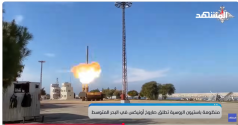
subsonic cruise missiles are easy to intercept because the moment engine light up of a bomber it is already known the window of time when they will arrive. and these Nato Planes fly around Black Sea they can observe missile launches from ships/subs. but this truck mounted Onyx is a surprize. Ukranian think its hypersonic.Cruise missiles are much easier to intercept than ballistic missiles based on data from Ukraine, by both western and Russian systems.
There is no advantage to a supersonic cruise missile in land attack, as it is neither flying too fast and high to be shot down by a regular AAM or SAM, nor is it flying low enough to slip under the radar horizon. It is worse than using Cold War era SCUDs. There's a reason US and Russians both gave up development of supersonic cruise missiles early in the Cold War.
Supersonic and complex trajectory. The main thing about the Onyx missiles and why they cannot be shot down
Is it possible to shoot down this missile?
There are two serious problems that defenders of the Ukrainian skies face in countering the Onyx missiles:
- These missiles are hypersonic, so air defense forces have critically little time to detect and destroy them;
- Detection is further complicated by the fact that this missile flies at low altitude.