
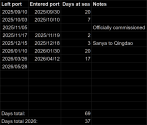
Fujian spotted leaving Qingdao, after whats been a few months at port iirc?




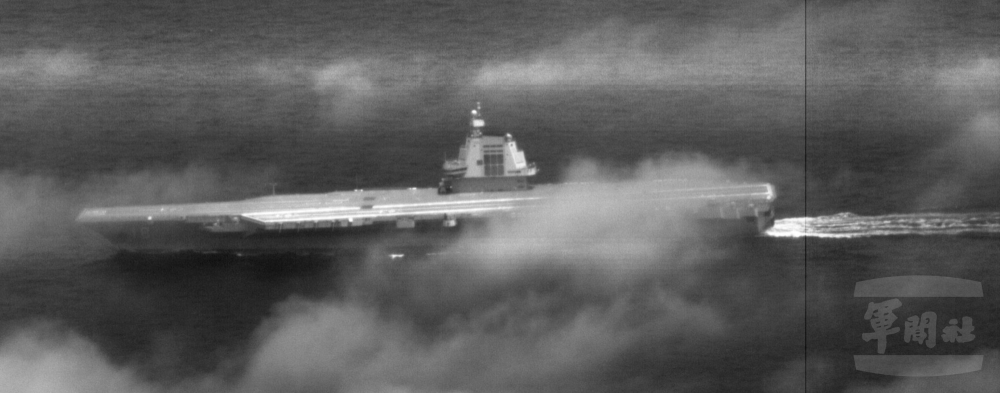

Seven months after it entered service, its deck is completely empty. No videos or photos are being released. Hopefully, PLAN will surprise us on its first anniversary.The Fu has transited through the Taiwan Strait today.

Her airwing can just fly to Lingshui over China's own airspace. Also there were quite a few times they released training footages. If you mean a full deckload then you'll probably have to wait till her first deployment outside the island chains.Seven months after it entered service, its deck is completely empty. No videos or photos are being released. Hopefully, PLAN will surprise us on its first anniversary.

Not really actually. Since it was commissioned back in early November, the only footage of carrier operations we have outside of the catapult/landing tests from March shown in September was its very first training session that occurred two weeks after it was commissioned.Her airwing can just fly to Lingshui over China's own airspace. Also there were quite a few times they released training footages. If you mean a full deckload then you'll probably have to wait till her first deployment outside the island chains.

It's not that complicated; in fact, the Fujian's air wing is far from at full capacity. It was commissioned only last November, so there hasn't been much time to train pilots in catapult launch procedures. And this is just the most basic skill. Over the past six months, the Fujian has been in the Bohai Sea training its pilots on this. There are J-15s and trainers from the Naval Aviation University based there, so the carrier doesn't need to carry any fighter jets. when it sailed north six months ago, its deck was also empty because its air wing had not yet been fully assembled.Her airwing can just fly to Lingshui over China's own airspace. Also there were quite a few times they released training footages. If you mean a full deckload then you'll probably have to wait till her first deployment outside the island chains.