CV-18 Fujian/003 CATOBAR carrier thread

tphuang

General
Staff member
Super Moderator
VIP Professional
Registered Member
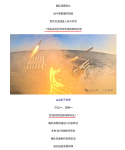
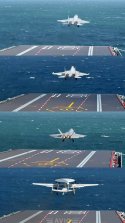
It has been suggested that GJ-21 has participated in integrated joint trainings with Fujian's CVW (J-15Ts, J-35s and KJ-600s) over Bohai recently. Posted by @沉默的山羊 on Weibo.


View attachment 173764
防空 - air defense
反导 - anti missile - now Itypically interpret this as anti-ballistic missile defense. And I would normally expect anti-cruise missile to be under air defense. So this is suggesting carrier air wing has a role in China's ABM, which is quite interesting.
 

ACuriousPLAFan

Lieutenant General
Registered Member
防空 - air defense
反导 - anti missile - now Itypically interpret this as anti-ballistic missile defense. And I would normally expect anti-cruise missile to be under air defense. So this is suggesting carrier air wing has a role in China's ABM, which is quite interesting.

The E-2Ds in service with the USN (and some other countries) can detect ballistic missiles, and I believe that the E-2D is part of the US's integrated (theater) ABM network systems as a sensor and communication node.

I'd take the messaging as the KJ-600 being similarly capable of doing the same, if not in addition to the ability to direct ship-based ABMs and/or AHMs towards intercepting enemy theater ballistic and hypersonic missiles.
 

Blitzo

General
Staff member
Super Moderator
Registered Member
防空 - air defense
反导 - anti missile - now Itypically interpret this as anti-ballistic missile defense. And I would normally expect anti-cruise missile to be under air defense. So this is suggesting carrier air wing has a role in China's ABM, which is quite interesting.

The E-2Ds in service with the USN (and some other countries) can detect ballistic missiles, and I believe that the E-2D is part of the US's integrated (theater) ABM network systems as a sensor and communication node.

I'd take the messaging as the KJ-600 being similarly capable of doing the same, if not in addition to the ability to direct ship-based ABMs and/or AHMs towards intercepting enemy theater ballistic and hypersonic missiles.


Do we know how the PLA has described definitive ballistic missiles defense systems in the past (e.g. HQ-19, HQ-29)?

I ask mostly because while it's not impossible for the carrier airwing to contribute to a ballistic missile defense system of systems for the naval group by virtue of their sensors, it would be odd to punctuate that as a capability as if it were a primary or even secondary mission.

OTOH, if it is in context of defending against cruise missiles, that would of course be much more reasonable for the airwing to be involved in.
 

Confusionism

Junior Member
Registered Member
防空 - air defense
反导 - anti missile - now Itypically interpret this as anti-ballistic missile defense. And I would normally expect anti-cruise missile to be under air defense. So this is suggesting carrier air wing has a role in China's ABM, which is quite interesting.
I call that wishful overthinking. If you search for news about the PLA Navy's training, you'll find that the term “anti-missile” is rarely associated with anti-ballistic missiles.
Please, Log in or Register to view URLs content!

1776930756942.png
 

Attachments

  • 1776930565585.png
    1776930565585.png
    701 KB · Views: 95

siegecrossbow

Field Marshall
Staff member
Super Moderator
防空 - air defense
反导 - anti missile - now Itypically interpret this as anti-ballistic missile defense. And I would normally expect anti-cruise missile to be under air defense. So this is suggesting carrier air wing has a role in China's ABM, which is quite interesting.
My understanding is that 防空 is an umbrella term that pertains to defense against aircraft (manned or otherwise), dumb or guided bombs, suicide drones, and missiles whereas 反导 specifically defend against guided missiles of all kinds, cruise missiles included.
 

tphuang

General
Staff member
Super Moderator
VIP Professional
Registered Member
My understanding is that 防空 is an umbrella term that pertains to defense against aircraft (manned or otherwise), dumb or guided bombs, suicide drones, and missiles whereas 反导 specifically defend against guided missiles of all kinds, cruise missiles included.
I see, that makes sense.

It is a little strange to me for them to talk about BMD as an initial training exercise for aerial assets. But since I previously saw 反导 mostly in BMD context, I thought that might be it.
 

bd popeye

The Last Jedi
VIP Professional
This is a link to the real article about CVN-77 on USNI news.

Please, Log in or Register to view URLs content!

+++++++++++++++++++++++++++++++++++++++++++++++++++

USNI view of Fujian dated March 2026..I want to stay on topic..

Please, Log in or Register to view URLs content!

On 5 November 2025, China’s People’s Liberation Army Navy (PLAN) commissioned its newest and most powerful aircraft carrier, the Type 003 Fujian. Built at Jiangnan Shipyard in Shanghai, the 80,000-ton conventionally powered warship was laid down in 2016 and launched in June 2022.

Measuring 1,037 feet long with a 249-foot beam, the Fujian is considered the world’s largest nonnuclear-powered warship. Numbered CV-18, she conducted sea trials during 2024–25 and is the third PLAN aircraft carrier in service. The Fujian was designed domestically and incorporates catapults as part of an electro-magnetic launch system (EMALS). Two older carriers, the Type 001 Liaoning and Type 002 Shandong, joined the Chinese fleet in 2012 and 2019, respectively, but were based on a Soviet design and feature only a “ski jump” flight deck to enhance short takeoffs. (See “
Please, Log in or Register to view URLs content!
,” April 2020)

The Fujian’s electro-magnetic launch system is similar in concept to the EMALS found on the U.S. Navy’s newest Gerald R. Ford–class aircraft carriers. It provides advantages including increased sortie generation and the ability to launch a wider variety of aircraft. While the Gerald R. Ford class has four catapults—two bow and two “waist”—the Fujian has only three, with two situated at the bow and one along the angled deck. The Fujian’s flight deck, however, has a narrower angle than U.S. aircraft carriers. This likely will restrict her ability to conduct simultaneous takeoffs and landings because of overlaps between the landing strip and bow catapults. Furthermore, the Fujian has only two aircraft elevators, both located starboard, with one fore and one aft of the island structure. These may result in further reduced sortie rates and additional aircraft bottlenecks during flight operations, especially when compared with the Gerald R. Ford class with three aircraft elevators and the Nimitz class with four.

Despite these shortfalls, the Fujian is significantly more capable than the Liaoning and Shandong and can operate more powerful aircraft. The Fujian’s air wing likely will number around 50–60 aircraft, with a mix of J-15T Flying Shark fighters, J-15D electronic warfare jets, J-35 stealth fighters, KJ-600 airborne early warning and control aircraft, Z-20 helicopters, and a variety of unmanned systems.

Crew size is estimated at roughly 2,000 ship’s company and 1,000 embarked air wing personnel. For self-defense, the Fujian reportedly will be fitted with multiple HHQ-10 short-range missile launchers and 11-barrel 30-mm close-in weapon system gatling guns. The Fujian’s propulsion system is said to incorporate eight boilers and four steam turbines with diesel generators and four shafts. This provides a top speed of roughly 30 knots and a maximum unrefueled range of 8,000–10,000 nautical miles.

Last year, a fourth Chinese aircraft carrier, widely thought to be nuclear powered, was reportedly under construction at Dalian Shipbuilding in Dalian. According to the U.S. Department of Defense’s 2025 annual report to Congress on Chinese military and security developments, the PLAN intends to acquire six additional aircraft carriers during the coming decade. This will brings to nine the total number of planned carriers for the Chinese Navy by 2035.

 
Top