Chinese semiconductor thread II

tokenanalyst

Lieutenant General
Registered Member

Hesai Technology releases the world's first 6D full-color LiDAR chip​


Hesai Technology has unveiled "Picasso", its fifth-generation self-developed chip platform, featuring the world's first 6D full-color ultra-sensitive LiDAR chip (Picasso SPAD-SoC).​
  • Native 6D Perception: Integrates color sensing (RGB) and time-of-flight ranging at the chip level, producing pixel-by-pixel aligned 3D spatial + color point clouds. No post-processing or data stitching is required.​
  • Top-Tier Sensitivity: Photon Detection Efficiency (PDE) exceeds 40%, a global benchmark. This enables longer detection range, smaller target recognition, and clearer imaging in low-light conditions with the same laser power.​
  • Autonomous Driving Upgrade: Provides direct color context for traffic lights, lane markings, and signs, significantly improving AI decision-making safety without relying on algorithmic "guesswork."​
1780935265023.png

Hesai Technology has achieved a technological upgrade—the advent of the world's first 6D full-color LiDAR ultra-sensitive chip not only allows 3D perception technology to move from "black and white imaging" to "full-color vision," but also marks a new stage in the industry's transition from "line count intensification" to "experience enhancement."

All solid growth stems from leading technological strength. Last November, Hesai released the Fermi C500, a high-performance intelligent main control chip for LiDAR based on the RISC-V architecture, completing the final piece of the puzzle for self-developed chip stack. The revamped ATX version of LiDAR equipped with the Fermi C500 chip has entered full-scale mass production, with orders from leading global OEMs exceeding 6 million units, becoming a phenomenal bestseller in the industry and continuing to lead in market recognition.

Spanning five generations of chip platform R&D and mass production, Hesai is currently the only LiDAR company in the industry to have achieved full-stack self-development of seven key components, including lasers, detectors, laser drivers, TIA chips, ADC chips, digital signal processors, and controllers . To date, Hesai has obtained AEC-Q automotive-grade certification for 21 self-developed chips, with a cumulative delivery of 230 million units. It is projected that by the end of 2026, cumulative shipments will exceed 300 million units, making it the world's leading company in the cumulative delivery of self-developed chips and semiconductor devices.
Please, Log in or Register to view URLs content!
 

tokenanalyst

Lieutenant General
Registered Member

Ingentech's advanced packaging project with an annual production capacity of 5 billion high-end chips has been launched in Haimen.​

On June 6, Haimen Economic and Technological Development Zone and Ingen Semiconductor Technology Co., Ltd. signed an investment agreement, officially launching a high-end chip advanced packaging project with an annual output of 5 billion chips.

The project, with a total investment of 500 million yuan, focuses on semiconductor wafer thinning, dicing, cutting, and new packaging and testing services. Its products primarily serve applications in AI, computing power, communication electronics, automotive electronics, consumer electronics, and wireless infrastructure. Construction is scheduled to begin in the fourth quarter of this year, and upon full operation, the project will be able to produce 5 billion high-end chip advanced packaging products annually.

According to reports, Ingentech Semiconductor Technology Co., Ltd. mainly engages in semiconductor packaging and testing, and has achieved significant breakthroughs in the grinding and scribing processes of products such as silicon carbide and gallium nitride.

1780935710835.png

Please, Log in or Register to view URLs content!
 

tokenanalyst

Lieutenant General
Registered Member

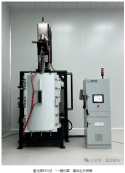
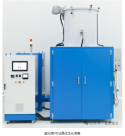
FugaGallium Industry's VB method crystal growth equipment has successfully passed customer acceptance.​


Hangzhou Fujia Gallium Industry Technology Co., Ltd. has successfully deployed and delivered its self-developed VB method gallium oxide crystal growth equipment, which passed customer acceptance following a successful initial trial run. Since beginning research in 2023, the company has steadily advanced its capabilities, achieving breakthroughs in growing 6-inch, 8-inch, and 12-inch crystals by early 2026. In addition to VB systems, it is developing automated EFG crystal growth equipment for smaller wafers and holds numerous domestic and international patents.


1780936340036.png1780936355986.png

Founded in 2019, the firm is a pioneer in China's gallium oxide sector, offering an integrated supply chain that covers growth equipment, single crystal substrates, and epitaxial wafers. It operates a large-scale production line, has drafted the country's first national standard for gallium oxide, and leads several provincial and national research projects. This successful delivery confirms the commercial readiness of its technology and positions the company to accelerate the adoption of gallium oxide in power electronics, radio frequency devices, and optoelectronics.

Please, Log in or Register to view URLs content!
 

tokenanalyst

Lieutenant General
Registered Member

Experimental study of spectra near 6.7 nm and out-of-band radiation from Gd-based thin-film targets for EUV light source (Beyond EUV)​

Abstract​

For next-generation 6.7 nm extreme ultraviolet lithography light sources, Gd2O3 thin films and Gd(OH)3 thin-film target were fabricated via electrochemical deposition method. These gadolinium-based film targets enhance laser-coupling and function as mass-limited targets, effectively boosting EUV emission. It is shown that superior EUV spectral performance for both the thin-film targets. Specifically, the spectral intensity near 6.7 nm increases by a factor of 1.56 for Gd(OH)3 films and 1.25 for Gd2O3 films compared to pure Gd targets, respectively. while the spectral full width at half maximum was reduced by approximately one-third and one-fourth, respectively. The out-of-band(OOB) radiation measurements of the Gd2O3 thin-film target revealed that the thermal radiation intensity in the 325–385 nm and 435–500 nm wavelength ranges decreased to half compared to that of the metallic Gd target, thereby effectively mitigating OOB radiation spread in different directions. These results provide valuable insights for the development of next-generation EUV light-source targets.​

Please, Log in or Register to view URLs content!
 

tphuang

General
Staff member
Super Moderator
VIP Professional
Registered Member

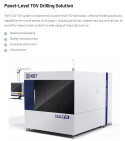
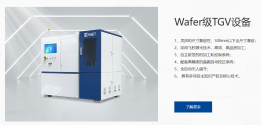
HGLaser Accelerates Mass Production of Glass Substrates with Advanced TGV Laser Drilling Equipment


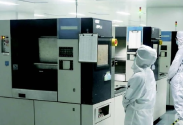
Driven by surging demand for AI chips, CPO optical modules, and RF MEMS, the semiconductor industry is shifting from traditional organic substrates to glass substrates due to their superior high-frequency performance, dimensional stability, and interconnect density. The key hurdle has been Through-Glass Via (TGV) drilling, which requires micron-level precision at scale. HGLaser has overcome this bottleneck with its intelligent laser processing system, leveraging proprietary Rapid Beam Deflection and Synchronous Positioning Technology to achieve 5,000–8,000 holes per second (up to 8,000 max), representing a 5–8× efficiency leap over industry averages. The equipment delivers 5μm hole diameters, 1:100 aspect ratios, and a 99.9% through-hole success rate. With core components fully domestically produced and pilot verification completed, the system is now ready for large-scale deployment in advanced packaging (2.5D/3D AI chips, CPO optical engines, RF/MEMS), effectively transforming TGV technology into scalable industrial capability.

View attachment 176343

Please, Log in or Register to view URLs content!
I don't think people really understand or appreciate just what a huge deal HG Tech group and all it's units have in laser, production equipment, optical laser, sensors, advanced optical modules and chips is. They have like the full supply chain for all this stuff.
 

tokenanalyst

Lieutenant General
Registered Member

Simulation of EUV mask defect classification based on optical neural network​

Abstract​

Optical neural networks perfectly combine the high parallelism, high-speed transmission, and low energy consumption characteristics with the powerful computing capabilities of neural networks, demonstrating unprecedented potential and advantages in the field of edge computing. However, when it comes to actual industrial application scenarios, the accuracy of optical neural networks still needs to be verified. In order to expand the application of optical neural networks, this work conducts a simulation study on EUV mask defect classification based on optical diffraction neural networks. By simulating the EUV lithography mask defect dataset and training an 8-layer optical diffraction neural network, high-precision classification of amplitude-type defects and phase-type defects was achieved. After 200 epochs of iterations, the accuracy of the model reached 100% on the validation set. The simulation results show that the optical diffraction neural network can achieve high-precision classification of amplitude and phase defects in EUV masks, opening up a new technical route for the problem of EUV mask defect detection.​

Please, Log in or Register to view URLs content!
 

tokenanalyst

Lieutenant General
Registered Member
I don't think people really understand or appreciate just what a huge deal HG Tech group and all it's units have in laser, production equipment, optical laser, sensors, advanced optical modules and chips is. They have like the full supply chain for all this stuff.
They and Han's Laser Technology Group are biggest ones.

1780938588377.png1780938744844.png

Please, Log in or Register to view URLs content!
 

sunnymaxi

Colonel
Registered Member

Experimental study of spectra near 6.7 nm and out-of-band radiation from Gd-based thin-film targets for EUV light source (Beyond EUV)​

Abstract​

For next-generation 6.7 nm extreme ultraviolet lithography light sources, Gd2O3 thin films and Gd(OH)3 thin-film target were fabricated via electrochemical deposition method. These gadolinium-based film targets enhance laser-coupling and function as mass-limited targets, effectively boosting EUV emission. It is shown that superior EUV spectral performance for both the thin-film targets. Specifically, the spectral intensity near 6.7 nm increases by a factor of 1.56 for Gd(OH)3 films and 1.25 for Gd2O3 films compared to pure Gd targets, respectively. while the spectral full width at half maximum was reduced by approximately one-third and one-fourth, respectively. The out-of-band(OOB) radiation measurements of the Gd2O3 thin-film target revealed that the thermal radiation intensity in the 325–385 nm and 435–500 nm wavelength ranges decreased to half compared to that of the metallic Gd target, thereby effectively mitigating OOB radiation spread in different directions. These results provide valuable insights for the development of next-generation EUV light-source targets.​

Please, Log in or Register to view URLs content!
this is interesting. it seems CIOMP also deeply involved in next generation 6.7nm EUV light source. this 6.5nm light source will eventually solve complex multi-pattering issue for smaller nodes like sub-2nm.

you need completely different optical mirrors/photoresist for this light source.. 13.5 nm current EUV light source rely on molybdenum-silicon multilayer reflective mirrors, light at 6.5 nm is absorbed by almost all materials. There are currently no mature, high-efficiency multilayer mirrors to direct 6.7 nm light source.
 

tokenanalyst

Lieutenant General
Registered Member
this is interesting. it seems CIOMP also deeply involved in next generation 6.7nm EUV light source. this 6.5nm light source will eventually solve complex multi-pattering issue for smaller nodes like sub-2nm.

you need completely different optical mirrors/photoresist for this light source.. 13.5 nm current EUV light source rely on molybdenum-silicon multilayer reflective mirrors, light at 6.5 nm is absorbed by almost all materials. There are currently no mature, high-efficiency multilayer mirrors to direct 6.7 nm light source.
Stochastic defects are also a challenge so it require a new resists technology but it could start with larger features and move to smaller features as the technology mature.
 
Top