Chinese semiconductor thread II

tokenanalyst

Lieutenant General
Registered Member

Guoxin Technology: Successfully developed multiple series of RISC-V CPU IP cores​


Recently, when receiving research from institutions, Guoxin Technology stated that the company has successfully developed multiple RISC-V CPU IP core series covering all scenarios from low-power embedded systems to high-performance computing, and is equipped with domestically developed software development toolchain support.

In terms of AI custom chip services, Guoxin Technology has provided custom design and mass production services for AI chips to multiple customers, and this part of the business has become an important part of the company's operating revenue.

In the field of quantum-resistant cryptography, Guoxin Technology is one of the earliest companies in China to commercialize its products, and has formed a complete chain of "algorithm IP - chip products - module solutions - customer applications - ecosystem collaboration". The company has applied its quantum-resistant cryptography technology to the automotive-grade chip CCRC4XXX and participated in the national key research and development program for quantum migration resistance in the international financial and banking industry.

Regarding quantum-safe chips and modules, Guoxin Technology's main products include the A5Q quantum-safe chip for terminal applications, the CCP907TQ quantum-safe chip for cloud and server applications, as well as various quantum-safe modules and cryptographic cards. Some products have already been sold and shipped, and have been adopted by companies such as China Telecom Quantum, Wentian Quantum, and Hefei Sizhen, in applications in the power and communications sectors. The CCM3310SQ-T quantum-safe chip, developed in cooperation with Wentian Quantum, has been sold and supplied. Simultaneously, the company provides customized design and mass production services for the QRNG chip of its investee company, Hefei Sizhen. This chip has passed the testing of the Commercial Cryptography Center of the State Cryptography Administration and has achieved large-scale sales.

Please, Log in or Register to view URLs content!
 
Last edited:

tokenanalyst

Lieutenant General
Registered Member
A bit of military electronics:

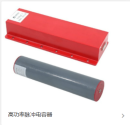
Hongming Electronics: High-energy-storage pulse capacitors focus on military and large-scale scientific facilities; currently not expanding into the civilian market.​


On May 26, Hongming Electronics clarified on its investor interaction platform that its high-energy-storage pulse capacitors, with their unique advantages such as fast charging and discharging speed and high power density, are mainly used in new concept weapons and equipment and large-scale pulse power scientific devices, and are not currently used in the civilian sector. The company also indicated that it will leverage its existing strong technological foundation and market resources to actively expand into emerging application areas in the future.

This statement clarifies the current market positioning of the company's core strategic products. High-energy-storage pulse capacitors are key basic components of high-end equipment, and their technology has long been subject to international embargoes. As a backbone enterprise in the domestic metallized film capacitor field, Hongming Electronics' related technologies have reached the international advanced level, and it has undertaken the national mission of solving the "bottleneck" problem in this field.

To seize market opportunities and achieve the localization of key components, Hongming Electronics has made the industrialization of high-energy-storage pulse capacitors a key strategic focus after its IPO. According to its IPO fundraising plan, the company is advancing the "High-Energy-Storage Pulse Capacitor Industrialization Project," with a total investment of 509 million yuan. Upon completion, the project will significantly increase production capacity from the current 25,000 units/year to 300,000 units/year, aiming to meet the rapidly growing demand brought about by the construction of new equipment and large-scale scientific facilities.

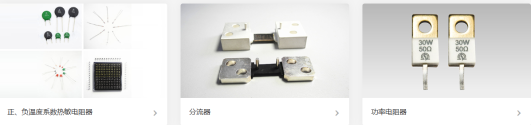
Besides pulse capacitors, the company has also made continuous breakthroughs in other high-end electronic components. On May 25th, the company revealed on its interactive platform that some of its electronic components have been applied in commercial aerospace fields such as rocket launches and satellites.

1779811096465.png1779811066208.png 1779811141954.png

Please, Log in or Register to view URLs content!
 

tokenanalyst

Lieutenant General
Registered Member

Actinic quantitative characterization of surface roughness of extreme ultraviolet multilayer components​

Abstract​

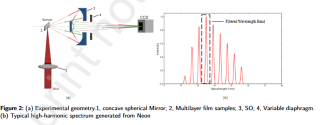
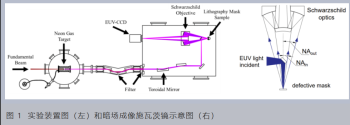
Extreme ultraviolet (EUV) lithography is highly sensitive to surface roughness, which can cause scattering, phase errors, contrast loss, and linewidth roughness. However, existing metrology techniques face a significant capability gap: atomic force microscopy (AFM) lacks the throughput and actinic correlation required for functional qualification, while synchrotron-based inspection---though precise---is prohibitively expensive and inaccessible for routine industrial qualification. This study presents an imaging-capable laboratory-scale actinic inspection system based on a High-Harmonic Generation (HHG) source at 13.5 nm. Unlike conventional non-imaging scatterometry, the system employs a Schwarzschild objective to simultaneously provide spatially resolved imaging and band-limited roughness evaluation over the spatial-frequency range of 0.02-0.06 nm-1, which is particularly relevant to EUV lithographic performance. By employing a motorized aperture, we perform angle-resolved scattering measurements to reconstruct the Power Spectral Density within this band. Our method directly captures the functional optical response of the multilayer stack, filtering out high-frequency noise artifacts inherent to AFM. This non-contact method enables rapid actinic feedback on middle-to-high spatial frequency roughness, offering a timely alternative to lengthy AFM scans or inaccessible synchrotron beamlines.
1779811512217.png


Please, Log in or Register to view URLs content!
 

tokenanalyst

Lieutenant General
Registered Member

Actinic quantitative characterization of surface roughness of extreme ultraviolet multilayer components​

Abstract​

Extreme ultraviolet (EUV) lithography is highly sensitive to surface roughness, which can cause scattering, phase errors, contrast loss, and linewidth roughness. However, existing metrology techniques face a significant capability gap: atomic force microscopy (AFM) lacks the throughput and actinic correlation required for functional qualification, while synchrotron-based inspection---though precise---is prohibitively expensive and inaccessible for routine industrial qualification. This study presents an imaging-capable laboratory-scale actinic inspection system based on a High-Harmonic Generation (HHG) source at 13.5 nm. Unlike conventional non-imaging scatterometry, the system employs a Schwarzschild objective to simultaneously provide spatially resolved imaging and band-limited roughness evaluation over the spatial-frequency range of 0.02-0.06 nm-1, which is particularly relevant to EUV lithographic performance. By employing a motorized aperture, we perform angle-resolved scattering measurements to reconstruct the Power Spectral Density within this band. Our method directly captures the functional optical response of the multilayer stack, filtering out high-frequency noise artifacts inherent to AFM. This non-contact method enables rapid actinic feedback on middle-to-high spatial frequency roughness, offering a timely alternative to lengthy AFM scans or inaccessible synchrotron beamlines.
View attachment 175591


Please, Log in or Register to view URLs content!
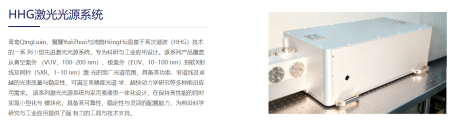
There are already domestic companies developing HHG EUV light sources that can be use in EUV Actinic metrology.

1779811970029.png

1779812025732.png

Please, Log in or Register to view URLs content!
 

tokenanalyst

Lieutenant General
Registered Member

Multi-wavelength EUV microscopy technology assists in the detection of mask substrate defects​


Background: In the semiconductor field, with the advancement of advanced process nodes below 14nm , especially after the introduction of extreme ultraviolet ( EUV ) lithography technology , extremely high requirements have been placed on mask defect detection. Tiny defects on the mask directly affect chip manufacturing yield, becoming one of the biggest challenges in improving yield. Detection solutions mainly rely on EUV light sources with a wavelength of 13.5nm generated by LPP or synchrotron radiation . However, for sub-hundred-nanometer-scale defects (especially those at the tens or even few nanometer scale), the signal is weak, making detection extremely difficult and severely restricting the application and development of EUV technology.

Researchers from the team at the Shanghai Institute of Optics and Fine Mechanics, Chinese Academy of Sciences , proposed a novel defect detection scheme using high-harmonic generation (HHG) as a breakthrough. They utilized the scattering dark field imaging ( MS - DFI ) system and, through a combination of experiments and simulations, systematically explored the detection limits and application prospects of this scheme.

1779812208781.png

Please, Log in or Register to view URLs content!
 

sunnymaxi

Colonel
Registered Member
That is another huge W for China.

Chip prodigy Da Bo returns to China after his role in TSMC’s 3nm plant in Japan​

The acclaimed researcher’s goal is to bring Chinese semiconductor equipment, materials and components up to global standards​


A Chinese chip pioneer who made his name in Japan – sweeping its top awards and developing the core components of the world’s most advanced production line – has returned to China, along with his team of researchers.

Da Bo, a semiconductor prodigy whose research underpins
Please, Log in or Register to view URLs content!
3-nanometre chip production line in Japan, is listed on the University of Science and Technology of China (USTC) website as a chair professor at the School of Engineering Science.

Please, Log in or Register to view URLs content!
 

tokenanalyst

Lieutenant General
Registered Member
Gallium Oxide potential military application in protection against low altitude drones among other civilian uses.

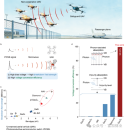
FugaGallium's deep involvement led to a record-breaking voltage conversion efficiency for gallium oxide optoelectronic switches, earning it a spot on the cover of a top international journal.​


Hangzhou Fuga Gallium Industry Technology Co., Ltd. (FugaGallium) has been recognized with a cover feature in the international optics journal Opto-Electronic Science for its pivotal role in achieving a record-breaking voltage conversion efficiency for gallium oxide optoelectronic switches. This breakthrough marks a significant milestone in China's fourth-generation semiconductor industry.

Led by a team at Sun Yat-Sen University, the research utilized ultra-high-quality iron-doped gallium oxide single crystals supplied exclusively by FugaGallium to overcome fundamental physical limitations in previous devices.

The team developed a novel "phonon-assisted absorption" mechanism, which replaces traditional impurity-level excitation methods. This approach enables efficient carrier mass excitation within the crystal structure, addressing long-standing bottlenecks regarding voltage conversion efficiency and conduction losses.
1779812875964.png
  • Voltage Conversion Efficiency: Up to 98.93% (approaching theoretical physical limits).​
  • Operating Voltage: Ultra-high bias range of 50 V to 4,000 V.​
  • Output Power Density: Peak of 17.7 MW/cm².​
  • Stability: Minimal voltage deviation (only 3.01%) across the wide operating range.​
These results represent the best overall performance ever reported for gallium oxide photoconductive switches (PCSS), validating FugaGallium's material quality and establishing a new standard in the field.

The technology is particularly critical for addressing security threats in the emerging "low-altitude economy," where civilian airports and infrastructure face risks from non-cooperative drones. High-power microwave (HPM) systems, which use these switches to generate directional electromagnetic interference, rely heavily on miniaturization and efficiency.

Furthermore, this advancement lays a solid foundation for DT Semiconductor's "P100 AIEdge" project. The technology promises a 10-year lifespan for the devices, providing the robust durability needed for long-term industrial intelligence applications in defense, national security, and special electronics.

Please, Log in or Register to view URLs content!
 

tokenanalyst

Lieutenant General
Registered Member

Aoshi Technology completes over 100 million RMB Series B financing, accelerating the industrialization of its novel Micro OLED/LED lithography process.​


Guangzhou Aoshi Technology Co., Ltd., recognized as a pioneering firm in China's emerging patterned lithography sector, has successfully closed its Series B financing round with capital exceeding 100 million RMB. This significant funding milestone was achieved through investment from multiple strategic partners and prominent industrial funds, marking a crucial step for the company in scaling its operations. The primary objective of these raised funds is to construct the K2 manufacturing facility, designed with an annual production capacity of 60,000 12-inch wafers. Once operational, this plant will serve as the backbone for accelerating the industrialization of novel lithography processes specifically tailored for Micro OLED (silicon-based) and Micro LED applications, positioning Aoshi at the forefront of next-generation display manufacturing.

The strategic importance of this move is underscored by the shifting landscape of silicon-based OLED production, which has largely converged onto two distinct pathways: white light plus color filter (WOLED), exemplified by Sony and Hefei Visionox, and metal-mask-free patterned lithography, championed by Samsung and Aoshi. While Micro LED technology currently explores various routes such as quantum dots and vertical stacking, both rely heavily on advanced 12-inch wafer-based patterned lithography to achieve market competitiveness. Historically, this type of lithography was confined to etching metals and inorganic materials in traditional semiconductor fabrication; however, new patterned lithography has rapidly expanded its scope into key areas like AI-driven advanced packaging, High-Bandwidth Memory (HBM), and Co-Packaged Optics (CPO). This evolution represents a paradigm shift where the technology is no longer just about replacing conventional methods but rather unlocking capabilities that traditional semiconductor lithography cannot achieve due to physical limitations.

Beyond display technologies, the rapid advancement of organic and heterogeneous patterned lithography is creating unprecedented opportunities for Chinese manufacturers in the domains of semiconductors, equipment, materials, and testing. These innovative processes support entirely new device structures, specialized etching targets, diverse substrate materials, and large-scale substrates required by modern demands such as in-memory computing and ultra-high bandwidth connectivity.

Please, Log in or Register to view URLs content!
 
Top