Chinese semiconductor thread II

tokenanalyst

Lieutenant General
Registered Member

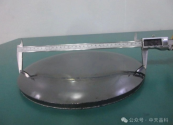
Zhongtian Jinke Releases 12-inch Silicon Carbide Crystal​

The Zhongtian Jinke R&D team overcame the core barriers to large-size crystal growth through multiple rounds of rigorous technical research. From the production of the first crystal in March 2025 to its official announcement in May 2026, over a period of just over a year, the company leveraged its deep technological reserves to overcome the core challenges in large-size crystal growth. This achievement is attributed to the company's commitment to both independent R&D of core equipment and continuous innovation in process technology. By independently designing and manufacturing dedicated crystal growth equipment, the company achieved deep compatibility between equipment and processes, providing a solid guarantee for the stable growth of large-size crystals.

1778520230425.png
.
Please, Log in or Register to view URLs content!
 

tokenanalyst

Lieutenant General
Registered Member
View attachment 174766

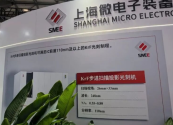
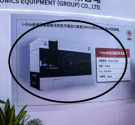
Dry series have this plain look like the KrF machine shown in the background. why change it in I-Line, what make this I-Line scanner special that require its own design, why it needs such big housing. If they didn't planned show immersion wouldn't be better to show the ArF dry scanner, even if immersion are usually better paired with KrF scanners but it would just better than showing those two.

Why SMEE can just be a normal SME company. Why Naura has not taken over this company already.
1778522623078.png1778522725905.png

This show the KrF scanner better.
 

tphuang

General
Staff member
Super Moderator
VIP Professional
Registered Member
Please, Log in or Register to view URLs content!

The information posted on Jiwei.com has since been deleted.

Much of the information in it was wildly inaccurate, even claiming that immersion lithography was showcased at the Shanghai Semiconductor Exhibition in March.

I attended the March exhibition. Shanghai Microelectronics (SMEE) did have a lithography machine model, but it was a dry lithography machine. SMEE has consistently refused to comment on or actively promote its 28nm immersion lithography machine, and the information it releases remains the same old stuff.

The equipment models from AMIES also all use dry lithography, not immersion lithography.

View attachment 174753View attachment 174754
are you "
Please, Log in or Register to view URLs content!
"?

if you are not, then it's entirely inappropriate to write a post like you are by directly translating his content.

As for the stuff he posted on the bottom about it being delivered for commercial usage this January and tech is not mature. Well, clearly that cannot be true if YMTC already received machine last year in building its fully domestic line. Also, his comment about SSA600 being the Arf dry model they are selling or that it has 80% domestic market share seems just entirely wrong. If the Dry version of SSA800 only got validated by late 2024, how does it get 80% market share already? It doesn't seem like any of this stuff is accurate.

Unless this particular user has some real background, then please don't post random zhihu stuff on here. It's just not appropriate.

You have been warned.
 
Last edited:

tphuang

General
Staff member
Super Moderator
VIP Professional
Registered Member
For the sake of record here's the Interview of the SMEE employee from SEMICON posted by the Korean newspaper at that time.
They didn't mention immersion, but they did say the machine could be used for 10nm, which could be interpreted in different ways.
*Original Korean text and machine translation.

Please, Log in or Register to view URLs content!

Some people speculated immersion, mostly due to this bit. But it could also mean it can be used for non-critical layers of a 10nm process. Or they could have even meant "100s of nm to 10s of nm", in which case it could mean nodes like 65nm, 90nm, etc.

View attachment 174780

The only you are making 10nm FinFets is either with immersion with good overlay, EUV or magic.
The no critical layers are made with KrF. Barely anyone is buying dry ArF tools
my understanding is that the second part is true and you can see it in the ASML sales. A lot of Arfi, Krf & iLine, very few Arf Dry. In fact, most people outside of this nerd space think of Arfi when they hear DUV lithography. There is in fact no reason to boast about it otherwise.

Also, I don't quite understand why people think they need to bring Arfi scanner to SEMICON when that would just cause too much attention? That's entirely opposite of how China would allows such a high opSec project to be released.
 

tokenanalyst

Lieutenant General
Registered Member

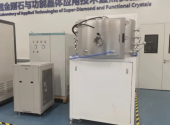
A 16-inch diamond crystal growth furnace has been successfully developed using supercrystalline thermal conductivity technology.​


Shenzhen Supercrystal Thermal Conductivity Technology Co., Ltd. has successfully developed its own 16-inch high-vacuum hot-wire CVD diamond growth furnace, marking a major breakthrough in China's semiconductor equipment landscape. Previously reliant on imports that struggled with large-scale, thick-film requirements, this domestically produced machine now meets international standards for fabricating fourth-generation diamond materials.​
  • Breakthrough Capability: The equipment enables the stable deposition of millimeter-thick high-quality diamond films on 16-inch substrates, overcoming past bottlenecks related to uniformity and internal stress control.​
  • Industrial Applications: By reducing production costs for diamond tools, molds, heat sinks, and electrodes, this technology accelerates the industrialization of diamond semiconductors in sectors such as 5G communications, new energy vehicles, power transmission, and quantum computing.​
  • Superior Performance: The furnace features a maximum temperature of 2200°C, an ultimate vacuum better than 8×10−48×10−4 Pa, and adjustable hot-wire spacing to accommodate complex curved surfaces. It includes four-channel gas flow control and advanced safety protections.​
  • Market Status: The company has opened pre-orders for the equipment across research institutes, mold-making firms, and electrode development sectors.​
This self-developed solution not only lowers dependency on foreign technology but also enhances efficiency by combining multiple processes into a single, space-saving unit with easy-to-operate interfaces.

1778525188923.png

Please, Log in or Register to view URLs content!
 

tokenanalyst

Lieutenant General
Registered Member

The groundbreaking ceremony for the Suzhou Dongwei Semiconductor R&D and Production Headquarters Base was held.​

On May 8, the groundbreaking ceremony for the Suzhou Dongwei Semiconductor R&D and Production Headquarters Base was held in the Suzhou Industrial Park. Shen Mi, member of the Standing Committee of the Suzhou Municipal Party Committee and Secretary of the Party Working Committee of the Suzhou Industrial Park, attended the event.

Suzhou Dongwei Semiconductor Co., Ltd., established in the industrial park in 2008, is a benchmark enterprise in the field of high-performance power devices in China. Its main products are widely used in new energy vehicle charging piles, data center power supplies, 5G base station power supplies, and intelligent robots. After years of dedicated development, the company was listed on the Shanghai Stock Exchange's Science and Technology Innovation Board in 2022, becoming the first listed company in China specializing in charging pile chips. The headquarters base, whose foundation stone was laid today, is located on a plot of land east of Xinghan Street and north of Suhong West Road, with a total investment of 320 million yuan. It is planned to be an industrial base integrating group headquarters, R&D, operations, sales, and manufacturing, with a focus on R&D centers, advanced power electronics laboratories, and intelligent warehousing. Upon completion, the project will further enhance the company's overall planning capabilities and the efficiency of its entire industry chain, promoting the company's continuous enhancement of R&D innovation and industrialization capabilities.

Gong Yi, Chairman and General Manager of Suzhou Dongwei Semiconductor, stated that the successful establishment of the headquarters project is inseparable from the long-term support of the industrial park, which has further strengthened the company's confidence in establishing itself and developing deeply within the park. The company will take this project as an opportunity to promote the construction of the R&D center, laboratories, and intelligent supporting facilities to high standards and with high quality. It will continue to increase its investment in technological R&D and product innovation, strictly control safety, quality, and progress, and strive to complete and put the project into operation as soon as possible, contributing to the construction of the park's industrial innovation cluster through higher-quality development.​

Please, Log in or Register to view URLs content!
 

tokenanalyst

Lieutenant General
Registered Member

Tsinghua Unigroup releases "Zixian" 3D near-memory architecture​


At its first Innovation Summit in Beijing, Tsinghua Unigroup’s Frontier Technology Research Institute unveiled the "Zixian" 3D Near-Memory Computing (PNM) architecture, a hardware solution engineered to break through the "memory wall" bottleneck that currently restricts AI chip performance. As large-scale language models and autonomous AI agents demand exponentially higher data throughput, the traditional separation of processing and storage units has created severe latency, bandwidth constraints, and power inefficiencies. Additionally, the strategic reliance on Japanese and Korean manufacturers for high-bandwidth memory (HBM) has become a critical vulnerability for domestic AI development. Zixian directly addresses these limitations by co-stacking memory and compute units, drastically shortening data pathways and removing dependency on overseas HBM supply chains.

Technologically, the architecture merges 3D stacked DRAM with a novel 3.5D heterogeneous integration method, physically bringing storage and processing closer together. According to the company's official data, this design delivers up to 30TB/s of memory bandwidth, outperforming the latest HBM4 standards in both speed and capacity. By leveraging a near-memory computing approach, Zixian reportedly reduces memory access latency by up to 18 times. Simulation results further indicate that, under identical computing conditions, the architecture can achieve 1.5 to 2 times higher token throughput than NVIDIA’s B200 series, while supporting a system interconnect bandwidth of 1600GB/s.

Beyond its technical specifications, Zixian is designed for rapid, large-scale deployment using China’s domestic semiconductor supply chain. Tsinghua Unigroup plans to begin commercial productization in 2026, targeting the shipment of tens of thousands of units by 2027, with the goal of establishing it as a foundational accelerator for next-generation domestic AI servers.​

Please, Log in or Register to view URLs content!
 

tokenanalyst

Lieutenant General
Registered Member

A transmission grating extreme ultraviolet spectrometer using a gradient-reflectivity Al/Zr multilayer mirror for the range of 24–32 nm.​


Compact extreme ultraviolet (EUV) spectrometers are increasingly required for laboratory plasma diagnostics and EUV optical metrology, where broadband coverage and high spectral resolution must be simultaneously achieved. In this paper, a compact spectrometer operating in the 24–32 nm band is presented, enabled by a near-normal-incidence spherical mirror coated with an aperiodic Al(1.5%Si)/Zr multilayer specifically designed to exhibit a monotonic, gradient-reflectivity profile. The multilayer was optimized using interactive multilayer design to provide a broadband response with a reflectance increasing from ∼5% to ∼20% toward the long-wavelength end, thereby compensating for the intrinsic efficiency roll-off of the other optical elements in this band. Synchrotron measurements confirm that the fabricated coating closely reproduces the designed peak position, bandwidth, and gradient behavior of reflectivity. With this system, single-shot laser-produced plasma EUV emission from high-purity W, Mo, Fe, Cu, Cr, Si, and Al targets was systematically characterized, revealing the optimal excitation power density and multi-shot lifetime behavior for each material within this spectral range. Overall, this spectrometer achieves a spatial resolution of ∼31 μm and maintains a spectral resolution better than 0.2 nm across the full 24–32 nm band, establishing a compact and high-performance solution for broadband EUV source diagnostics.

Please, Log in or Register to view URLs content!
 

PopularScience

Senior Member
Registered Member
are you "
Please, Log in or Register to view URLs content!
"?

if you are not, then it's entirely inappropriate to write a post like you are by directly translating his content.

As for the stuff he posted on the bottom about it being delivered for commercial usage this January and tech is not mature. Well, clearly that cannot be true if YMTC already received machine last year in building its fully domestic line. Also, his comment about SSA600 being the Arf dry model they are selling or that it has 80% domestic market share seems just entirely wrong. If the Dry version of SSA800 only got validated by late 2024, how does it get 80% market share already? It doesn't seem like any of this stuff is accurate.

Unless this particular user has some real background, then please don't post random zhihu stuff on here. It's just not appropriate.

You have been warned.

I am not. I just google translate them. He shown some photos visited the booth in other post. A photo is worth thousands words.

1778554280431.png

v2-e12fab7d9f49bff5f4153c83fa350d78_r.jpg
 
Last edited:
Top