Chinese semiconductor thread II

ENTED64

Junior Member
Registered Member
Please, Log in or Register to view URLs content!
This is a good read that summarizes what is publicly known. I am surprised though that in the conclusion where he sets out several scenarios, even the optimistic scenario has only limited EUV production for select stages in pilot lines by 2030. Previously in the article he mentions that the "overall best case EUV development scenario for 2026–27 holds that an EUV light source prototype was functional in 2023..." and that by 2027 limited production at sub-5nm could begin. These two statements feel contradictory, does he just entirely discount the optimistic 2026-2027 scenario as not being real?

Further he states that in the pessimistic scenario if EUV deployment doesn't happen until well beyond 2030, Huawei's roadmap would still remain viable. Does this mean he thinks that Ascend 970 (and even its successor given that Huawei's roadmap has Ascend 970 by Q4 2028) can be done without EUV? I don't really think that's reasonable and that's not the impression I got reading @tphuang posts, especially post #10220.
 

tokenanalyst

Lieutenant General
Registered Member

Hygon Information: Q1 2026 earnings expected to increase, with continued increase in R&D investment.​

Hygon Information (688041.SH) issued an announcement stating that it expects its net profit for the first quarter of 2026 to be between RMB 620 million and RMB 720 million, representing a year-on-year increase of 22.56% to 42.32%.

The announcement stated that the company has continuously increased its R&D investment, resulting in constantly enhanced product competitiveness. With the increasing demand from the artificial intelligence industry, the market demand for domestically produced high-end chips continues to rise. By continuously optimizing product performance and accelerating product iteration, the company has expanded its market share in high-end processor products, achieving significant revenue growth and sustained overall performance growth.

Please, Log in or Register to view URLs content!
 

jx191

Junior Member
Registered Member
This is a good read that summarizes what is publicly known. I am surprised though that in the conclusion where he sets out several scenarios, even the optimistic scenario has only limited EUV production for select stages in pilot lines by 2030. Previously in the article he mentions that the "overall best case EUV development scenario for 2026–27 holds that an EUV light source prototype was functional in 2023..." and that by 2027 limited production at sub-5nm could begin. These two statements feel contradictory, does he just entirely discount the optimistic 2026-2027 scenario as not being real?

Further he states that in the pessimistic scenario if EUV deployment doesn't happen until well beyond 2030, Huawei's roadmap would still remain viable. Does this mean he thinks that Ascend 970 (and even its successor given that Huawei's roadmap has Ascend 970 by Q4 2028) can be done without EUV? I don't really think that's reasonable and that's not the impression I got reading @tphuang posts, especially post #10220.
Fully agree. Most of the commentary on EUV is still extremely speculative. Patents can only tell you so much. There is huge efforts to keep everything secret, not a single article has proper access.

The author admits that. Yet somehow he still manages to make big predictions past 2030?

He says Huawei's current stance indicates that EUV won't be making chips by 2030 but where is that evidence?

If anything it's the opposite. Huawei is confident about the future and we've seen that plenty now.

Again, I'm not an expert and the article is good otherwise. But the conclusion is just speculation written like it's all factual.
 

tokenanalyst

Lieutenant General
Registered Member

Aixin Semiconductor, a semiconductor quality inspection equipment company, has completed a B+ round of financing worth hundreds of millions of yuan.

Recently, Shenzhen-based semiconductor metrology equipment company, Escore Semiconductor, announced the completion of the first tranche of its multi-million RMB B+ round of financing. This round was jointly invested by Shenzhen Semiconductor and Integrated Circuit Industry Investment Fund (Semi Fund), SMIC Capital, Bosera Innovation, and Yangtze Capital. Following the financing, the company will accelerate breakthroughs in key technologies, R&D of next-generation products, and the construction of its supply chain and delivery system, thereby enhancing its large-scale delivery and customer service capabilities.

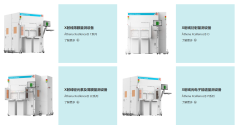
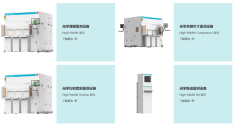
According to public information, Essex Semiconductor was founded in October 2020 by Dr. Zhang Xuena, an alumna of the University of Science and Technology of China. Headquartered in Shenzhen, the company focuses on semiconductor front-end metrology and inspection equipment. With optical metrology and X-ray metrology as its dual technological foundation, the company has established four major product lines: optical wafer metrology, X-ray wafer metrology, advanced packaging inspection, and scientific instruments, covering scenarios such as advanced process wafer metrology, advanced packaging inspection, and materials research. Its equipment has been adopted in mass production by leading domestic wafer fabs, and its advanced packaging metrology equipment serves the yield improvement needs of high-end products such as HBM.
1772047674972.png1772047696040.png

Against the backdrop of rapid global development in advanced manufacturing processes, 3D stacking, and advanced packaging, the localization rate of metrology equipment, a core component for wafer fab yield control, remains below 10%. Achip Semiconductor employs a dual-track approach, combining optical and X-ray methods. Its X-ray metrology technology is a domestic first, enabling non-destructive 3D structure inspection and adapting to advanced processes at 7nm and below, as well as applications such as HBM and Chiplet. The company possesses proprietary software platforms and core algorithms and adheres to the principles of self-developed and domestically produced key components. It will continue to promote the large-scale deployment of products such as the HighYield® IM series optical integrated metrology equipment, accelerating breakthroughs in incremental markets such as advanced packaging and AI chips.​

Please, Log in or Register to view URLs content!
 

tokenanalyst

Lieutenant General
Registered Member

Xinge Microelectronics' net profit soared by 80% in 2025, marking the high-growth phase of its "dual-engine" strategy.​


Xinge Microelectronics reported a remarkable surge in profitability in 2025, with net profit attributable to owners reaching RMB 290 million up 80.42% year-on-year. This performance was supported by a total operating revenue of RMB 1.408 billion, reflecting a 47.61% increase from the previous year. Notably, the company's profit growth significantly outpaced its revenue growth, indicating improved operational efficiency and profitability driven by strategic shifts toward high-value products.

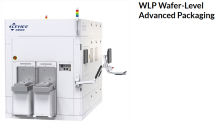
The underlying drivers of this success are rooted in Xinge’s "dual-engine" strategy focused on advancing both PCB (printed circuit board) and semiconductor technologies. In the PCB sector, the company has successfully upgraded its laser direct imaging (LDI) equipment to meet premium market demands, securing strong order flow. Meanwhile, in semiconductors, the WLP (wafer-level packaging) series of equipment achieved mass production delivery, enabling leading manufacturers to scale up operations and becoming a key new growth driver.
1772048228197.png
The company has also made significant strides in globalization, with the establishment of a Thai subsidiary serving as a regional hub for Southeast Asia. This move has catalyzed stronger market penetration, with increasing orders from ASEAN countries and exports extending to Japan and Vietnam. These achievements reflect a shift from early-stage expansion to tangible global presence, signaling that Xinge’s strategic vision is now entering a mature, harvest phase.

Financially, the company maintained robust health throughout 2025, with total assets rising to RMB 3.117 billion (+11.75%) and equity increasing to RMB 2.308 billion (+11.92%). This solid financial foundation supports future investments in R&D, capacity expansion, and further global outreach. Xinge’s performance underscores a sustainable path of growth one that balances revenue expansion with enhanced profitability, product innovation, and international reach.

Please, Log in or Register to view URLs content!
 

henrik

Captain
Registered Member
that's fine. I communicated with Paul on this piece.

But it's fair to note that nothing new has been reported here. And I'm going to delete comments that have just been entirely off topic since my warning.

Is this Paul trying to skim off information on behalf of someone else here?
 

jx191

Junior Member
Registered Member
that's fine. I communicated with Paul on this piece.

But it's fair to note that nothing new has been reported here. And I'm going to delete comments that have just been entirely off topic since my warning.
Considering you were involved, to what extent do you agree with Paul's conclusions and predictions set out in the article? Like you said, nothing new was reported in terms of tech/breakthroughs but I'm just wondering how his take stacks up against yours on the whole semi industry and/or EUV as well
 
Top