The first batch of key projects in the Shanghai Lingang New Area commenced Thursday, with a total investment of approximately 13.6 billion yuan (about $2 billion USD). Among the notable projects is Yipu Semiconductor, which focuses on advanced 2.5D to 3D packaging technologies.
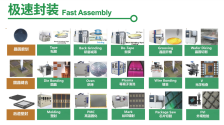
With an investment of 3.6 billion yuan (approximately $520 million USD), Yipu aims to "build towers for chips," a technique that maximizes functionality within a minimal spatial footprint. This innovation holds significant potential for artificial intelligence and high-performance computing, positioning the company at the forefront of global tech competition.
Li Wenqi, Deputy General Manager of Operations at Shanghai Yipu Semiconductor Co., Ltd., stated, "Within a package the size of a stamp, we have integrated more than 30 chip cores, providing unmatched advantages in terms of size, packaging efficiency, computational speed, bandwidth, and power consumption. We can rapidly achieve large-scale production, which will accelerate our progress in catching up with international standards in technology and production scale."
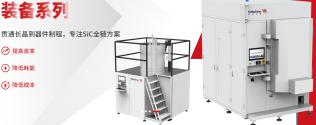
Additionally, Yuanchuang Kexin Semiconductor is investing 5 billion yuan (around $720 million USD) to establish a production base for core components of semiconductor equipment. If lithography and etching machines are regarded as specialized robots, then the products from the Lingang base will serve as their "brains and nerves," encompassing sensory, motion, and precision control systems.
Yu Shuting, Director of Shanghai Yuanchuangyuanchip Semiconductor Co., Ltd., emphasized, "The semiconductor industry's primary bottleneck lies in equipment, which in turn is constrained by key components. Establishing this production base will not only tackle technological hurdles but also secure the supply of core components for China's mass production. It is projected to eventually account for 10% to 30% of global capacity."
Since its establishment in 2019, the integrated circuit (IC) sector in Shanghai Lingang has experienced rapid growth, with its industrial output value projected to reach 35 billion yuan (approximately $5 billion USD) by 2025, doubling annually.