Chinese semiconductor thread II

tphuang

General
Staff member
Super Moderator
VIP Professional
Registered Member
Please, Log in or Register to view URLs content!

Please, Log in or Register to view URLs content!

16 bit 12.8G RF DAC from CASC, rivaling the best from TI and ADI. DAC is less used than ADC, but still important for AWG, EW, SerDes and radar simulation
this is good stuff. In fact, having seen how dominant TI still is in the serdes, EW and radar, it's good to see some domestic solutions here. If you look at the MMW radars that Chinese producers are now making for EVs, the radar themselves are domestic designed, but the main SoC is always TI.

I saw this chip recently by TI called AWR2188
Please, Log in or Register to view URLs content!
essentially receives analog data and convert to digital to pass along computing unit to process.

Until you get really good at analog to digital and vice versa + FPGA, it's hard to compete against TI on integrated solutions like this. With the world class ADC, DAC and FPGA that they are increasingly developing, looks like we are getting there.
 

tokenanalyst

Lieutenant General
Registered Member

Anlu Technology plans to raise 1.262 billion yuan to increase its investment in the research and development and industrialization of high-end FPGA chips.​


116396611707.4836.jpg


On January 26, Anlogic Technology unveiled its "2026 Plan for Issuance of A-Shares to Specific Targets," aiming to raise up to RMB 1.26 billion by issuing no more than 120.25 million shares—capped at 30% of pre-issuance share capital—to no more than 35 institutional investors. The funds will be used exclusively for two core R&D projects to strengthen its position in high-end field-programmable gate array (FPGA) chips and accelerate domestic technological substitution.

The issuance price will be set at no less than 80% of the average stock price over the previous 20 trading days, with all proceeds paid in cash and subject to a six-month lock-up period. After deducting issuance costs, the funds will be allocated as follows:
  1. Advanced Process Platform Ultra-Large Scale FPGA Chip R&D Project (RMB 726 million): Focuses on developing next-generation ultra-large scale FPGA chips using advanced FinFET and chiplet technologies, targeting high-performance applications in 5G/6G communications, data centers, precision instruments, and hardware simulation to bridge the gap with global leaders.​
  2. FPGA & FPSoC Chip Upgrade and Industrialization Project (Planar Process) (RMB 536.4 million): Aims to enhance existing FPGA and FPSoC products with support for new bus protocols, high-precision ADCs, customizable interfaces, and national cryptographic security features—addressing growing domestic demand in intelligent computing servers, smart vehicles, smart grids, and edge computing.​
Anlogic emphasized that this private placement is a strategic move to leverage national semiconductor industry opportunities and meet evolving market needs. The projects are expected to overcome critical technical barriers, expand product innovation, strengthen China’s end-to-end semiconductor supply chain, and solidify Anlogic’s leadership in the domestic FPGA market while enhancing long-term competitiveness and profitability.

Please, Log in or Register to view URLs content!
 

tokenanalyst

Lieutenant General
Registered Member

Jifeng Electronics, a one-stop semiconductor testing and analysis solutions provider, has submitted its IPO preparatory filing application.​

According to the official website of the China Securities Regulatory Commission, Shanghai Jifeng Electronics Co., Ltd. (hereinafter referred to as "Jifeng Electronics") submitted an IPO tutoring filing application to the Shanghai Securities Regulatory Bureau on January 22, with Everbright Securities as the tutoring broker.

Jifeng Electronics was established in July 2008 with a registered capital of 116 million yuan. The legal representative is Zheng Zhaohui. The company has no controlling shareholder. The actual controllers, the siblings Zheng Zhaohui and Zheng Qijun, and their concerted parties hold a total of 38.08% of the shares. Jifeng Electronics was listed on the National Equities Exchange and Quotations (NEEQ) from January 2017 to March 2021.

According to its official website, Jifeng Electronics is an enabling platform technology company focusing on the semiconductor field and deeply engaged in the R&D and technical services of integrated circuit testing-related software and hardware. The company's business is divided into four major segments: basic laboratories, software and hardware development, testing and packaging, and instrumentation and equipment. It can provide one-stop testing and analysis solutions for companies in the semiconductor industry chain, including chip design, wafer manufacturing, packaging and testing, and materials equipment, as well as in the new energy field.
1769525820869.png

Please, Log in or Register to view URLs content!


tphuang

General
Staff member
Super Moderator
VIP Professional
Registered Member
Please, Log in or Register to view URLs content!

San Yi Laser unveiled new large inch laser cutting equipment for diamond.

Please, Log in or Register to view URLs content!

黄河旋风 became the first in china to produce 8-inch diamond heat sink wafer, breaking a major bottleneck here. This will significantly lower production cost of heatsinks.


Please, Log in or Register to view URLs content!

CSMT won CEC award for its 3 major breakthrough in high speed ADCs this year for 8-bit 64G, 12-bit 16GSPS and 12-bit 40 GSPS. They have already been used in radar, EW, 6G, satcom and AI data center and high end instrumentation.

For example, China's first Ku-band ADC is use ADC-HWD12B40GA4
 

tokenanalyst

Lieutenant General
Registered Member

Sanan Optoelectronics: Has already begun R&D on fourth-generation semiconductor materials such as gallium oxide and diamond.​

Sanan Optoelectronics, through its subsidiary Hunan Sanan, has initiated R&D on fourth-generation semiconductor materials, specifically gallium oxide and diamond. This move expands the company's reach beyond its existing third-generation silicon carbide (SiC) and gallium nitride (GaN) production lines to materials that offer higher voltage resistance and better thermal stability.​
  • AI/AR Glasses: Sanan’s Micro LED products have progressed from technology verification to small-batch verification. Additionally, their silicon carbide optical substrates have achieved small-batch deliveries to improve optical performance and heat dissipation.​
  • Data Center & AI Server Power: The company's SiC products are in mass production, supplying major global clients such as Vertiv and Flextronics. They have also launched new GaN products (100V and 650V) designed for the high power density and efficiency requirements of AI servers.​
  • Data Communication: The optical chip business is iterating rapidly, with 400G chips in mass production, 800G chips in small-batch shipment, and 1.6T chips currently in development.​
By building a complete technology chain from third- to fourth-generation semiconductors, Sanan Optoelectronics aims to solidify its position in the wide-bandgap semiconductor market and capitalize on the growing demand for AI computing infrastructure.​

Please, Log in or Register to view URLs content!
 

tokenanalyst

Lieutenant General
Registered Member

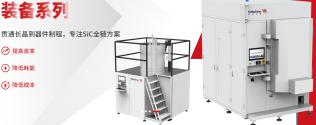
Haimu Microelectronics: Deeply engaged in resistive SiC crystal growth, focusing on cost reduction and efficiency improvement.​


Jiang Shaoyi describes 2025 as a year of "pressure and breaking the deadlock" for the SiC industry. While facing downward cycles and high demands for cost reduction, the industry achieved a significant technological shift by widely adopting resistive crystal growth technology. This method has largely replaced traditional induction heating for large-size crystals due to its advantages in loading flexibility, safety, and suitability for 8-inch wafer mass production.
1769535288035.png
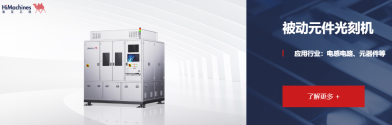
Lithography for discrete devices and Passive components.
1769535619998.png1769535660657.png


Haimu Microelectronics focused on technological iteration and ecosystem expansion, achieving six major breakthroughs: Through process optimization, the company reduced power consumption by nearly 50% and extended the lifespan of core components (graphite and insulation materials) from 6 months to over 24 months. These improvements lowered the production cost of SiC substrates to below several hundred yuan per piece. The company expanded its business to cover the entire chain from crystal growth furnaces to downstream processing equipment (e.g., laser peeling and dicing), creating an integrated equipment ecosystem.

Jiang predicts the next five years will be characterized by "explosive growth." As yields improve and costs drop, SiC is expected to transition from a high-end material to a mass-market consumer product, widely used in electric vehicles, AI servers, photovoltaics, and AR glasses.
Haimu successfully grew 12-inch silicon carbide single crystal ingots in early 2026 using proprietary equipment and processes. The company will continue optimizing resistive crystal growth equipment to offer "plug and play" solutions, develop intelligent auxiliary equipment, and expand into overseas markets while supporting the industrialization of large-size SiC in China.

Please, Log in or Register to view URLs content!
 

tokenanalyst

Lieutenant General
Registered Member

Jiufengshan Laboratory in collaboration with Huazhong University of Science and Technology: Demonstration of Ampere-process Ga₂O₃ two-step trench Schottky barrier diode​


This study demonstrates a self-aligned double-order trench Ga₂O₃ Schottky barrier diode (SBD) with a breakdown voltage of 1164 V. This double-order trench structure, fabricated using a single-pass photolithography combined with dielectric-assisted etching ( DAL ) process, redistributes the electric field peak to the trench region, effectively mitigating electric field congestion at the termination edges. Compared to in-trench termination structures, devices with field plates extending to cover the trench exhibit superior breakdown performance, highlighting the crucial role of field plate optimization in ultra-wide bandgap power devices. This research provides an effective approach for realizing scalable high-voltage Ga₂O₃ trench SBDs .

1769535851480.png
Please, Log in or Register to view URLs content!
 

ForcedTrend

New Member
Registered Member
The first batch of key projects in the Shanghai Lingang New Area commenced Thursday, with a total investment of approximately 13.6 billion yuan (about $2 billion USD). Among the notable projects is Yipu Semiconductor, which focuses on advanced 2.5D to 3D packaging technologies.

With an investment of 3.6 billion yuan (approximately $520 million USD), Yipu aims to "build towers for chips," a technique that maximizes functionality within a minimal spatial footprint. This innovation holds significant potential for artificial intelligence and high-performance computing, positioning the company at the forefront of global tech competition.

Li Wenqi, Deputy General Manager of Operations at Shanghai Yipu Semiconductor Co., Ltd., stated, "Within a package the size of a stamp, we have integrated more than 30 chip cores, providing unmatched advantages in terms of size, packaging efficiency, computational speed, bandwidth, and power consumption. We can rapidly achieve large-scale production, which will accelerate our progress in catching up with international standards in technology and production scale."

Additionally, Yuanchuang Kexin Semiconductor is investing 5 billion yuan (around $720 million USD) to establish a production base for core components of semiconductor equipment. If lithography and etching machines are regarded as specialized robots, then the products from the Lingang base will serve as their "brains and nerves," encompassing sensory, motion, and precision control systems.

Yu Shuting, Director of Shanghai Yuanchuangyuanchip Semiconductor Co., Ltd., emphasized, "The semiconductor industry's primary bottleneck lies in equipment, which in turn is constrained by key components. Establishing this production base will not only tackle technological hurdles but also secure the supply of core components for China's mass production. It is projected to eventually account for 10% to 30% of global capacity."

Since its establishment in 2019, the integrated circuit (IC) sector in Shanghai Lingang has experienced rapid growth, with its industrial output value projected to reach 35 billion yuan (approximately $5 billion USD) by 2025, doubling annually.

 
Top