Is pretty much a marketing tactic. For investors what matters is that your company has the solution for a big problem, in this case domestic substitution under the pressure US export controls. Even if 3 other companies already have develop solutions.these Ai tools are pretty useless.
in Low-energy category there are Three major Chinese companies providing solution up to 7nm as of now. Kaishitong , Sirui Intelligent and Huahai Qingke.
in fact, Huahai Qingke's launched first 12-inch low-energy ion implanter just recently.
Link -
there are two more players in Logic ion implanter category. CETC provided upto 14nm and below. NAURA also entered in this sector.

You are using an out of date browser. It may not display this or other websites correctly.
You should upgrade or use an alternative browser.
You should upgrade or use an alternative browser.
Chinese semiconductor thread II
- Thread starter vincent
- Start date
A 7 billion yuan advanced semiconductor project, ChipQ, will be launched in Shandong, focusing on the power semiconductor field.
A 7 billion yuan (approximately $1 billion) advanced semiconductor project, ChipQ, is set to launch in Weihai Lingang, Shandong, with joint investment from the Singapore China Mining Investment Group (71%) and Xishun (Hong Kong) (29%). The project focuses on power semiconductors such as MOSFETs, IGBTs, FRDs, and FBDs used in new energy vehicles, consumer electronics, solar inverters, and power transmission. Led by a core team of 34 experts under Dr. Zhang Lan (former CEO of Brightsky Semiconductor), the project aims to resolve domestic chip supply bottlenecks, replace imported components, and achieve self-sufficiency.
Additionally, the Weihai Lingang Green Development Fund (500 million yuan) was established to support green and low-carbon industries, including clean energy, carbon fiber composites, energy storage, and green transportation aiming to advance Shandong’s transition toward a sustainable, high-end, intelligent carbon fiber ecosystem. This marks a significant step in both semiconductor innovation and green finance development in the region.
Additionally, the Weihai Lingang Green Development Fund (500 million yuan) was established to support green and low-carbon industries, including clean energy, carbon fiber composites, energy storage, and green transportation aiming to advance Shandong’s transition toward a sustainable, high-end, intelligent carbon fiber ecosystem. This marks a significant step in both semiconductor innovation and green finance development in the region.
A full-stack cryptographic application solution based on Zhaoxin CPU won the 2025 Shanghai Excellent Cryptographic Solution Award.
In 2025, a full-stack cryptographic application solution based on Zhaoxin CPUs developed in collaboration with ShanghaiTech University and Sanwei Information Security won the Shanghai Excellent Cryptographic Application Solution Award, recognized by the Shanghai Cryptography Administration and the Shanghai Commercial Cryptography Industry Association.
The winning solution, the “Zhaoxin Full-Stack Cryptographic Application Service Platform,” delivers end-to-end cryptographic security from hardware to application layers, leveraging Zhaoxin’s domestically designed CPUs with native commercial cryptography acceleration. It integrates server and database encryption devices, Sanwei’s Trusted Execution Environment (TEE+TCM), and unified key management to enable secure, efficient, and scalable cryptographic services across cloud, edge, and terminal devices.
Designed for ShanghaiTech University’s campus systems, the solution meets stringent national cryptographic standards, improves operational efficiency, reduces maintenance costs, and supports “encryption on demand, security on data” a novel paradigm for dynamic, user-friendly security. It has successfully passed official commercial cryptography compliance assessments and is now actively securing the university’s critical information infrastructure.
Zhaoxin, whose CPUs are fully certified under China’s commercial cryptography standards, continues to champion independent innovation, ecosystem development, and affordability. This award underscores its leadership in building a robust, homegrown cryptographic defense layer for national cybersecurity, with plans to expand partnerships and drive broader industry adoption.

another ESP32 SoC has been launched. This supports Wifi6E & Bluetooth band. Again, ESP32 has de facto monopoly in this space.

Does it support NearLink?
another ESP32 SoC has been launched. This supports Wifi6E & Bluetooth band. Again, ESP32 has de facto monopoly in this space.
this one, doesn't seem like it. I wonder if Huawei itself has some kind of monopoly on that.Does it support NearLink?
Innosilicon launches LPDDR6 IP and achieves commercial shipment.
Chinese semiconductor company Innosilicon has become the first in China to commercially ship LPDDR6 interface IP, just months after the JEDEC standard was finalized. This breakthrough addresses growing demand for higher memory bandwidth in AI smartphones and PCs, where current LPDDR5X faces bottlenecks with large AI models.
The new IP boosts single-channel speeds to 14.4Gbps (50% faster than LPDDR5X) and widens data pathways from 16 to 24 bits, significantly improving bandwidth for AI tasks. Developed in collaboration with TSMC and Samsung for advanced 5nm/3nm processes, it overcomes challenges like signal crosstalk and thermal issues.
Innosilicon also offers a combined LPDDR5X/LPDDR6 solution, reducing chip development time by 30% and lowering transition risks. Its IP has already enabled mass production of over 10 billion chips, positioning China as a competitive player in global memory IP supply.
Jinda Semiconductor and Turnafei Electronics have reached a technology cooperation agreement to jointly explore new tracks in AI storage.
Jinda Semiconductor and Turnafei Electronics have signed a technology cooperation agreement to advance PCIe Gen4 SSD controller technology, targeting AI PCs, embedded AI, and AI data centers. As Hong Kong’s only semiconductor memory company, Jinda plans a $100 million investment over five years to boost R&D, talent recruitment, and AI product development, strengthening the city’s semiconductor ecosystem.
Both leaders emphasized the partnership’s milestone significance: Jinda’s chairman highlighted integrating Turnafei’s controller tech with Hong Kong’s innovation resources to build dedicated AI storage solutions, while Turnafei’s chairman noted it accelerates global commercialization of their cutting-edge chip technology. The collaboration aims to enhance Hong Kong’s role in the global semiconductor industry and drive regional tech self-sufficiency.
Both leaders emphasized the partnership’s milestone significance: Jinda’s chairman highlighted integrating Turnafei’s controller tech with Hong Kong’s innovation resources to build dedicated AI storage solutions, while Turnafei’s chairman noted it accelerates global commercialization of their cutting-edge chip technology. The collaboration aims to enhance Hong Kong’s role in the global semiconductor industry and drive regional tech self-sufficiency.
On January 12, 2026, Guangdong Fuxuelai Electric Co., Ltd. (referred to as “Fuxuelai” ) broke ground on its new Semiconductor Equipment Manufacturing Base in Nantong High-tech Zone, Jiangsu Province. The 30-mu (2-hectare) facility, with a planned 22,000 sqm construction area, will focus on R&D and high-volume production of core components for high-end semiconductor and photovoltaic equipment. Upon completion, it is expected to produce 11,000 sets annually, significantly boosting Fuxuelai’s manufacturing capacity and supporting its technological innovation and market expansion.
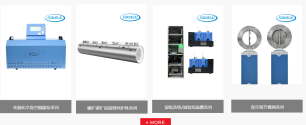
Founded in 2003, Fuxuelai is a national high-tech enterprise specializing in precision electrical equipment for semiconductors, photovoltaics, and new energy. Its product portfolio includes furnace systems, vacuum valves, diaphragm pumps, and integrated solutions like wet processing and high-purity filtration systems. With over 20 years of technical expertise, the company holds 9 invention patents, 60 utility models, 9 design patents, and 10 software copyrights, and has been recognized as a “Specialized, Refined, and Innovative Enterprise” by Guangdong Province. This new base marks a strategic step in vertically integrating its supply chain and enhancing end-to-end solution capabilities.
Founded in 2003, Fuxuelai is a national high-tech enterprise specializing in precision electrical equipment for semiconductors, photovoltaics, and new energy. Its product portfolio includes furnace systems, vacuum valves, diaphragm pumps, and integrated solutions like wet processing and high-purity filtration systems. With over 20 years of technical expertise, the company holds 9 invention patents, 60 utility models, 9 design patents, and 10 software copyrights, and has been recognized as a “Specialized, Refined, and Innovative Enterprise” by Guangdong Province. This new base marks a strategic step in vertically integrating its supply chain and enhancing end-to-end solution capabilities.
The Institute of Microelectronics has made significant progress in the research of high-density three-dimensional dynamic random access memory.
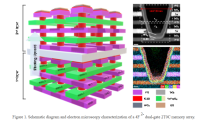
In the field of semiconductor memory technology, DRAM, as a key component of computing systems, has always faced the dual challenges of increasing density and reducing power consumption. With the rapid development of artificial intelligence and big data, traditional memory architectures are struggling to meet the ever-increasing data processing demands. In the mainstream 1T1C architecture, process miniaturization has made it difficult to further reduce the size of memory capacitors, leading to increasingly prominent issues of capacitor leakage and interference. While the 2T0C architecture is considered a potential solution, traditional integration methods, due to their step-by-step stacking process, face severe challenges from lateral alignment misalignment and thermal cycling effects.
To address the aforementioned challenges, the research team at the National Key Laboratory of Integrated Circuit Manufacturing Technology, Institute of Microelectronics, in collaboration with the Beijing Superstring Memory Research Institute and Shandong University, proposed a novel dual-gate 4F² 2T0C memory cell. This technology utilizes an in-situ metal self-oxidation process to achieve self-aligned integration of the read and write transistors within the 4F² memory cell, and further enhances storage density through multi-value storage technology. Test results show that this vertical dual-gate transistor achieves excellent on-state current and subthreshold swing, and demonstrates reliable performance with -22.6 mV (NBTS) and 87.7 mV (PBTS) in 85℃ thermal stability tests, exhibiting both high performance and high stability. The 4F² 2T0C cell based on this transistor supports 4-bit multi-value storage, achieving a write time of 50 nanoseconds and a data retention time exceeding 300 seconds, demonstrating significant technological potential.
This research, titled "High-density three-dimensional integration of dynamic random-access memory using vertical dual-gate IGZO TFTs," was published in Nature Communications. The co-first authors are Dr. Liao Fuxi (Postdoctoral Fellow, Institute of Microelectronics), Researcher Zhu Zhengyong (Beijing Superstring Memory Research Institute), and Doctoral student Li Zihan (Institute of Microelectronics). The co-corresponding authors are Researcher Li Ling (Institute of Microelectronics), Associate Researcher Yang Guanhua (Institute of Microelectronics), Researcher Zhao Chao (Beijing Superstring Memory Research Institute), and Professor Arokia Nathan (Shandong University).