
Chinese semiconductor thread II

tokenanalyst

Lieutenant General
Registered Member

CRRC's 8-inch SiC wafer line has been completed, with an annual capacity of 360,000 wafers.​

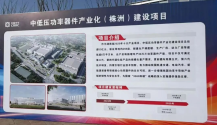
Today (December 26), CRRC Zhuzhou held a commissioning ceremony for its medium and low voltage power device industrialization (Zhuzhou) project, signifying the commencement of production of its 8-inch SiC production line, which will add an annual production capacity of 360,000 silicon carbide power devices.
1766760699318.png
It is understood that as one of the top ten industrial projects in Hunan Province in 2025, the medium and low voltage power device industrialization project has a total investment of 5.3 billion yuan, with a newly acquired land area of about 266 mu, and more than 80,000 square meters of new buildings including production scheduling buildings, production plants, and power plants. After reaching full production capacity, it will add an annual production capacity of 360,000 silicon carbide power devices.
This project focuses on breakthroughs in five core process technologies: fine photolithography, trench etching, high-temperature gate oxide, high-temperature ion implantation, and large-size SiC thinning. It can not only meet the needs of large-scale mass production of third- and fourth-generation silicon carbide products, but also make forward-looking plans for the research and development of fifth- and sixth-generation technologies, continuously leading the industry's technological innovation.

According to a previous report by "Experts Talk About Three and a Half Generations," the project started in 2022 and took only 11 months from groundbreaking to production, demonstrating extremely rapid progress.​
  • October 2022: The Zhuzhou Municipal People's Government and CRRC Times Semiconductor signed a cooperation agreement, and the medium and low voltage power device industrialization (Zhuzhou) project was officially launched.​
  • 2023: The project for the industrialization of medium and low voltage power devices (Zhuzhou) received approval from the National Development and Reform Commission.​
  • October 2024: Construction of the Medium and Low Voltage Power Device Industrialization (Zhuzhou) Project commenced.​
  • May-July 2025: The main plant building of the project was completed and the first set of equipment was moved in.​
  • September 2025: The first wafer rolled off the production line for the Industrialization of Medium and Low Voltage Power Devices (Zhuzhou) Project .​
  • December 2025: The commissioning ceremony for the medium and low voltage power device industrialization (Zhuzhou) project was held.​
CRRC Times Electric Co., Ltd. (hereinafter referred to as CRRC Times Electric) is a joint-stock company under CRRC. It was established in 2005 and has now formed a complete industrial chain structure of "basic components + devices and systems + complete machines and engineering". Its industries cover rail transit, new energy power generation, and electric drive for automobiles.
Focusing on SiC business, CRRC Zhuzhou possesses full-series engineering capabilities for 600V-6500V SiC. Its 6-inch SiC chip production line has a capacity of 30,000 wafers/year and is operating at full capacity. It is also advancing the introduction of an 8-inch SiC production line. Currently, key SiC products include 3300V high-voltage planar gate SiC MOSFETs, 1200V fine planar gate SiC MOSFETs, and 1200V trench gate SiC MOSFETs. Among these, SiC TO devices and SiC machined modular products have already achieved mass production and shipment.

Please, Log in or Register to view URLs content!
 

Michael90

Senior Member
Registered Member
Mate 70 uses CXMT, NYC, and BOE for DRAM, NAND, and display, respectively. Domestic production rose to 57% this year, covering most key components.

View attachment 166882

Please, Log in or Register to view URLs content!
So how come they still got some US parts when the US has placed them under strict sanctions and all American companies forbidden from working with them?
This also shows that globalization is the way to go and that no country can/should produce everything themselves .
 

sunnymaxi

Colonel
Registered Member
So how come they still got some US parts when the US has placed them under strict sanctions and all American companies forbidden from working with them?
This also shows that globalization is the way to go and that no country can/should produce everything themselves .
stockpile components and likely to be the last batch.. Mate70 released in 2024. for example, M70 series used SONY camera sensor , Korean Sk Hynix memory chips.

but Mate80 and Nova series have all core parts and components produced in China. Huawei has produced everything at home. camera sensor from Smartsens , DRAM from CXMT.
 

tphuang

General
Staff member
Super Moderator
VIP Professional
Registered Member
Please, Log in or Register to view URLs content!

Please, Log in or Register to view URLs content!

Zhaoxin apparently has 40 to 50% market share of the 创新PC (PC that uses domestic CPU) market. It's 2023 revealed KX-7000 chipset is equivalent in performance to AMD Ryzen 5 4500 CPU.

In Q3, it launched the KH-50000 server CPU series.
 

tamsen_ikard

Captain
Registered Member
Please, Log in or Register to view URLs content!

Please, Log in or Register to view URLs content!

Zhaoxin apparently has 40 to 50% market share of the 创新PC (PC that uses domestic CPU) market. It's 2023 revealed KX-7000 chipset is equivalent in performance to AMD Ryzen 5 4500 CPU.

In Q3, it launched the KH-50000 server CPU series.
Amd ryzen 5 4500 is equivalent to intel i7 from 2018. If kx-7000 was released in 2023, that's a 5 year gap in performance when it comes to laptop/desktop cpu. This much worse than domestic mobile cpu and ascend gpu.

I wonder why laptop desktop cpu do not get the same attention as gpu or mobile soc are getting. People do need these to run pretty much any professional applications and run things like cad software. Or is it considered a given that US will never ban these to be exported to China.
 

Michael90

Senior Member
Registered Member
Or is it considered a given that US will never ban these to be exported to China
Maybe they are waiting for that to happen before they also focus on that sector. So far it doesnt look like the US will take such a measure, so I guess there is no need for that at the moment. They have other more crucial sectors to focus on which are already under sanctions .
 

gotodistance

New Member
Registered Member

Huawei Reportedly Plans 2026 Ascend 950 Sales in South Korea, Targeting Cluster-Level Deployments​


As Huawei steps up its AI ambitions, South Korea is emerging as an unexpected focal market, with the company reportedly preparing to bring its AI chips to Korean customers. According to
Please, Log in or Register to view URLs content!
, Valian Wang, CEO of Huawei Korea, said at a press briefing on the 26th during Huawei Day 2025 that the company plans to officially roll out AI computing cards and AI data-center solutions in South Korea in 2026.

The product slated for launch is expected to be Huawei’s latest AI accelerator, the Ascend 950. As the report notes, the company aims to position the product as an alternative to NVIDIA for Korean customers.

Huawei Plans to Push Cluster-Based AI Strategy in South Korea

Unlike NVIDIA, Huawei does not plan to market its AI chips as standalone products, instead focusing on cluster-level deployments, the report notes. Wang explained that Huawei’s strategy goes beyond selling individual AI cards or servers, aiming to enhance competitiveness by delivering end-to-end (E2E) solutions that integrate infrastructure hardware, such as networking and storage, with software, as the report highlights.

Under this approach, Huawei may not need to rely on third-party partners for either supply or sales, as it is pursuing a strategy of direct integration and service delivery, Wang said. The report adds that Huawei Korea is currently in talks with several companies over potential supply arrangements.

Huawei also plans to supply its self-developed, open-source operating system, Harmony, to South Korean companies next year as part of its efforts to build a broader ecosystem, the report indicates. Meanwhile, the company has no plans to introduce smartphones in South Korea in 2026, the report adds.

Huawei Reportedly Builds Export-Ready AI Chips With In-House HBM

Huawei’s overseas AI chip ambitions are being bolstered by its progress in internalizing key components. According to
Please, Log in or Register to view URLs content!
, Huawei has reportedly brought HBM in-house in response to U.S. export restrictions, enabling a more stable supply without relying on external vendors such as Samsung Electronics or SK hynix. The report adds, citing sources, that at Huawei Connect 2025 the company said its Ascend 950 series will be equipped with Huawei’s proprietary HBM solutions—“HiBL 1.0” for inference and “HiZQ 2.0” for training.

Huawei’s Ascend AI Chips Set for Global Expansion

Beyond South Korea, Edaily notes that Huawei has emphasized plans to market its Ascend AI chips not only in Korea but also globally. The company also disclosed plans to launch the chips in Malaysia next year. According to
Please, Log in or Register to view URLs content!
, citing sources, its overseas expansion plan is significant, as it indicates that Huawei—previously focused largely on the domestic market—has now secured sufficient volumes to support exports abroad.

Please, Log in or Register to view URLs content!
 

antiterror13

Brigadier

Huawei Reportedly Plans 2026 Ascend 950 Sales in South Korea, Targeting Cluster-Level Deployments​


As Huawei steps up its AI ambitions, South Korea is emerging as an unexpected focal market, with the company reportedly preparing to bring its AI chips to Korean customers. According to
Please, Log in or Register to view URLs content!
, Valian Wang, CEO of Huawei Korea, said at a press briefing on the 26th during Huawei Day 2025 that the company plans to officially roll out AI computing cards and AI data-center solutions in South Korea in 2026.

The product slated for launch is expected to be Huawei’s latest AI accelerator, the Ascend 950. As the report notes, the company aims to position the product as an alternative to NVIDIA for Korean customers.

Huawei Plans to Push Cluster-Based AI Strategy in South Korea

Unlike NVIDIA, Huawei does not plan to market its AI chips as standalone products, instead focusing on cluster-level deployments, the report notes. Wang explained that Huawei’s strategy goes beyond selling individual AI cards or servers, aiming to enhance competitiveness by delivering end-to-end (E2E) solutions that integrate infrastructure hardware, such as networking and storage, with software, as the report highlights.

Under this approach, Huawei may not need to rely on third-party partners for either supply or sales, as it is pursuing a strategy of direct integration and service delivery, Wang said. The report adds that Huawei Korea is currently in talks with several companies over potential supply arrangements.

Huawei also plans to supply its self-developed, open-source operating system, Harmony, to South Korean companies next year as part of its efforts to build a broader ecosystem, the report indicates. Meanwhile, the company has no plans to introduce smartphones in South Korea in 2026, the report adds.

Huawei Reportedly Builds Export-Ready AI Chips With In-House HBM

Huawei’s overseas AI chip ambitions are being bolstered by its progress in internalizing key components. According to
Please, Log in or Register to view URLs content!
, Huawei has reportedly brought HBM in-house in response to U.S. export restrictions, enabling a more stable supply without relying on external vendors such as Samsung Electronics or SK hynix. The report adds, citing sources, that at Huawei Connect 2025 the company said its Ascend 950 series will be equipped with Huawei’s proprietary HBM solutions—“HiBL 1.0” for inference and “HiZQ 2.0” for training.

Huawei’s Ascend AI Chips Set for Global Expansion

Beyond South Korea, Edaily notes that Huawei has emphasized plans to market its Ascend AI chips not only in Korea but also globally. The company also disclosed plans to launch the chips in Malaysia next year. According to
Please, Log in or Register to view URLs content!
, citing sources, its overseas expansion plan is significant, as it indicates that Huawei—previously focused largely on the domestic market—has now secured sufficient volumes to support exports abroad.

Please, Log in or Register to view URLs content!
is Korea allowed to use Huawei chip by their daddy?
 
Top