Chinese semiconductor thread II

gotodistance

New Member
Registered Member
Seems my google translate cant translate the page.. was their source like cxmt docs?
Although Changxin Memory Technology (CXMT), a leading Chinese DRAM manufacturer, is expanding its size through aggressive facility investments, its actual production volume is falling short of its target. Low yields are cited as a significant gap between facility capacity and production volume.

However, CXMT, backed by Chinese government support, is accelerating the development of high-bandwidth memory (HBM) in partnership with Huawei, and is fiercely pursuing Korean semiconductor companies.

■Hindrance due to sluggish yields… Production capacity is 13%, but actual market share is in the single digits

CXMT's low-power memory 'LPDDR5X'. [Source: CXMT website capture]
According to market research firm Counterpoint Research on the 1st, CXMT's production capacity share of the global DRAM market is 13%, but its actual market share in terms of production volume is only 6%, and in terms of revenue, it only accounts for 4%.

The primary cause of this "illusion of market share" is its significantly lower yields compared to its competitors. According to a Counterpoint Research report, the yield of CXMT's flagship 1x (10nm-class 1st generation) DRAM process as of 2024 is approximately 42% lower than the yield of the 1a (10nm-class 4th generation) process of the three memory companies, including Samsung Electronics and SK Hynix. This means that while the yield of the three memory companies is 90%, CXMT's yield is only 52.2%.

CXMT is narrowing the technology gap by migrating to 1z (10nm-class 3rd generation) process technology, but the situation remains challenging. As of 2025, the yield gap compared to competitors' flagship 1b (10nm-class 5th generation) process still stands at 32%.

The report analyzed, "CXMT's low bit production per wafer and low yield mean its actual production volume remains at around 50% of its facility capacity." This suggests that while China's semiconductor industry may have achieved quantitative expansion, it still lags significantly behind Korean companies in terms of quality.

■ A Breakneck "Red Supply Chain"… HBM Independence Begins

Samsung Electronics' HBM4 and HBM3E. [Source: EBN]
The problem is that China's pursuit of competitiveness goes beyond yield and profitability. Despite low yields, CXMT is staking its life on securing next-generation memory technology. Its activities in the HBM sector, a key area for artificial intelligence (AI) semiconductors, are particularly noteworthy.

CXMT is pursuing mass production of HBM3 and is attempting to establish its own supply chain to achieve this. CXMT is currently developing a 16Gb DRAM core die using the G4 (16nm) process, which it plans to incorporate into Huawei's AI accelerators. The base die is expected to be fabricated using SIMC's 28nm process, and there are also rumors of a potential collaboration with Cambricon, often referred to as the Chinese Nvidia.

CXMT's HBM yield is known to be extremely low, at around 10-20%. However, backed by massive subsidies from the Chinese government and the domestic market, the company is currently developing the product, aiming for a launch in 2026. Counterpoint Research stated, "CXMT's HBM sample rate has currently reached 4.4 Gbps, and the company aims to increase the transmission speed to 5.2 Gbps by the end of 2025."

출처: EBN 뉴스센터(
Please, Log in or Register to view URLs content!
)


I think the data is what the media has guessed based on cxmt's production capacity and actual production volume.
 

swcc

New Member
Registered Member
Counterpoint ignored cxmt's production in their hbm market share research graphics in q2 2025, i'm not sure they have authority about this
 

tphuang

General
Staff member
Super Moderator
VIP Professional
Registered Member
Production Capacity 13% vs Actual Production 6%…The yield gap is 30 to 40 percent

In other words, if the yield of the three memory companies is 90%, CXMT is only 52.2%.

CXMT's HBM yields are extremely low, ranging from 10% to 20%


Please, Log in or Register to view URLs content!
this is just a terrible article. Given that we do not know how much capacity is actually available for production, everyone is guessing, we do not know how many wafers came out and such.

Also, this was the counterpoint report
Please, Log in or Register to view URLs content!
the market share here is based on revenue, not chips. I don't even know how you can do a market share based on chip produced, since they come in different sizes.

Another part to consider is that CXMT uses older process, so it would naturally have fewer dies per 12-inch wafer than Samsung. As such, using just 2 random market share numbers to calculate yield does not make any sense.

Given that this is such a terrible and flawed article, I will delete anything more on this.
 

lockedemosthenes1

Just Hatched
Registered Member
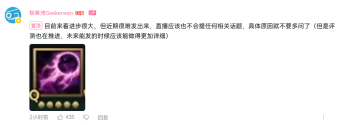
1764590454538.pngSo what exactly is the mysterious reason?Stocks? Market? Supply chain? EUV? ASML? TSMC? SMIC? USA?
translation: So far the progress is huge (for 9030), but recently it is hard to upload the video, and any relevant topics shall not be covered in live stream, please don't ask the exact reason(but the evaluation is progressing and can be more detailed in the future when we can release the evaluation)
 

pbd456

Junior Member
Registered Member
View attachment 165482So what exactly is the mysterious reason?Stocks? Market? Supply chain? EUV? ASML? TSMC? SMIC? USA?
translation: So far the progress is huge (for 9030), but recently it is hard to upload the video, and any relevant topics shall not be covered in live stream, please don't ask the exact reason(but the evaluation is progressing and can be more detailed in the future when we can release the evaluation)
Gaafet type structure instead of finfet?
 

swcc

New Member
Registered Member
this is just a terrible article. Given that we do not know how much capacity is actually available for production, everyone is guessing, we do not know how many wafers came out and such.

Also, this was the counterpoint report
Please, Log in or Register to view URLs content!
the market share here is based on revenue, not chips. I don't even know how you can do a market share based on chip produced, since they come in different sizes.

Another part to consider is that CXMT uses older process, so it would naturally have fewer dies per 12-inch wafer than Samsung. As such, using just 2 random market share numbers to calculate yield does not make any sense.

Given that this is such a terrible and flawed article, I will delete anything more on this.
You're wrong, the claims didn't come from that article, but this one
Please, Log in or Register to view URLs content!

China’s influence in the memory market is expected to grow for both buyers and suppliers. The extent of this influence will depend on the new demand environment shaped by
Please, Log in or Register to view URLs content!
, technological changes, and the US-China regulations.

How Big is ‘Made in China’ Memory?

Made in China DRAM
:
Please, Log in or Register to view URLs content!
CXMT is projected to account for 13% of the global capacity, 6% of shipments, and 3.7% of revenue in 2024. By 2025, its capacity is expected to grow to a level similar to that of Micron, the third-largest
Please, Log in or Register to view URLs content!
in the US. The lower production and revenue compared to capacity is due to lagging technology, low yield rates, and pricing. However, this gap is expected to narrow.
42% Less Bit Production per Wafer: Chinese semiconductor manufacturer CXMT was estimated to produce 42% fewer bits per wafer in 2024 compared to competitors. This gap could be reduced to 32% by 2025. However, CXMT needs to successfully implement HKMG to improve power consumption and speed. While the yield rate for LPDDR4 is around 80%, the yield rate for the company’s strategic product DDR5 in 2025 has not yet exceeded 50%.
New Opportunities and US Regulations: CXMT has entered the mobile market, which requires low-power processes, leveraging the Chinese market. The expansion of AI in electric vehicles could be a new opportunity for China. Due to US equipment regulations, China is working to close the gap with game-changers like 3D technology or by localizing key parts and materials. However, the localization of equipment, which is expected to expand over the next 1-2 years, will be a challenging endeavor.
Access full 4-pager report
Please, Log in or Register to view URLs content!
.
If you are not a client, reach out to us at [email protected]


This is published almost a full year ago tho, 16 Jan 2025 is a 9 and a half months ago, the data they produce could be 10 11 12 months ago. Very very very outdated, also projections on chinese semiconductors always deviate by a lot from actual results. I don't know tho where the claim in the article "4.4Gbps, want 5.2Gbps by end of 2025" and HBM3 yield extremely low 10-20%, won't be surprised if that's also super outdated
 
  • Like
Reactions: zbb

swcc

New Member
Registered Member
Gaafet type structure instead of finfet?
There's a taiwanese, wait no, it's traditional so i thought that but it's in cantonese and to support him donate hkd(hong kong dollar), it's a hong kong person video published on youtube 5 days ago claiming it's VGAA(Vertical GAA), btw

Title:麒麟9030是?nm,有3個問題:VGAA、EUV光刻和兩個版本的原因,但nm製程是肯定的。​

 
  • Like
Reactions: zbb
Top