Chinese semiconductor thread II

tokenanalyst

Lieutenant General
Registered Member

A Review of the 2025 Annual Reports of the Photomask Industry: Accelerated Domestic Substitution, Technological Breakthroughs and Performance Differentiation Coexist.​


In 2025, China’s photomask industry reached a critical inflection point, driven by global semiconductor supply chain restructuring and rapid upgrades in flat panel display technology. As domestic substitution accelerates from low-cost replacements to high-end technological breakthroughs, the annual reports of four major A-share listed companies reveal a stark performance divide. Luwei Optoelectronics and Qingyi Optoelectronics emerged as clear leaders, delivering robust double-digit growth in both revenue and net profit. Luwei’s success was fueled by economies of scale and the verified supply of IC photomasks at 90nm and above, with 40nm and 28nm nodes successfully validated. Qingyi benefited from expanded high-end AMOLED/LTPS mask production at its Hefei subsidiary, posting strong revenue gains and significant growth in equity and total assets. Conversely, Longtu Photomask and Guanshi Technology faced short-term financial pressure. Longtu’s profit dropped nearly 39% due to pricing competition in mature nodes and heavy depreciation from its new Zhuhai facility, while Guanshi reported a net loss of 70 million yuan amid strategic transformation investments, despite making notable strides in 55nm and 40nm process verification.

This performance divergence reflects differing strategic priorities, particularly in R&D intensity and capacity deployment. Longtu Photomask prioritized long-term technological barriers, allocating 11.10% of revenue to R&D highest among the four with a lean team focused on 90nm mass production and 65nm validation. Qingyi Optoelectronics led in absolute R&D spending (640 million yuan) and workforce size, concentrating on advanced OLED and 130nm–40nm processes, while also advancing its Foshan production facility toward 2026 mass production. Luwei and Guanshi maintained lower R&D intensity (around 3–4%) but directed capital toward scaling high-generation display capacity and preparing sub-28nm semiconductor equipment.

Beyond financials and capacity, the 2025 reports signal a fundamental shift in China’s photomask domestic substitution strategy, moving from basic supply chain security to genuine technological leadership and high-end market integration. Domestically produced masks are now widely adopted in consumer electronics and intelligent driving systems, with companies actively localizing core materials, integrating AI for imaging optimization, and strengthening customer relationships across leading chip and display manufacturers. Financial indicators reflect this transition, as firms balance revenue growth with strategic credit extension and capital preservation. Looking ahead, the industry stands at a pivotal crossroads: while Luwei and Qingyi enjoy near-term profitability and capacity maturity, Longtu and Guanshi are betting heavily on advanced process breakthroughs that could redefine competitive rankings. With AMOLED manufacturing shifting to China and domestic fabs rapidly expanding, the successful ramp-up of new production lines and the customer adoption of 28nm-and-below masks will be decisive in 2026, cementing the photomask sector’s growing strategic importance as a foundational enabler of China’s semiconductor and display industries.
Please, Log in or Register to view URLs content!
 

tokenanalyst

Lieutenant General
Registered Member

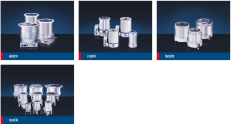
Zhongke Instrument officially listed on the Beijing Stock Exchange, raising 825 million yuan, which will be mainly invested in the industrialization project of dry vacuum pumps.​


Shenyang Scientific Instruments Co., Ltd. an affiliate of the Chinese Academy of Sciences, successfully listed on the Beijing Stock Exchange on April 29, 2026, raising 825 million yuan. As a leading domestic developer and manufacturer of dry vacuum pumps and vacuum scientific equipment, the company has demonstrated strong operational resilience, achieving a compound annual revenue growth of 23.12% and net profit growth of 18.79% from 2023 to 2025. Its business model is anchored in deep integration with industry leaders, maintaining a stable top-five customer concentration of 40–45%. Beyond long-term partnerships with major domestic wafer foundries and equipment makers, CAS Instruments has secured significant photovoltaic contracts (exceeding 159 million yuan in 2023 with LONGi Green Energy) and achieved product verification and small-batch shipments with global semiconductor giants including TSMC, Intel Dalian, and SK Hynix.

Technological breakthroughs form the core of the company’s competitive edge. Having overcome decades of foreign dominance in dry vacuum pumps, CAS Instruments is the only domestic manufacturer to achieve mass production across clean, medium, and harsh process environments. Its pumps support advanced semiconductor fabrication, including 14nm logic chips and 3D NAND memory exceeding 128 layers, with key performance indicators such as pumping speed, ultimate vacuum, and MTBF matching international standards. Supported by an average annual R&D investment of over 100 million yuan (9.46% of revenue), the company secured a 12.72% market share in China’s IC sector in 2024, ranking first among domestic peers. Core technology products accounted for 83.07% of 2025 revenue, backed by 103 invention patents, leadership in 13 national and industry standards, and participation in major national research initiatives.​
1777558862402.png

The newly raised capital will be primarily allocated to a dry vacuum pump industrialization project, targeting an annual production capacity of 26,500 units to capitalize on accelerating domestic substitution in semiconductor manufacturing. Beyond semiconductors, CAS Instruments continues to expand its footprint in high-end scientific instrumentation, having delivered over 60 units of its sixth-generation molecular beam epitaxy (MBE) equipment and served as a core supplier for 11 major national science infrastructure projects, including the Shanghai Synchrotron Radiation Facility. The Beijing Stock Exchange listing marks a strategic milestone, providing the financial foundation for capacity expansion, technological iteration, and international market penetration. Moving forward, CAS Instruments aims to reinforce China’s semiconductor supply chain security and advance the high-quality development of domestic high-end equipment manufacturing through sustained innovation and customer-driven growth.​


Please, Log in or Register to view URLs content!
 

tokenanalyst

Lieutenant General
Registered Member

From Prediction to Diagnosis: Interpretable Surrogate Modeling for 3D GAA-FETs​

Abstract:​

In sub-3nm Design-Technology Co-Optimization (DTCO), the mixing of process and bias effects in neural surrogates can obscure the origins of variability, limiting their utility for diagnosis. We propose a Graph-Conditioned Implicit Neural Orthogonal Decomposition (GC-INOD) framework to mathematically decouple geometry-dependent spatial modes from state coefficients. Validated on a 5,810-sample GAA-FET dataset, the method achieves 7.5 × 10⁻³ RMSE and retains R2 > 0.998 under moderate extrapolation. Monte Carlo variability analysis confirms that GC-INOD reproduces Ion/Ioff distributions with DKL < 10−3, outperforming an MLP baseline. The decomposition framework extracts physically interpretable spatial pat13 terns and retains variability information in devices, supporting diagnosis-oriented analysis.​

Please, Log in or Register to view URLs content!
 

tokenanalyst

Lieutenant General
Registered Member

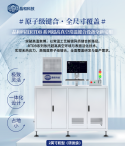
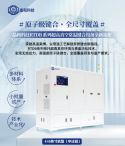
Jinghe Semiconductor Technology Showcase Their GaN Bonding Tools At The Advanced Semiconductor Exhibition​

Suzhou Jinghe Semiconductor Technology Co., Ltd. is an innovative high-tech enterprise incubated by the National Third-Generation Semiconductor Technology Innovation Center (Suzhou) and the Jiangsu Third-Generation Semiconductor Research Institute. It focuses on the research and industrialization of advanced heterogeneous integration and room-temperature direct bonding technologies. The company is committed to the research and development of cutting-edge technologies such as diamond-based gallium nitride (GaN) wafers, low thermal resistance and low warpage composite substrates, and 3D integration room-temperature bonding equipment. Based on its outstanding technological innovation capabilities, it has been recognized as both a "Suzhou Gusu Innovation and Entrepreneurship Leading Talent" and a "Suzhou Industrial Park Science and Technology Leading Talent."

The equipment utilize neutral atom beam irradiation technology to activate the wafer surface, direct bonding of heterogeneous materials between wafers (W2W), chips, and wafers can be achieved at room temperature. Breaking through the bottlenecks of traditional high-temperature hot-press bonding technology such as thermal expansion mismatch, material thermal damage, high interface thermal resistance, and low yield, it has the advantages of room temperature (25–27℃) bonding, alignment accuracy ≤ ±1 μm, bonding strength ≥10 MPa, lower interface thermal resistance than traditional solutions, thermal stability ≥1000℃, and interface transition layer ≤3 nm.

-4/6-inch ultra-high vacuum room temperature direct bonding equipment
-2-inch ultra-high vacuum room temperature direct bonding equipment
-8/12-inch ultra-high vacuum room temperature direct bonding equipment


1777563193768.png1777563296895.png1777563440263.png

Please, Log in or Register to view URLs content!
 

tokenanalyst

Lieutenant General
Registered Member

Dynamics of EUV-induced plasma adjacent to an electrostatic chuck.​

Department of Electrical Engineering, Tsinghua University​

Abstract​

In extreme ultraviolet (EUV) lithography, high-energy photon pulses generate transient plasmas and thus can degrade lithography system performance. This study investigates the dynamics of EUV-induced plasma adjacent to an electrostatic chuck, with a focus on the coupling mechanism between the plasma and the applied electric field. First-principle particle-in-cell simulations demonstrate that photoelectron emission serves as the dominant mechanism for electron production during an EUV pulse. Concurrently, electron-induced secondary emission significantly alters the potential distribution and electron density within positively biased regions, thereby modulating local plasma density. The space charge separation and the associated distortion of the electric field lead to anomalous electron and ion energy distributions, which in turn enhance ion sputtering on ruthenium surfaces. During the post-EUV-pulse phase, ion-induced secondary electron emission becomes the dominant source of electrons, sustaining the plasma during its gradual decay. The applied electric field established between the grounded blade and the reticle surface facilitates the extraction and loss of ions, thereby accelerating local ion density decay. &#xD;Spatiotemporal electron and ion energy distribution functions and ion fluxes indicate that the EUV-induced plasma transitions from a photoionization-dominated to a sheath-controlled state. These findings provide deep insights into the evolution of EUV-induced plasmas and enhance the understanding of particle sputtering-induced damage under coupled conditions, laying the foundation for improving pattern fidelity and process stability in nanolithography.

Please, Log in or Register to view URLs content!
 

jx191

Junior Member
Registered Member
Depend on what you are refiring. Process node? Processing tools? Metrology tools?

I do think there has been completely independent pilot lines (making chips) for immersion since 2020 and EUV since 2023.

Immersion lithography has already been adopted by mayor fabs in memory and logic. EUV is probably still in the pilot phase, but recent patents in EUV pellicles are saying they are getting close to some level of production, I don't think ASML level but a least to meet some domestic demand. In term of processing equipment and metrology, domestic companies can cover almost everything down to even 7nm and domestic tools are getting better because they are being used more than in the past and the improvement cycle clearly has been shortened.​
Good point

China will achieve small scale EUV soon and I guarantee you the stooges in the US will say "that doesn't count" because the volume of production is small

The process is long but even small scale production is a huge achievement and will still be significant, there are lots of moving parts in the supply chain
 

tokenanalyst

Lieutenant General
Registered Member

The Yancheng Zhuoxing Intelligent Semiconductor Equipment and Precision Structural Components Project, with a total investment of 1 billion yuan, has commenced construction.​


The Yancheng Zhuoxing Intelligent Semiconductor Equipment and Precision Structural Components Project, with a total investment of 1 billion yuan, has officially commenced construction in Yancheng High-tech Zone. This marks the third major high-end equipment project exceeding 1 billion yuan to launch in the park in 2026, signaling strong momentum for the region's high-end equipment industry cluster.

Yancheng Zhuoxing Intelligent Technology Co., Ltd., established in December 2025 with 30 million yuan in registered capital, specializes in high-precision, high-reliability core components for semiconductor equipment, aerospace, and new energy sectors. The company's focus aligns with national strategic emerging industries and Yancheng High-tech Zone's "3+3" modern industrial system.

Backed by an industry-leading R&D and operations team, Zhuoxing Intelligent has developed proprietary expertise in high-temperature alloys, precision heat treatment of titanium alloys, special material surface treatment, dissimilar material joining, and fully digital intelligent control. These capabilities have enabled partnerships with global leaders including Creality, KUKA Robotics, Zeiss, Honeywell, Lenovo, Xiaomi, and ASUS.

The newly launched project allocates 600 million yuan to fixed assets, constructing 45,000 square meters of standardized production facilities and deploying over 500 sets of intelligent precision equipment. It will focus on R&D and mass production of core structural components for semiconductor equipment, strengthening regional precision manufacturing support.

Upon reaching full capacity, the project is expected to generate 800 million yuan in annual sales revenue and 30 million yuan in tax revenue. Beyond expanding Yancheng's precision manufacturing scale, it aims to catalyze upstream and downstream industrial chain agglomeration, accelerate upgrades in high-end equipment and semiconductor sectors, and foster new productive forces within the park.​

Please, Log in or Register to view URLs content!


sunnymaxi

Colonel
Registered Member
On the evening of April 29, Cambricon released its financial report for the first quarter of 2026.

The report shows that the company achieved operating revenue of approximately RMB 2.885 billion during the reporting period, a year-on-year increase of 159.56%; net profit attributable to shareholders of the listed company was approximately RMB 1.013 billion, a surge of 185.04% compared to approximately RMB 355 million in the same period of the previous year.

Please, Log in or Register to view URLs content!
this is yet another wonderful story of survival. they literally risen from the ashes.. @tokenanalyst

2024 revenue - 1.2 Billion RMB

2025 revenue - 6.50 Billion RMB.. 453% y/y increase

Q1, 2026 revenue - 2.885 Billion RMB .. 185.04% y/y increase in the same period last year.

don't forget, Cambricon is one of the two companies alongside Huawei to have Government mandate in Ai chips for Public sector.
 

Michael90

Senior Member
Registered Member
this is yet another wonderful story of survival. they literally risen from the ashes.. @tokenanalyst

2024 revenue - 1.2 Billion RMB

2025 revenue - 6.50 Billion RMB.. 453% y/y increase

Q1, 2026 revenue - 2.885 Billion RMB .. 185.04% y/y increase in the same period last year.

don't forget, Cambricon is one of the two companies alongside Huawei to have Government mandate in Ai chips for Public sector.
Yeah but this is still nothing compared to Huawei (who expects over $12billion dollars in AI chips sales this year) and even more so Nvidia(expects about $250billion ). But it’s a good start for them. Still a long way to go, but they are on the good track .
 
Top