You are using an out of date browser. It may not display this or other websites correctly.
You should upgrade or use an alternative browser.
You should upgrade or use an alternative browser.
Chinese semiconductor thread II
- Thread starter vincent
- Start date
Tongfu Microelectronics' Q1 report: Net profit surged 224.55% year-on-year.
On April 29, Tongfu Microelectronics issued an announcement stating that in the first quarter of 2026, the company achieved operating revenue of 7.482 billion yuan, a year-on-year increase of 22.80%; net profit attributable to shareholders of the listed company was 329 million yuan, a year-on-year increase of 224.55%.
The change in performance was mainly due to the year-on-year increase in the company's operating revenue, especially the significant increase in revenue from mid-to-high-end products. At the same time, the company accurately grasped industry development trends and made industrial investments around the supply chain and upstream and downstream sectors, achieving good investment returns and boosting the company's performance this period.
Naura Technology Group: Q1 revenue increased, R&D of high-end semiconductor equipment continues to advance.
On April 29, North China Electronics Technology Group Corporation (002371.SZ) released its first-quarter results for 2026. During the period, the company achieved operating revenue of RMB 10.323 billion, a year-on-year increase of 25.80%; net profit attributable to shareholders of the listed company was RMB 1.635 billion, a year-on-year increase of 3.42%.
The change in performance was mainly due to the steady increase in the market share of multiple integrated circuit equipment products, the growth in process coverage and market share, and the increase in operating revenue year-on-year. At the same time, the company continued to actively develop multiple high-end semiconductor equipment and continued to increase R&D investment. In the first quarter of 2026, the R&D expenses included in profit and loss were RMB 1.402 billion, an increase of 36.64% year-on-year, which resulted in the growth rate of net profit attributable to the parent company being lower than the growth rate of revenue.
The company's net profit in Q1 was 1.635 billion yuan, and the net profit in Q4 of 2025 was 392 million yuan. Based on this, the net profit in Q1 increased by 317% compared to the previous quarter.
BYD introducing its 1500V SiC Discrete Device here used for MW charging 2.0. It's called TO-247-4.
It needs to be able to handle:
- 380V AC input
- Front-end inversion to a DC voltage
- Subsequent high-efficiency boosting to 1000V for high-voltage direct charging of the power battery
Leadcore Acquires Benyuan Nano to Strengthen Domestic High-End Instrument Portfolio
On April 28, Lead Microelectronics now referred to as Leadcore in the report, officially acquired a controlling stake in Benyuan Nano Instruments Co., Ltd. This move marks its third major acquisition of high-end scientific instrument firms this year, following the March purchase of Wufeng Instruments.
The deal allows Leadcore to complete its core portfolio of surface and 3D measurement tools, complementing existing capabilities in spectroscopy, chromatography, and mass spectrometry. Together with Benyuan Nano's strengths in atomic force microscopy (AFM) and scanning probe microscopes (SPM), the group aims to build a comprehensive domestic scientific instrument system.
The acquisition focuses on breaking through technological barriers in nano-precision detection. By integrating Benyuan Nano which developed China's first AFM and STM and its 40 years of R&D history, Leadcore seeks to reduce reliance on overseas brands. The combination is expected to enhance independent innovation capabilities across technology R&D, market coverage (serving sectors like semiconductors and biomedicine), and supply chain security through core component localization.
The acquisition aligns with a critical strategic opportunity for China's science instrument industry. The domestic market size is projected to grow from 46.5 billion yuan (2025) to over 60 billion yuan by 2029, driven by the innovation-driven strategy and demands in new materials and biomedicine.
Founded in 1988 by nanotechnology experts, Benyuan Nano is a benchmark enterprise recognized as a national high-tech enterprise specializing in SPM manufacturing that is the only domestic manufacturer with documented, traceable atomic-resolution AFM technology and is a supplier to top institutions (e.g., Tsinghua University, CAS) and a contributor to over 5,000 SCI papers.
Chinese GPU manufacturer Moore Threads has established a new subsidiary that includes integrated circuit chip design business.
Beijing Moore Wisdom Technology Co., Ltd., a new wholly-owned subsidiary of Chinese GPU manufacturer Moore Threads, has recently been established to expand its ecosystem beyond core chip design. Legally represented by Lü Qiheng, this entity encompasses integrated circuit (IC) chip design services, computer system solutions, and a dedicated AI hardware sales platform alongside an innovation and entrepreneurship service hub. This strategic move marks a significant deepening of Moore Threads' vertical integration strategy, aligning closely with its parent company's efforts to solidify control over the supply chain from independent R&D to commercial distribution. The new subsidiary complements the existing Moore Threads Intelligent Technology (Beijing) Co., Ltd., which is poised for listing on the Science and Technology Innovation Board by late 2025 and has become one of China's few companies capable of mass-producing full-featured GPUs based on its proprietary MUSA architecture.
The formation of this subsidiary coincides with a major commercial inflection point for Moore Threads, evidenced by robust financial performance and technological breakthroughs in early 2026. The company recently achieved its first quarterly profit with Q1 revenue surging to 738 million yuan (a 155% year-on-year increase), while 2025 revenues reached 1.5 billion yuan, reflecting a narrowing loss trajectory and high gross margins. Technologically, the group has validated its capabilities through significant milestones, including its flagship MTT S5000 AI training card becoming fully compatible with the DeepSeek-V4 large model "Day-0" version earlier in April, and securing a substantial 660 million yuan order for the Kua'e Intelligent Computing Cluster. These developments collectively demonstrate Moore Threads' successful transition from pure technological innovation to robust market realization, reinforcing its position as a core force in building independent domestic AI computing power infrastructure.
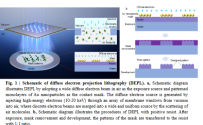
High-Throughput Diffuse Electron Projection Lithography
Abstract
Higher resolution and higher throughput are the relentless pursuits of lithography technologies for continued downscaling of semiconductor devices 1. While the cutting-edge lithography technique for semiconductor manufacturing has evolved into extreme ultraviolet lithography (EUVL) 2, 3, there is still no foreseeable lithography techniques for post-EUVL 4. Electron lithography, as a candidate for post-EUVL, exhibits higher resolution (down to sub-2 nm 5-7) than that of EUVL, but encounters the main challenge of low throughput due to the trade-off between resolution and throughput resulting from the adoption of electron optics systems 8, 9. Here, we report a diffuse electron projection lithography (DEPL) by adopting a wide diffuse electron beam in air as the exposure source and patterned monolayers of Au nanoparticles as the contact mask. Without the adoption of electron optics systems, the resolution and throughput of DEPL are decoupled and can be optimized independently. A minimum feature size of 4 nm and a throughput of 15 4-inch wafers per hour have been demonstrated by DEPL, with a potential throughput up to 532 12-inch wafers per hour. The outstanding features of high resolution, high throughput, and freedom from electron optics and ultrahigh vacuum systems make DEPL a promising and cost-effective lithography technique for post-EUVL.