Chinese semiconductor thread II

tokenanalyst

Lieutenant General
Registered Member

Mingjian Electronics, a manufacturer of high-frequency and high-speed test and measurement equipment, has completed a Series A financing round of tens of millions of yuan.​


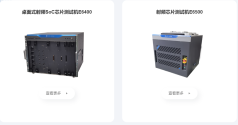
Recently, Mingjian Electronics, a leading domestic enterprise in the field of high-frequency and high-speed test and measurement equipment, announced the successful completion of a tens of millions of RMB Series A financing round. The funds raised will be primarily invested in two areas: firstly, to advance the research and development of high-speed signal testing equipment; and secondly, to expand the production capacity of high-frequency testing equipment. Simultaneously, the funds will also help Mingjian Electronics further penetrate the testing business in the fields of AI computing power interconnection and aerospace.
1776357859803.png1776357895208.png

Founded in 2008 and headquartered in Shanghai, Mingjian Electronics is a national high-tech enterprise and a Shanghai "Specialized, Refined, and Innovative Enterprise." As an innovator in the field of high-frequency and high-speed test and measurement equipment, Mingjian Electronics focuses on technological research and development and product innovation in this field. It is one of only three manufacturers globally with independent development capabilities for DC-500GHz signal testing. The company innovatively adopts a software-defined instrument architecture, enabling flexible combinations of test benches and modular instruments, achieving comprehensive coverage from RF to terahertz frequencies through full-stack self-development. Relying on a full-stack self-developed system from chip level to system level, Mingjian Electronics has achieved several key breakthroughs in hardware architecture, software platform, core chips, and system design, effectively reducing the cost of high-end test instruments and improving testing efficiency. Its products have been widely used in multiple high-growth sectors such as AI computing power, aerospace, and 5G-A/6G wireless communication.
Please, Log in or Register to view URLs content!
 

tokenanalyst

Lieutenant General
Registered Member

Guoxin Technology successfully develops a high-performance automotive electronic AI RISC-V based MCU chip​


Suzhou Guoxin Technology (688262.SH) has successfully completed internal testing of its new CCRC4XXX series, marking the first launch in China of a high-performance, multi-core RISC-V architecture automotive MCU featuring integrated AI and quantum-resistant security.

The chip combines open-source RISC-V technology with native AI processing (NPU) and Post-Quantum Cryptography (PQC), positioning it as a foundational component for Software-Defined Vehicles (SDVs). In terms of computing power, the CCRC4XXX series is nearly double that of similar international competitors. The flagship model boasts:​
  • 10,500 DMIPS computing power.​
  • Up to 9MB SRAM and large RRAM storage (24MB Code + 2MB Data).​
  • 20 channels of high-speed CAN FD interfaces.​
The chips meet the highest industry standards, including AEC Q100 reliability and ISO 26262 ASIL-D functional safety levels. They can directly compete with or surpass top international brands like Infineon and Renesas in specific metrics (e.g., SRAM capacity). Unlike most competitors, this chip integrates both traditional cryptography (RSA/ECC) and quantum-resistant algorithms (PQC/NIST standards). This "dual-encryption" approach ensures the vehicle's security remains robust throughout its 10–15 year lifecycle against future quantum computing threats. The product family includes various configurations for critical automotive domains, such as intelligent driving control, chassis management, powertrain/BMS systems, and central domain controllers.

Guoxin Technology's CCRC4XXX series represents a critical step toward China achieving independence in high-end semiconductor technology for intelligent and electric vehicles.

Please, Log in or Register to view URLs content!
 

tokenanalyst

Lieutenant General
Registered Member

CETC 13th Research Institute: New Progress in Diamond Power Devices​


Diamond has long been hailed as the "ultimate material" for next-generation electronic devices due to its exceptional ultra-wide bandgap properties, including extreme breakdown voltage, high carrier mobility, and superior thermal conductivity. However, utilizing this potential has historically been hindered by challenges in achieving effective n-type or p-type doping, which traditionally relies on hydrogen-terminated surface transfer doping. While past research focused primarily on normally-on (depletion-mode) devices, the development of normally-off (enhancement-mode) transistors offers a critical safety advantage known as "zero gate voltage turn-off," making them highly suitable for demanding applications such as power circuits, RF amplifiers, and high-voltage switches where reliability is paramount.

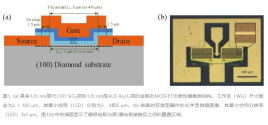
Addressing these challenges, researchers Feng Zhihong and Wei Cui from China Electronics Technology Group Corporation's 13th Research Institute successfully fabricated a novel normally-off diamond MOSFET using advanced surface engineering techniques. By treating the hydrogen-terminated diamond substrate with UV ozone, they created a partially oxygen-terminated high-resistivity channel that effectively suppresses conductivity at zero gate voltage, ensuring stable turn-off characteristics. This innovation was further enhanced by integrating a 240 nm thick SiO₂/Al₂O₃ double-layer dielectric structure and an overlapping gate design, which significantly improved electrostatic control over the entire channel while boosting the device's current-carrying capability and voltage withstand limits.

The research represents a significant breakthrough in evaluating the practical performance of these devices through systematic testing of both DC and RF capabilities at 1 GHz. Load-pull measurements revealed an output power density of 2.2 W/mm, a power-added efficiency of 16.2%, and measurable linear gain, demonstrating that despite micrometer-scale gate lengths and some parasitic effects, the device's performance rivals advanced diamond MOSFETs and traditional structures. This success is attributed to high current density and low on-resistance in the conducting state, combined with the thick dielectric structure that stabilizes operation under high voltage conditions.

1776358552665.png

Despite these promising results, the study identifies specific limitations, such as leakage risks in the overlapping gate region under high fields and reduced carrier mobility due to interface scattering effects. To overcome these hurdles and bridge the gap between laboratory prototypes and commercial viability, future work must focus on optimizing device geometry by shortening gate lengths, reducing parasitic capacitance, and improving the quality of the diamond/dielectric interface through heavy doping or regeneration techniques. Overall, this research validates the feasibility of thick dielectric overlapping gate structures for normally-off power devices, paving the way for diamond technology to emerge as a viable solution in high-power, high-frequency electronics applications.

Please, Log in or Register to view URLs content!
 

tokenanalyst

Lieutenant General
Registered Member

Breakthrough achieved in six-inch silicon carbide ingot cutting technology​


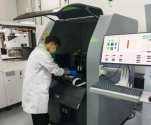
Recently, the Jiangsu Provincial Elite Researcher Project, "Research and Development of Laser Stealth Cutting Technology for Six-inch Silicon Carbide Ingots," jointly undertaken by Jiangsu Third Generation Semiconductor Research Institute Co., Ltd. and the National Third Generation Semiconductor Technology Innovation Center (Suzhou), has achieved a major technological breakthrough. The relevant results have been officially disclosed by the project undertaking unit. The core technical indicators have reached the advanced level in the industry, providing important support for the independent development of China's silicon carbide industry.

1776358799180.png

According to official disclosures from the project's implementing unit, this technology has achieved several key breakthroughs in silicon carbide ingot cutting efficiency, yield, damage control, and thinning precision, effectively addressing the pain points of traditional processes. Its cutting efficiency is significantly improved compared to traditional wire cutting processes, the cutting time per wafer is significantly shortened, the ingot loss rate is greatly reduced, and the cutting yield steadily improves, far exceeding the industry average.

The National Innovation Center for Third-Generation Semiconductor Technology (Suzhou), as one of the core undertaking units of the project, has long focused on tackling key common technologies in the third-generation semiconductor industry. It has built an open and shared innovation platform integrating industry, academia, and research, and has currently gathered various innovative elements, serving over 500 enterprises and research institutions, and overcoming many "bottleneck" technologies. Jiangsu Third-Generation Semiconductor Research Institute Co., Ltd., relying on its own R&D advantages, has formed a collaborative innovation force with the center to accelerate technology research and development and the transformation of research results.

Please, Log in or Register to view URLs content!
 

tokenanalyst

Lieutenant General
Registered Member

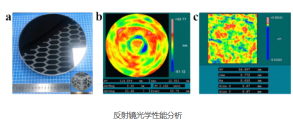
Changchun Institute of Optics, Fine Mechanics and Physics has made new progress in additive manufacturing technology for silicon carbide optical mirrors.​

Recently, a research paper titled " Binder Jetting Additive Manufacturing of High-Performance Silicon Carbide Optical Mirrors via graphite addition method" was published in *Light: Advanced Manufacturing* by a collaborative team led by Professor Zhang Ge at the State Key Laboratory of Advanced Manufacturing for Optical Systems, Changchun Institute of Optics, Fine Mechanics and Physics, Chinese Academy of Sciences, and Professor Wang Gong at the Center for Space Application Engineering and Technology, Chinese Academy of Sciences. The corresponding author is Professor Zhang Ge, and the first author is Assistant Researcher Li Wei.

Compared to traditional molding technologies, additive manufacturing offers advantages such as shorter manufacturing cycles and lower costs, bringing about a revolutionary technological transformation in the development of silicon carbide mirrors. However, silicon carbide particles typically exhibit angular or lath-like morphologies, resulting in high interparticle friction and making it difficult to achieve close packing. This leads to a low silicon carbide content in the phase composition of the mirror, severely limiting its performance.

To address this issue, the research team led by Professor Zhang Ge at the Changchun Institute of Optics, Fine Mechanics and Physics innovatively proposed a graphite/silicon carbide composite powder additive manufacturing method. On one hand, graphite, with its layered crystal structure, is a common solid lubricant. On the other hand, graphite can also act as a reactant to promote the conversion of free silicon into secondary silicon carbide. Therefore, this research cleverly leverages the dual positive roles of graphite in the additive manufacturing of silicon carbide ceramics, overcoming the dual bottlenecks of poor silicon carbide particle flowability and difficulty in controlling the free silicon phase during additive manufacturing.

Experimental results show that this method can increase the silicon carbide content by 18.18% (46.36%→64.54%) and achieve the fabrication of a 220 mm diameter silicon carbide mirror with an end-to-end dimensional deformation of less than 0.5%. The processed optical surface has a surface accuracy better than λ/50 RMS (λ=632.8 nm) and a roughness of 0.772 nm. This research lays a theoretical foundation for enhancing the performance of additively manufactured silicon carbide ceramics and provides guidance for the short-cycle, low-cost fabrication of silicon carbide optical mirrors.

1776360072322.png

Please, Log in or Register to view URLs content!
 

Michael90

Senior Member
Registered Member
So according to this twitter they are targeting trial operation of fully domestic 7nm by 2030 and they also don't expect fully functional EUV by 2030.
Even if they manage to build a fully functioning operational EUV machine (even if it’s 10years from now) that matches even ASML OLDER EUV machines, it will still be a major achievement . In fact I believe it will be even more monumental than achieving a moon landing to be honest. For one country to be able to make a viable functioning EUV machine independently is a monumental achievement
 

Almond98

New Member
Registered Member
What happened to commercial EUV production by 2027? I thought Huawei will be relying on advanced nodes from EUV machines by 2028 with their 970 series.
It is very difficult to tell as they are keeping highly secret about this. But as tphuang said before we shouldn't be worrying much about EUV. We have seen a lot of patents regarding EUV. And also there this reply from that twitter where he didn't translate this part "Other than high end smartphones where chips face high demands on capability, power cost, and size... for all other chip types (AI, CPU, FPGA) the US can no longer restrict China". A very positive news.
 
Top